
Last updated September 23, 2026
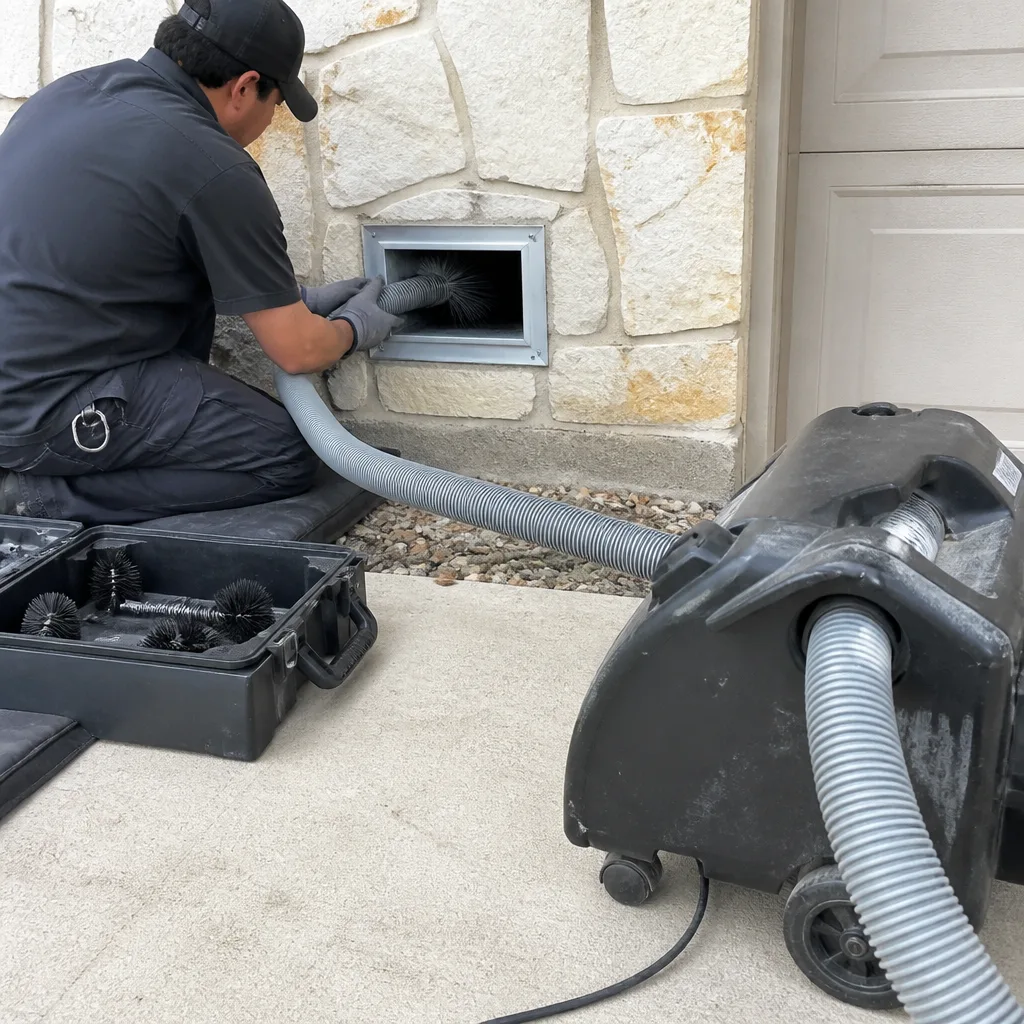
Whole-system duct and dryer vent check with before-and-after photos - you see exactly what came out of your vents
That "$99 whole-house special" is a bait ad - the real number appears once they are in your hallway, or the "clean" is a shop-vac at the register. We photograph the inside of your ducts before and after instead.
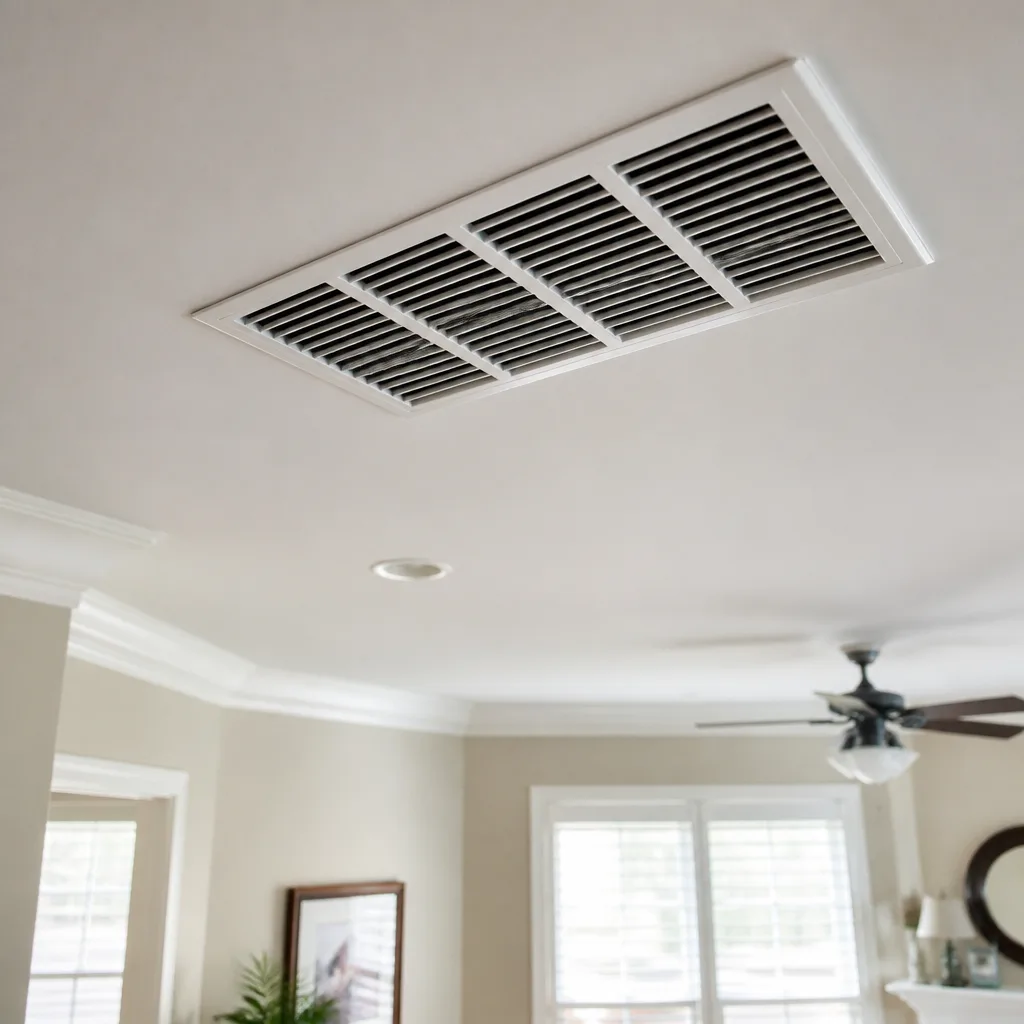
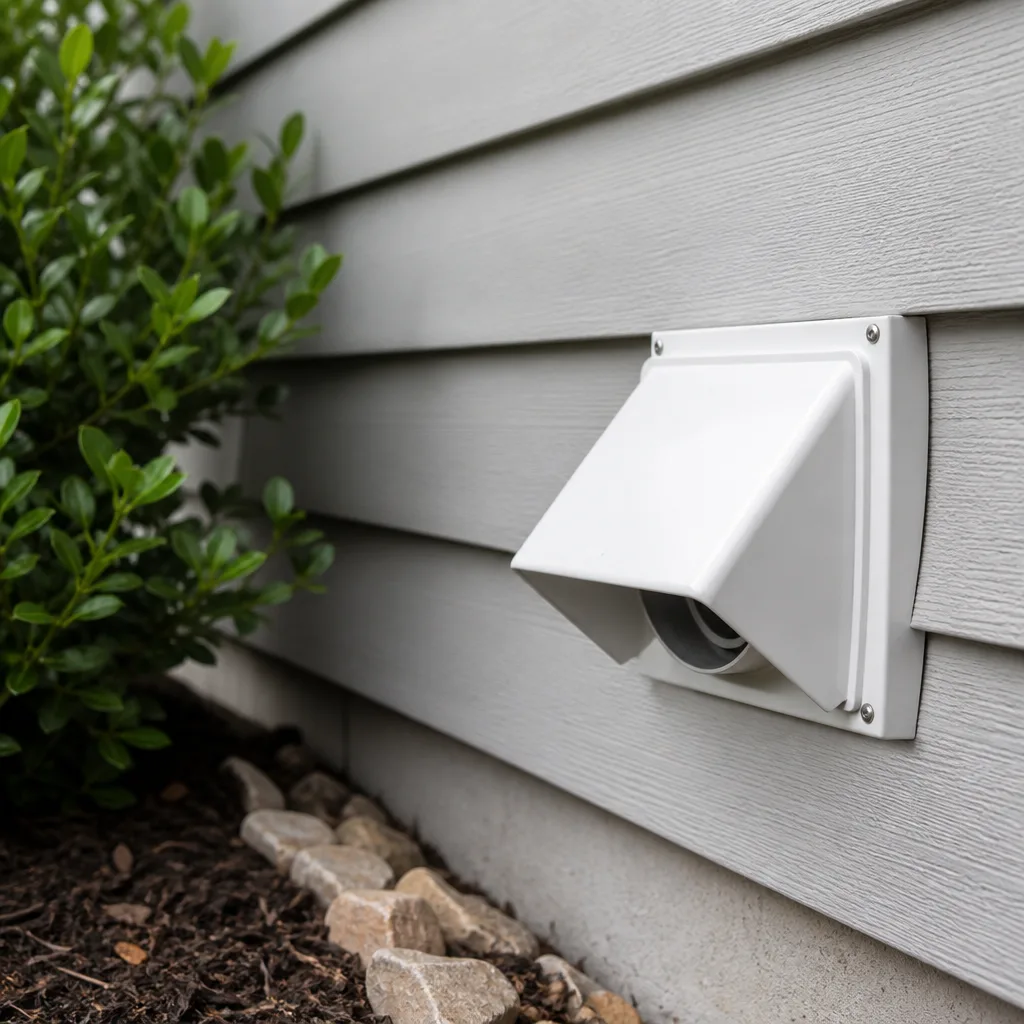
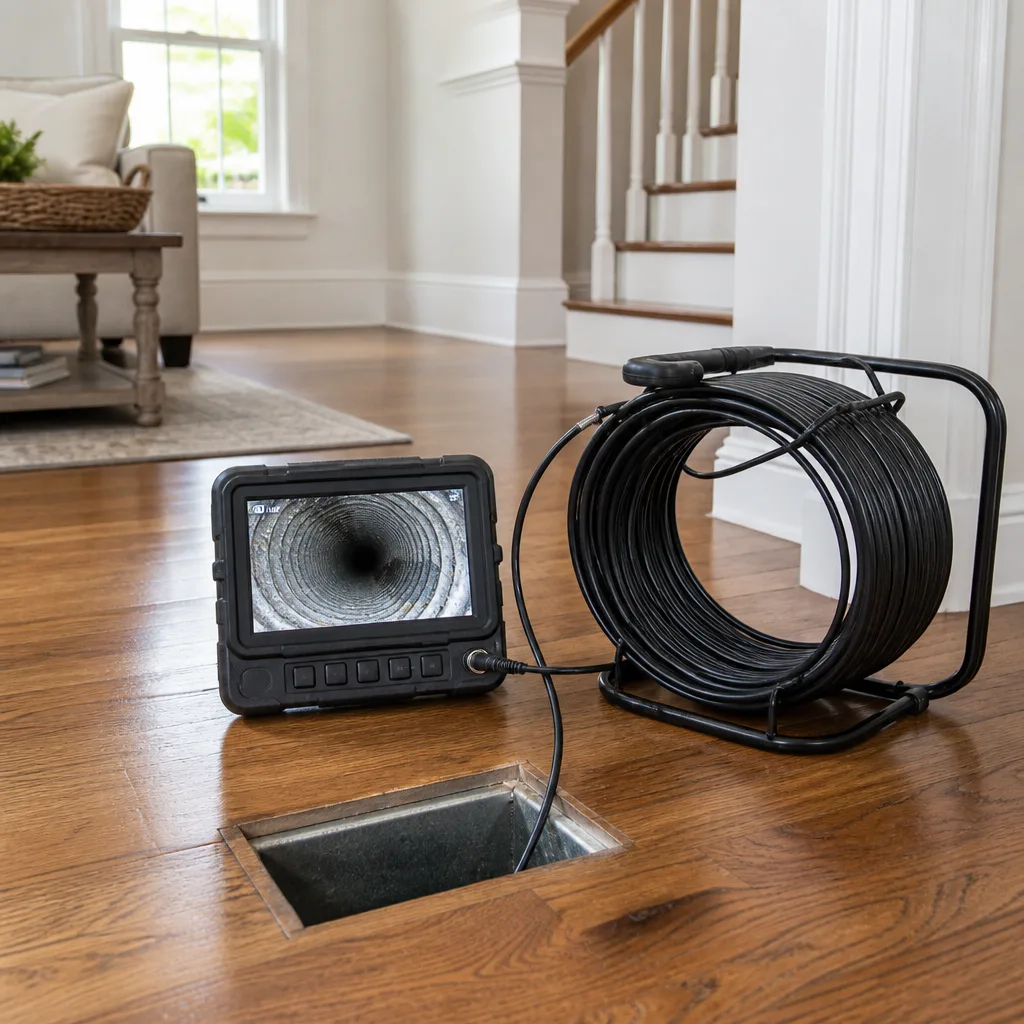
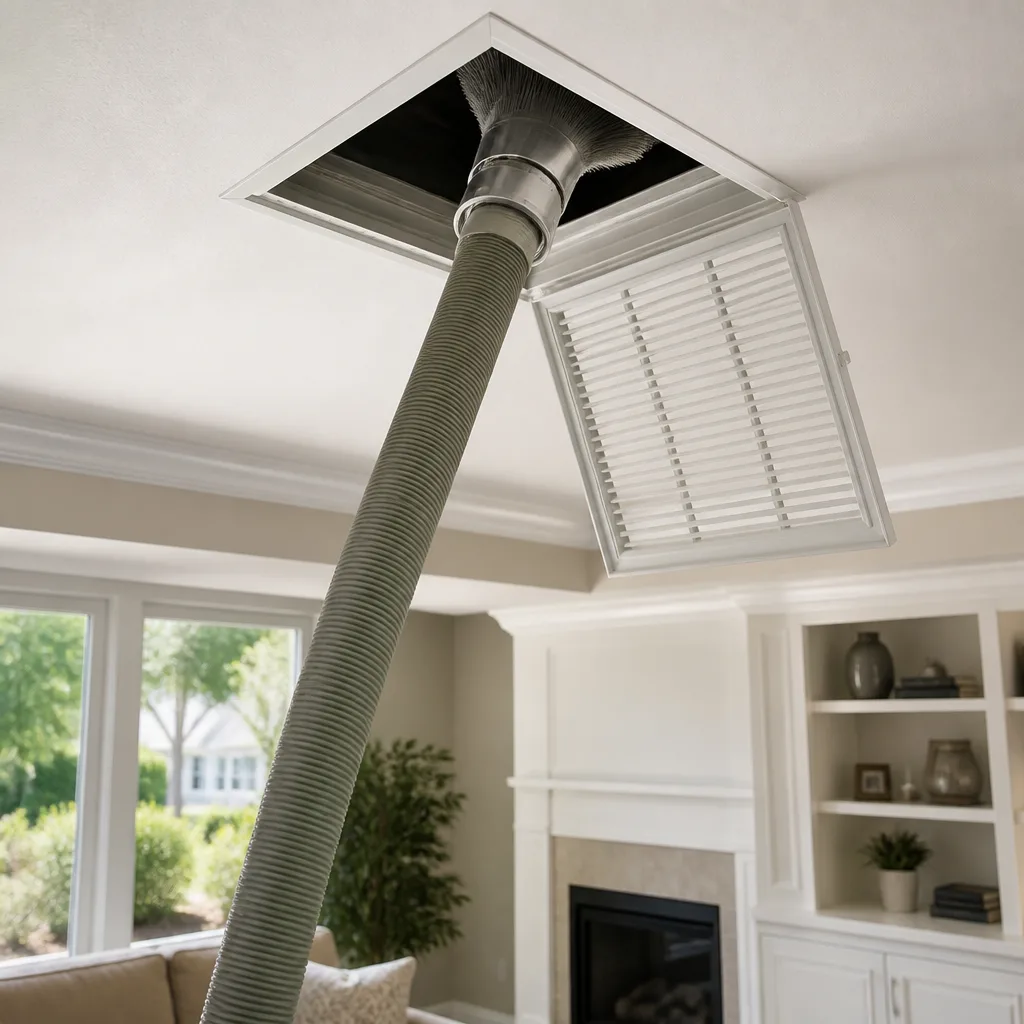
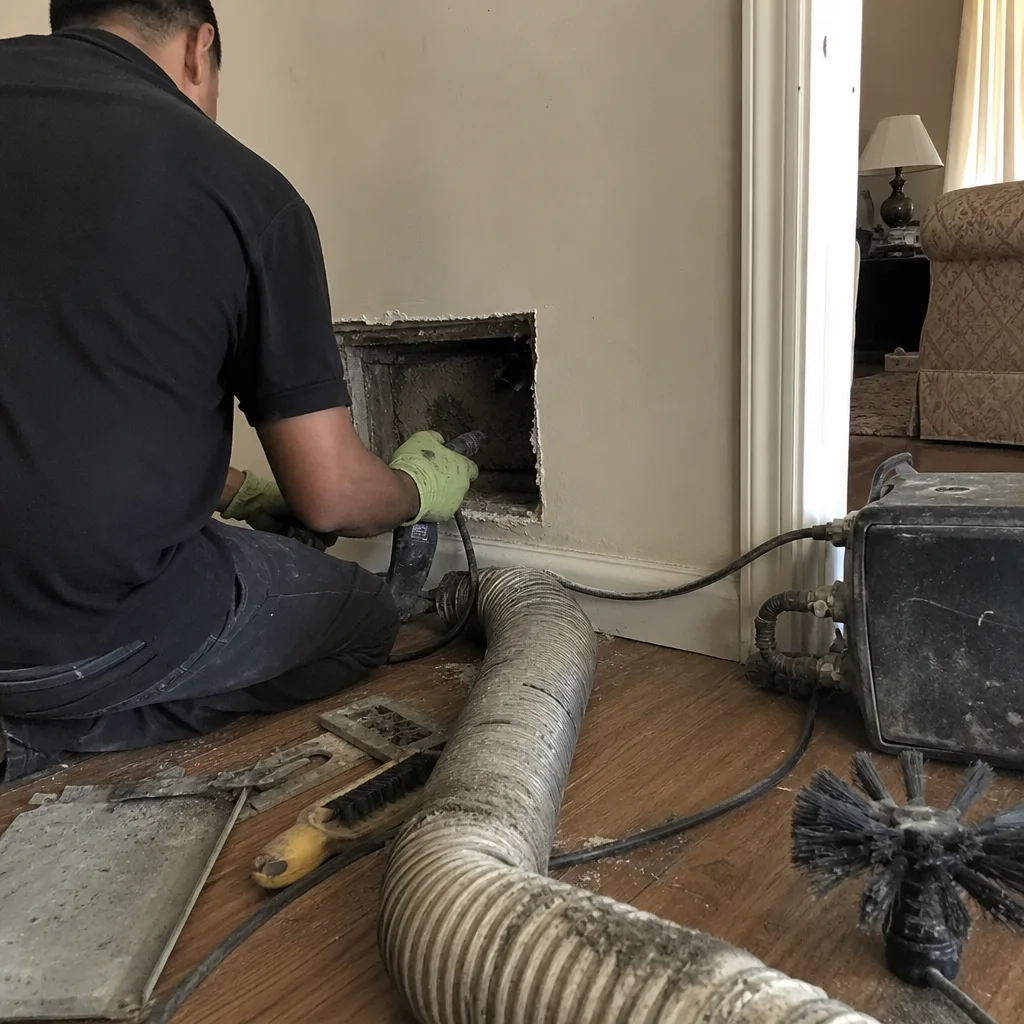 Before
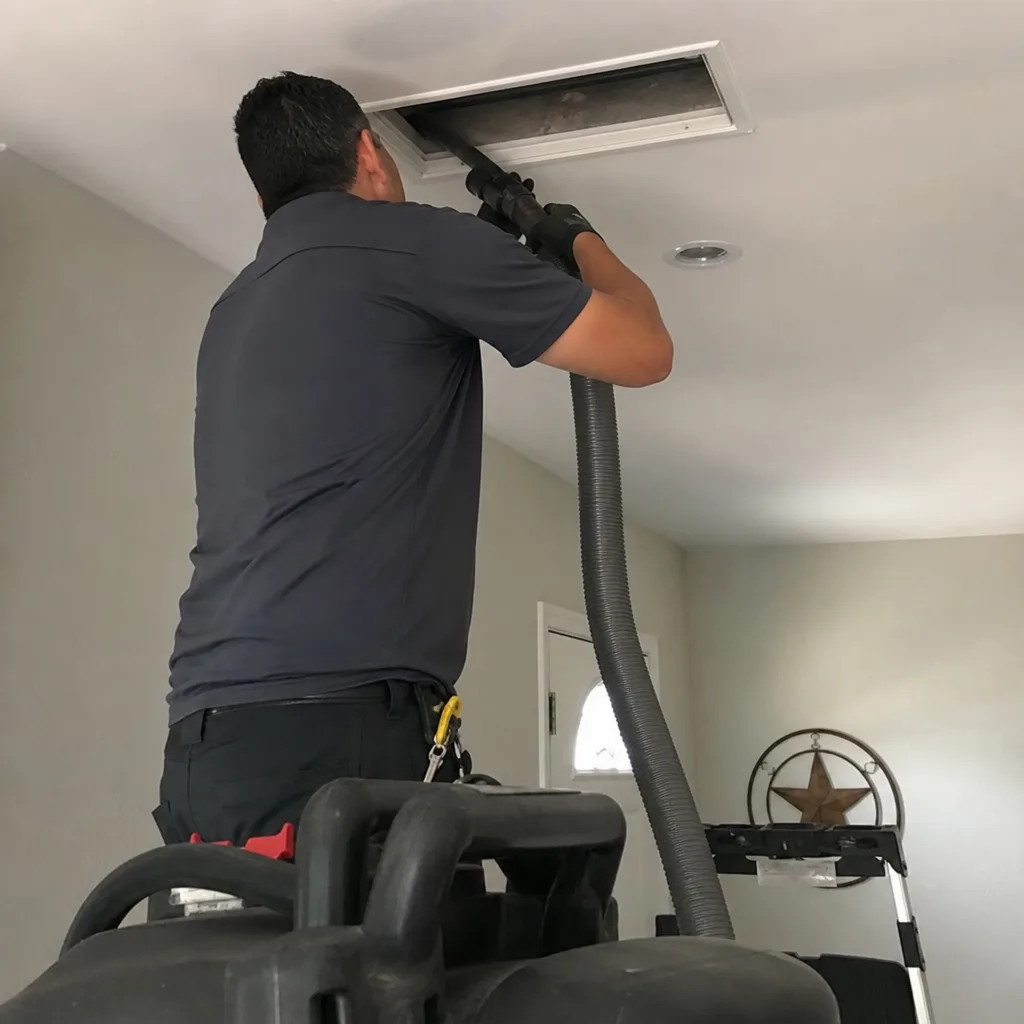 After
After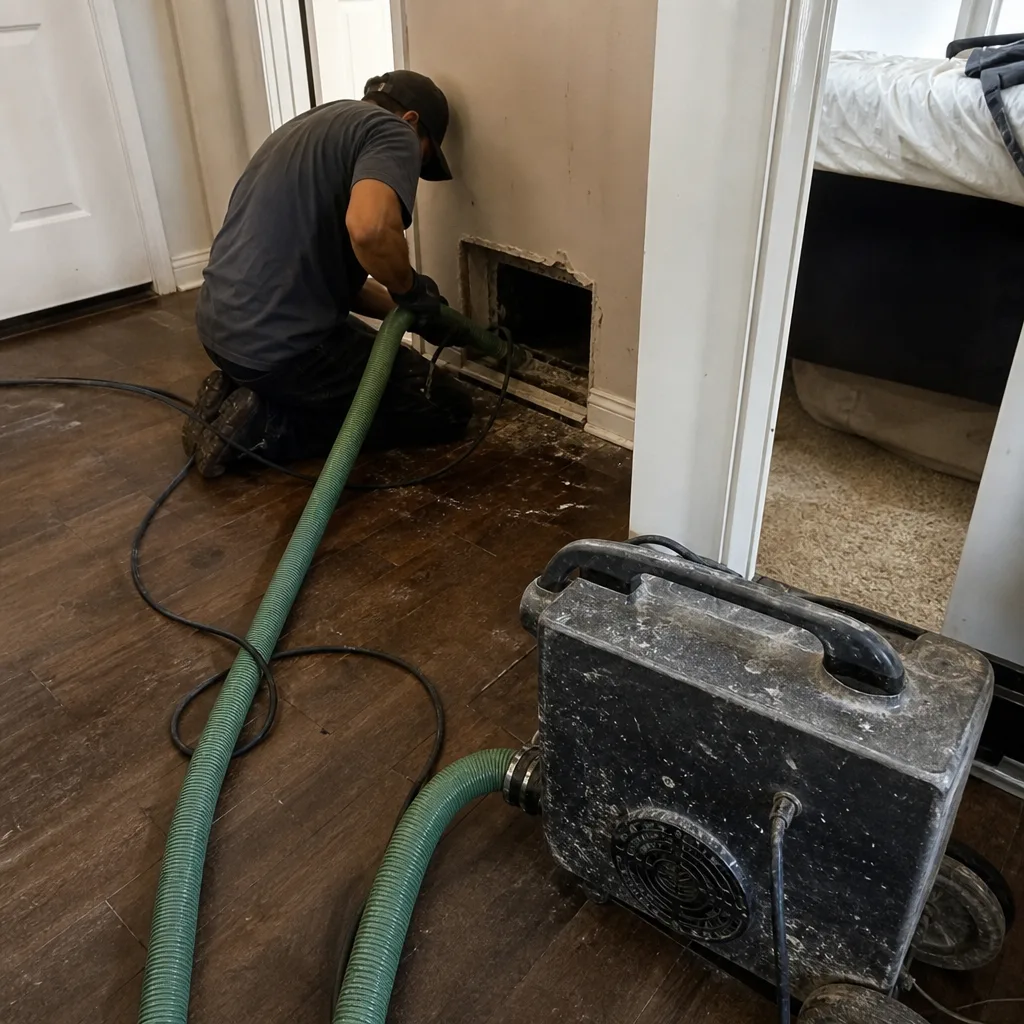 Before
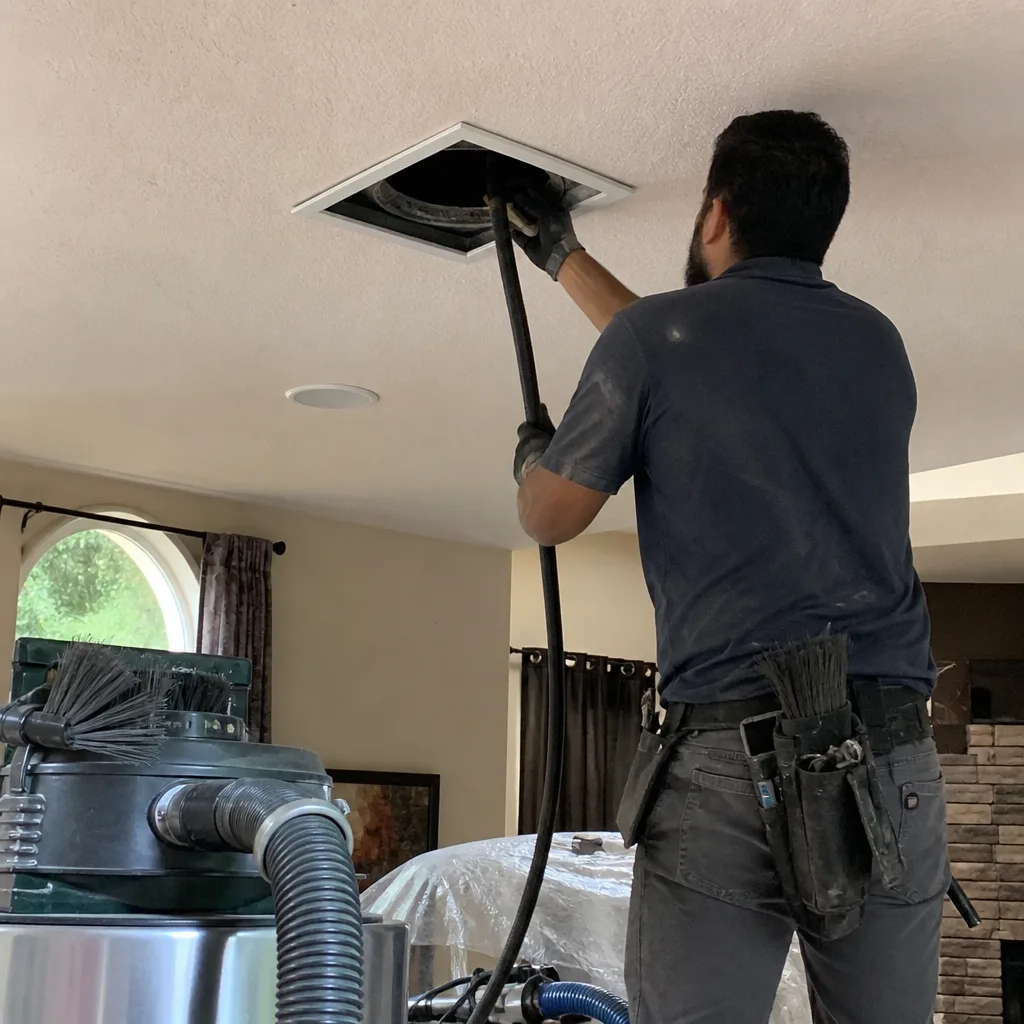 After
After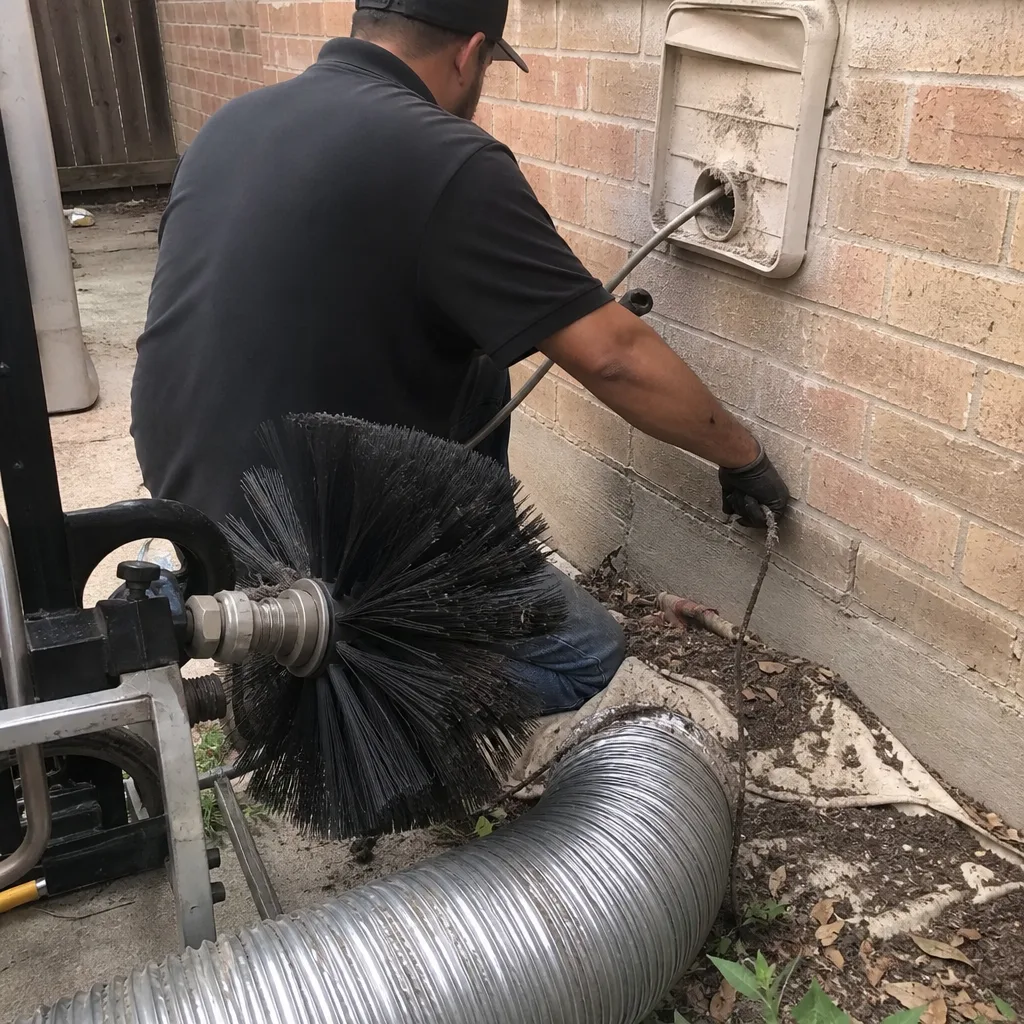 Before
 After
AfterAir Duct Cleaning Cost Breakdown: The Round Rock Homeowner’s Reference for 2026
A Round Rock home with 18 duct runs, a two-zone system, and a return plenum in the attic cannot be properly cleaned in under two hours. The $79 coupon job averages 45 minutes on-site. The math is the story, and most homeowners in Round Rock never see it until the invoice arrives. In this guide, we’ll break down exactly where every dollar in a legitimate duct cleaning estimate goes, how to convert competing quotes to a common basis, and why the spread between a coupon special and a documented cleaning has nothing to do with profit margin and everything to do with what actually happens inside your ductwork. You’ll learn the line-item structure we use at CleanRun Air Duct Cleaning Round Rock home, the hidden cost drivers specific to local construction, and how to spot a quote that can’t possibly cover the work it promises.
Quick Answer
In Round Rock, our Air Duct Cleaning services for a typical single-family home with 12-16 duct runs cost $480-$780 in 2026. This covers equipment setup, negative-pressure extraction of each duct run, register and boot cleaning, return plenum access, and photo documentation. Add-on services such as dryer vent cleaning ($89-$149), coil cleaning ($180-$280), or EPA-registered sanitizing treatment ($0.35-$0.55 per square foot of duct surface) are priced separately and agreed in writing before work begins.
Table of Contents
- Why the Spread Between $79 and $800 Is Not Profit Margin
- Line-Item Cost Structure: Where Every Dollar Goes
- Why Home Size Is a Poor Proxy for Cleaning Cost
- Hidden Cost Drivers in Round Rock Homes
- How to Compare Quotes With Different Pricing Structures
- What Add-On Services Should and Shouldn’t Cost
- Red Flags That Signal a Bait-and-Switch
- What Documentation You Should Receive
BeforeAfterWhy the Spread Between $79 and $800 Is Not Profit Margin
The duct cleaning industry in Round Rock runs on two incompatible business models, and the price tag tells you which one you’re buying.
The $79 coupon model works like this: a technician arrives with a shop vacuum and a rotary brush, spends 30-45 minutes on-site, cleans only the registers and the first few feet of visible ductwork, and leaves. The “cleaning” never reaches the trunk lines, the return plenum, or the elbows where debris actually accumulates. The business model depends on upselling, not on delivering the advertised service. We’ve been called to homes in Forest Creek and Behrens Ranch where the homeowner paid $79 and received a register wipe-down. The camera showed the main trunk still packed with construction debris from 2019.
The $480-$780 model, which is what legitimate operators in the Round Rock market charge for a standard residential job, covers:
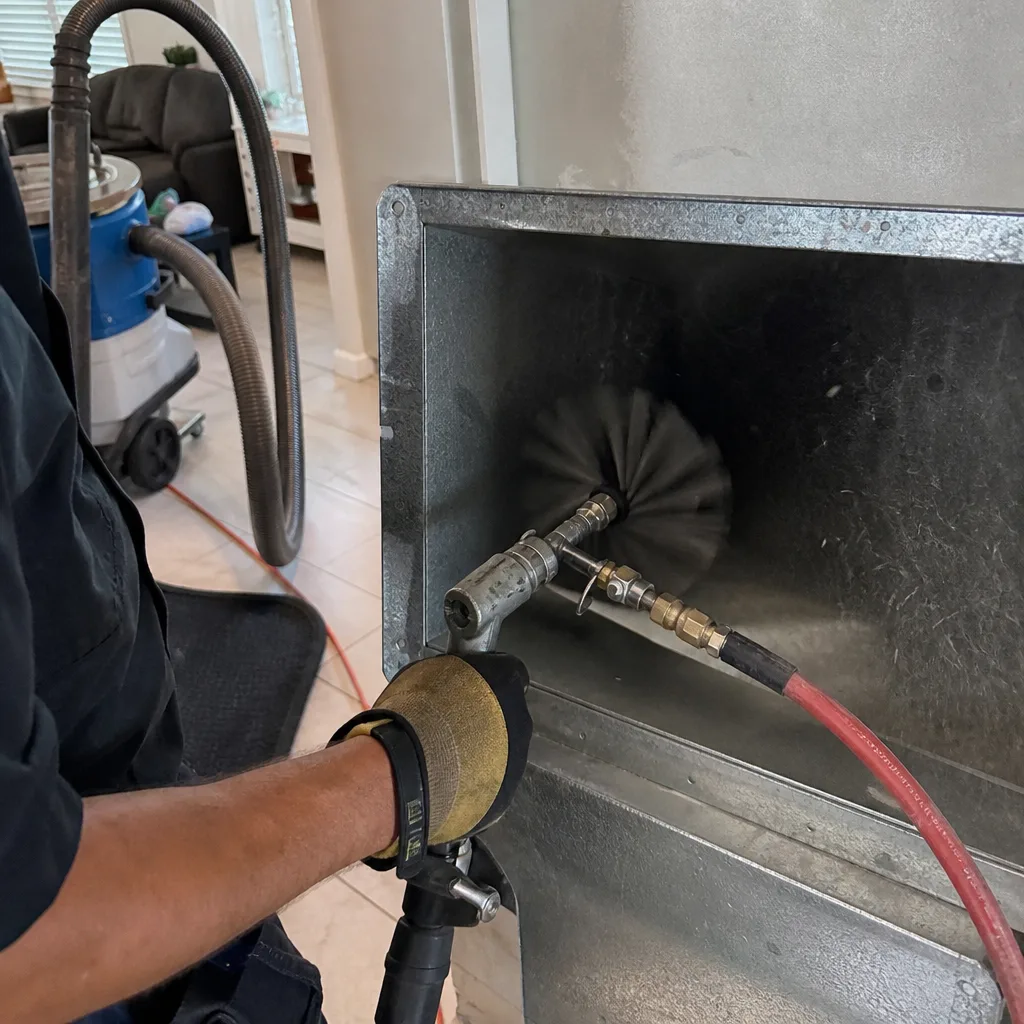
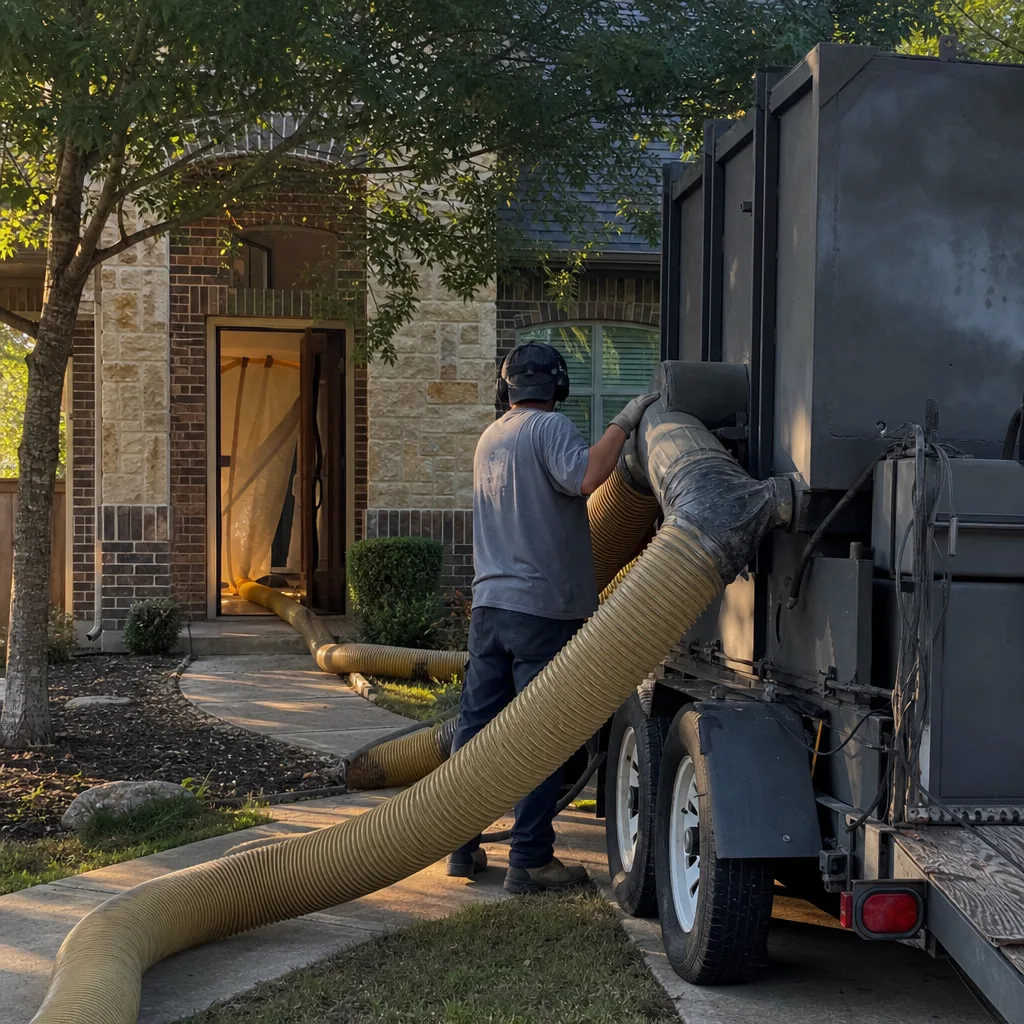
- Equipment transport and setup: truck-mounted negative-pressure extraction systems, HEPA filtration, and rotary brush assemblies from manufacturers like Rotobrush or Nikro
- Access creation: cutting proper service openings in trunk lines when needed, sealing them after
- Per-duct-run cleaning: agitation, extraction, and visual verification of each supply and return
- Return plenum cleaning: the large chamber that collects the most debris, often skipped in cut-rate jobs
- Register and boot cleaning: removing, cleaning, and reinstalling each vent cover
- System testing: verifying airflow balance and checking for leaks created or exposed during cleaning
- Photo documentation: before and after images of every duct run, delivered as a standard job record
The equipment alone explains much of the gap. A truck-mounted negative-pressure system from Abatement Technologies or Nikro costs $15,000-$35,000. The shop vac in a $79 van costs $400. The technician on a legitimate job spends 2.5-4 hours on-site. The coupon technician is scheduled for three jobs before lunch.
At Air Duct Cleaning in Round Rock, we quote every job with a written price before work starts, under Haven Standard Clause 1. No exceptions. The price is based on duct run count, system configuration, and access conditions, not on a coupon designed to get a foot in the door.
Line-Item Cost Structure: Where Every Dollar Goes
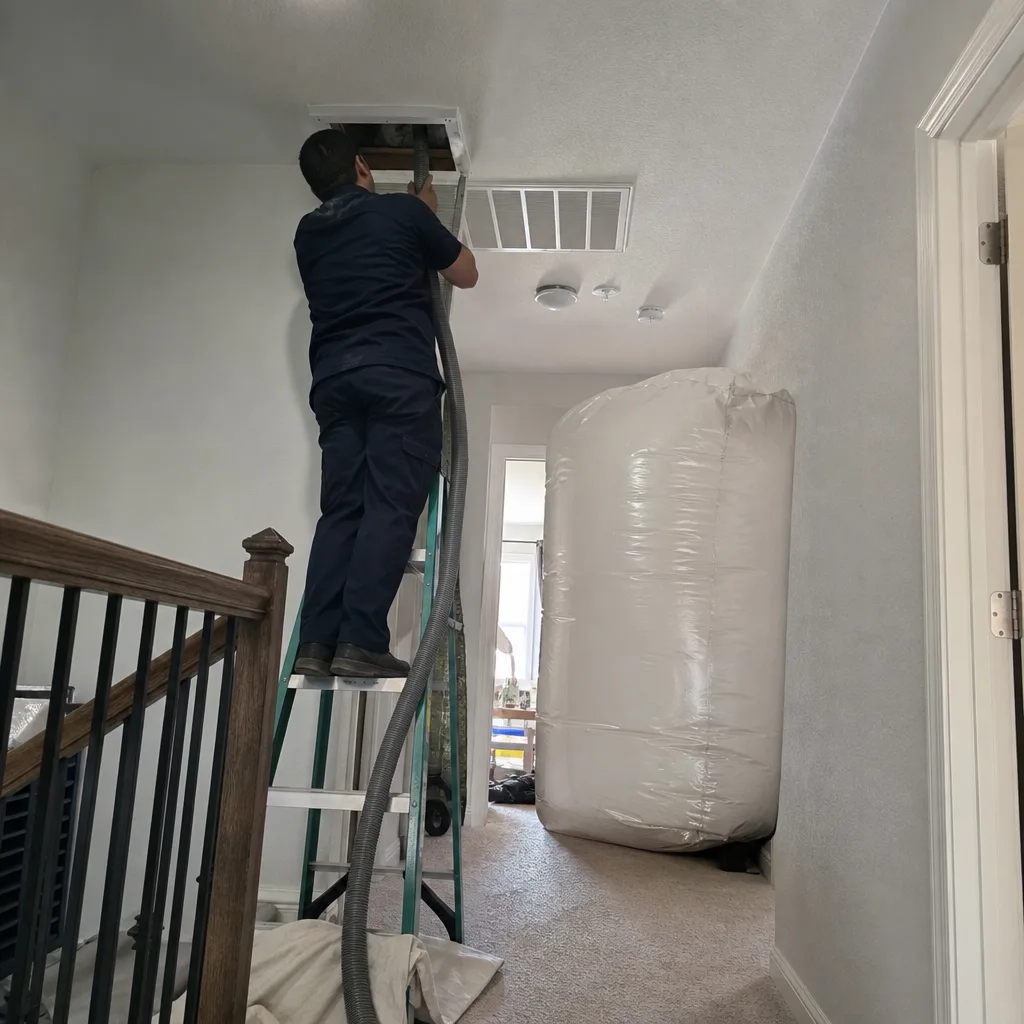
Here’s how we build an estimate for a typical Round Rock home. These numbers reflect our actual pricing structure and the current market range for documented, professional-grade work in the area.
| Line Item | Description | Typical Range (2026) |
|---|---|---|
| Base rate per duct run | Negative-pressure extraction, agitation, and visual verification of one supply or return run | $28-$42 |
| Equipment setup charge | Truck-mounted system deployment, HEPA filtration setup, hose routing, and takedown | $95-$145 |
| Return plenum cleaning | Access, debris removal, and resealing of the main return chamber | $85-$140 |
| Register and boot cleaning | Removal, cleaning, and reinstallation of vent covers and the boot connection to the duct | $6-$10 per register |
| Photo documentation | Before and after imaging of every duct run, compiled into a customer deliverable | Included in base rate |
| Sanitizing agent (optional) | EPA-registered antimicrobial applied to duct interior, priced per square foot of surface area | $0.35-$0.55/sq ft |
For a 2,200-square-foot home in Round Rock with 14 duct runs, single-zone system, and attic return plenum, a typical invoice might look like:
- 14 duct runs at $34: $476
- Equipment setup: $115
- Return plenum: $110
- 16 registers at $8: $128
- Subtotal: $829
Many Round Rock homes in neighborhoods like Teravista or Paloma Lake fall in the $520-$680 range with fewer duct runs or simpler access. The point is transparency: every line is itemized, every price is named in writing before work begins, and the total is never a surprise.
We’ve held this practice since our first job in 2013. Over 52,000 homes later, the written price remains non-negotiable under the H.A.V.E.N. Standard.
Why Home Size Is a Poor Proxy for Cleaning Cost
Square footage is the first question most homeowners ask about, and it’s the least useful number for estimating duct cleaning cost.
Two homes in Round Rock, both 2,400 square feet, can have radically different duct systems:
| Home A | Home B |
|---|---|
| Single-zone, 10 duct runs, all sheet metal, crawl space accessible | Two-zone, 18 duct runs, flex duct in attic, remote return plenum |
| Estimated cleaning time: 2.5 hours | Estimated cleaning time: 4.5 hours |
| Estimated cost: $420-$560 | Estimated cost: $720-$940 |
The variables that actually drive cost:
- Duct run count. Each supply and return run requires individual agitation and extraction. A run is a continuous path from trunk to register. Count your registers and returns; that’s your starting point.
- System configuration. Single-zone systems have one trunk line and one return. Multi-zone systems, common in newer Round Rock builds, have separate trunks for upstairs and downstairs, each requiring independent access and cleaning.
- Duct material. Sheet metal cleans efficiently with rotary brushes. Flex duct, the ribbed plastic common in 2015-2022 construction, requires lower pressure and more careful handling to avoid damage. It takes longer.
- Return plenum location. A return plenum in a 100°F Round Rock attic in July adds access time and safety considerations. A basement or closet location does not.
- Construction debris load. Homes built 2015-2022 in Round Rock’s rapid expansion often have significant drywall dust, wood chips, and insulation fragments in the ductwork from original construction. First cleanings take longer.
When we quote a job, we ask about duct run count and system type, not square footage. The written price reflects what we find when we open the system, not a guess based on your home’s footprint.
Hidden Cost Drivers in Round Rock Homes
Round Rock’s construction patterns and climate create specific conditions that affect duct cleaning cost and approach. For a full overview, see our Air Duct Cleaning Maintenance Checklist for Round Rock Homeowners. These aren’t upsells. They’re realities of the local housing stock.
Pier-and-beam crawl space access. Many homes in older Round Rock neighborhoods like Old Town and Round Rock West sit on pier-and-beam foundations with ductwork running through crawl spaces. Access requires working in confined conditions, often with limited headroom. The technician must protect the vapor barrier, navigate around plumbing and electrical, and ensure proper resealing of any access cuts. This adds 30-60 minutes to a job that would take half the time with basement access.
Attic return plenums in extreme heat. Round Rock attic temperatures exceed 100°F from May through September. A return plenum located in the attic requires the technician to work in heat-stress conditions, with mandatory hydration breaks and shorter work intervals. The equipment runs harder too; HEPA filtration systems consume more power and require more frequent filter checks in high-heat, high-dust environments. We schedule attic-heavy jobs earlier in the day when possible, but the time premium remains.
Second-story duct runs in 2015-2022 construction. The building boom in Round Rock’s northeast corridor, neighborhoods like Siena and Sonoma, produced thousands of two-story homes with long flex-duct runs to second-floor bedrooms. These runs have more elbows, more sag points where debris collects, and less access for visual verification. Cleaning them properly requires additional agitation passes and camera inspection time.
Hard water scale on registers and boots. Round Rock’s water supply, drawn from the Edwards Aquifer and Lake Georgetown, runs moderately hard. Over years, evaporative moisture at registers can leave mineral scale that standard cleaning won’t remove. When we encounter this, we note it in the photo record and discuss treatment options, but we don’t bill for unrequested additional work.
These factors don’t appear in a coupon ad. They appear when the technician is on-site and the clock is running, or when the job is skipped entirely because it wasn’t priced to allow for proper completion.
How to Compare Quotes With Different Pricing Structures
You’ll encounter three pricing models in the Round Rock market. Here’s how to convert each to a common basis for honest comparison.
Per-vent pricing. ” $29.95 per vent” sounds straightforward until you realize “vent” may mean only the register, not the duct run behind it. A home with 16 registers has 16 duct runs, but the quote may cover only the visible portion. To compare: multiply the per-vent price by your actual duct run count, then ask whether the price includes trunk lines, return plenum, and register removal. Most per-vent quotes do not.
Flat rate per system. “Whole house, $399” is common. To compare, ask for the duct run count the price assumes, the equipment type (truck-mounted or portable), and whether photo documentation is included. A flat rate that assumes 10 runs when you have 16 will result in either an upsell or skipped work. At CleanRun, we don’t quote flat rates because we haven’t seen your system yet. We quote after gathering specifics, and the price is written before work starts, in line with Air Duct Cleaning Permits, Codes & Inspections in TX: What You Need to Know.
Hourly pricing. Rare in residential duct cleaning, but some specialty operators use it. To compare, ask for the estimated hours and the hourly rate, then verify whether the estimate includes equipment setup time (often 45 minutes) and whether the clock runs during breaks. Hourly pricing can be fair for complex commercial systems, but it’s unusual for standard residential work in Round Rock.
The honest comparison method:
- Count your registers and returns. That’s your duct run count.
- Ask each company for the per-run equivalent of their price: “If I have 14 duct runs, what’s my total?”
- Ask what’s included: trunk lines, return plenum, register removal and cleaning, photo documentation, system test.
- Ask what’s excluded: sanitizing, coil cleaning, dryer vent, access creation for sealed systems.
- Request the price in writing before scheduling, per Haven Standard Clause 1.
We offer a Free Second Opinion on Any Written Estimate. Bring a competitor’s quote; we put our number next to it in writing, line item by line item, so you can see the difference.
What Add-On Services Should and Shouldn’t Cost
Legitimate add-ons are priced separately and agreed in writing. Here’s what each should cost in the Round Rock market, and when they’re actually needed.
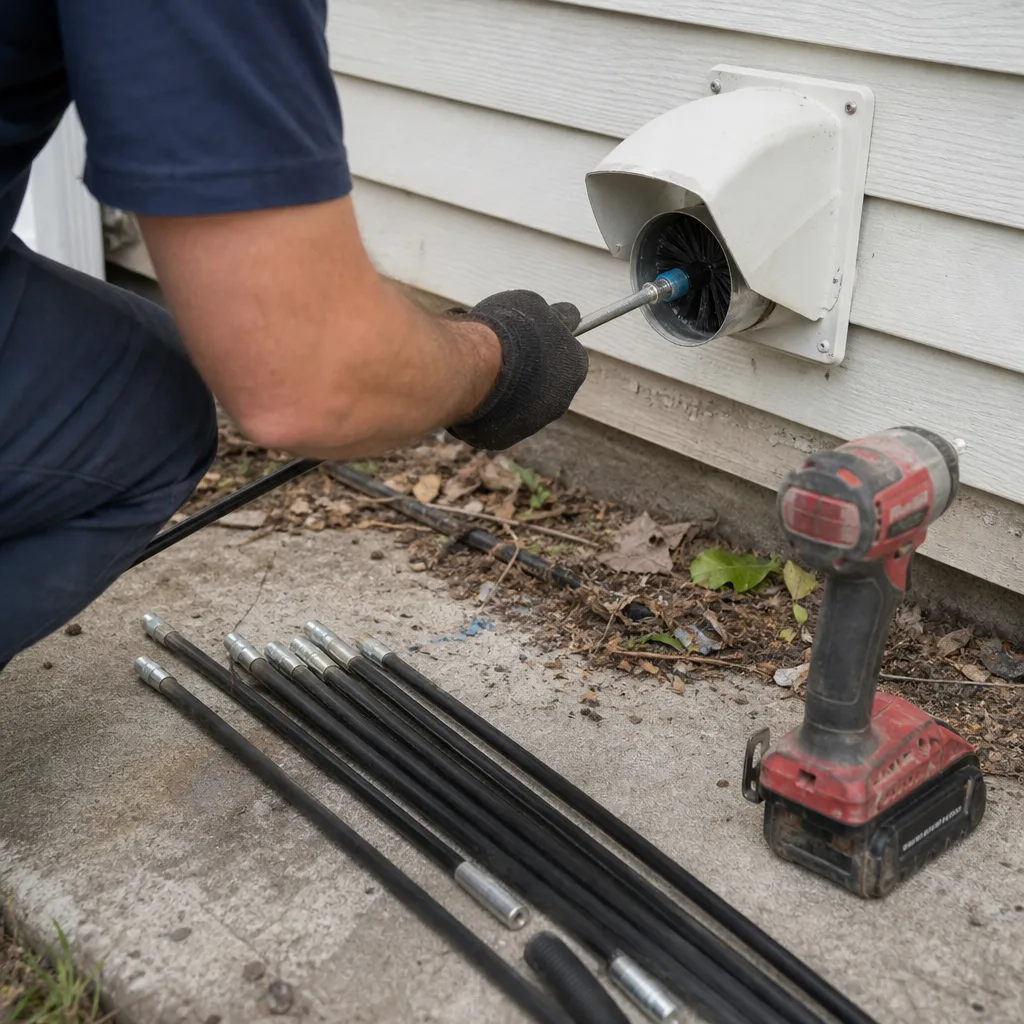
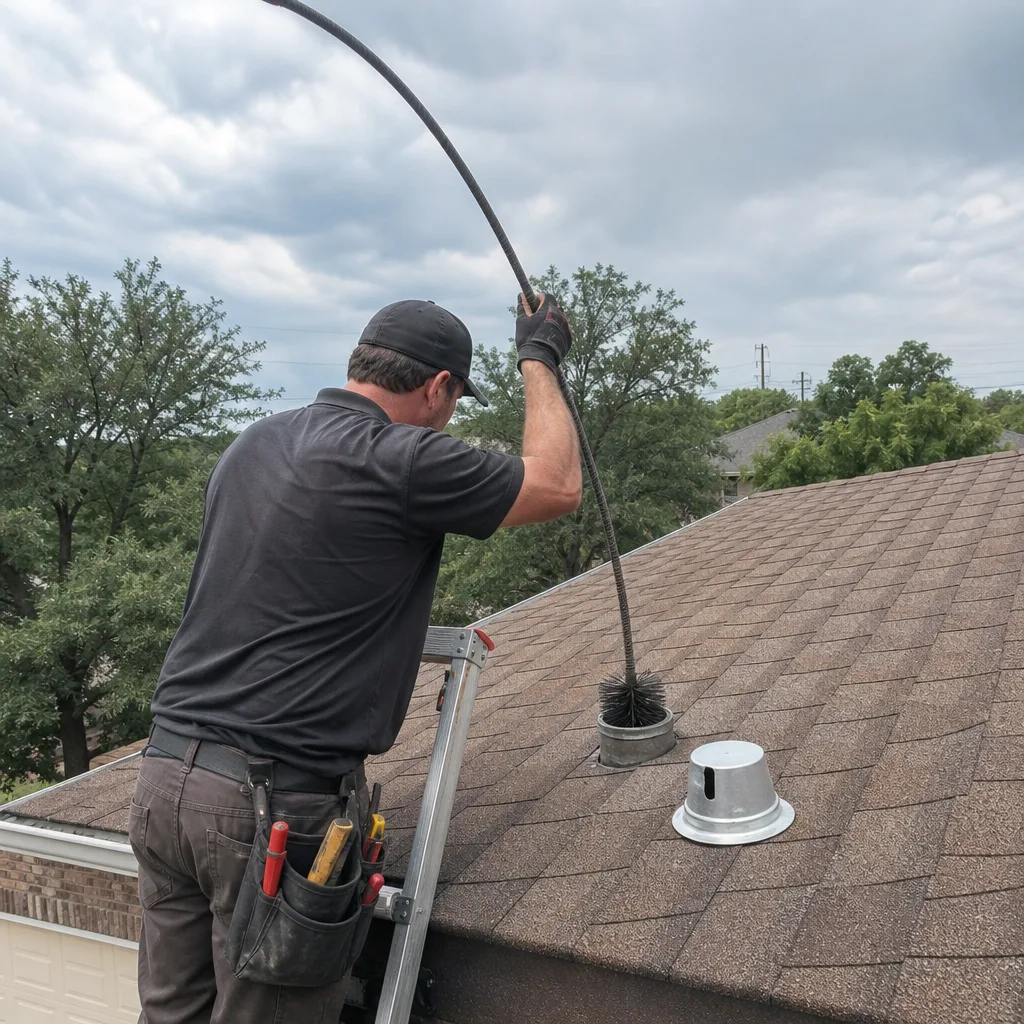
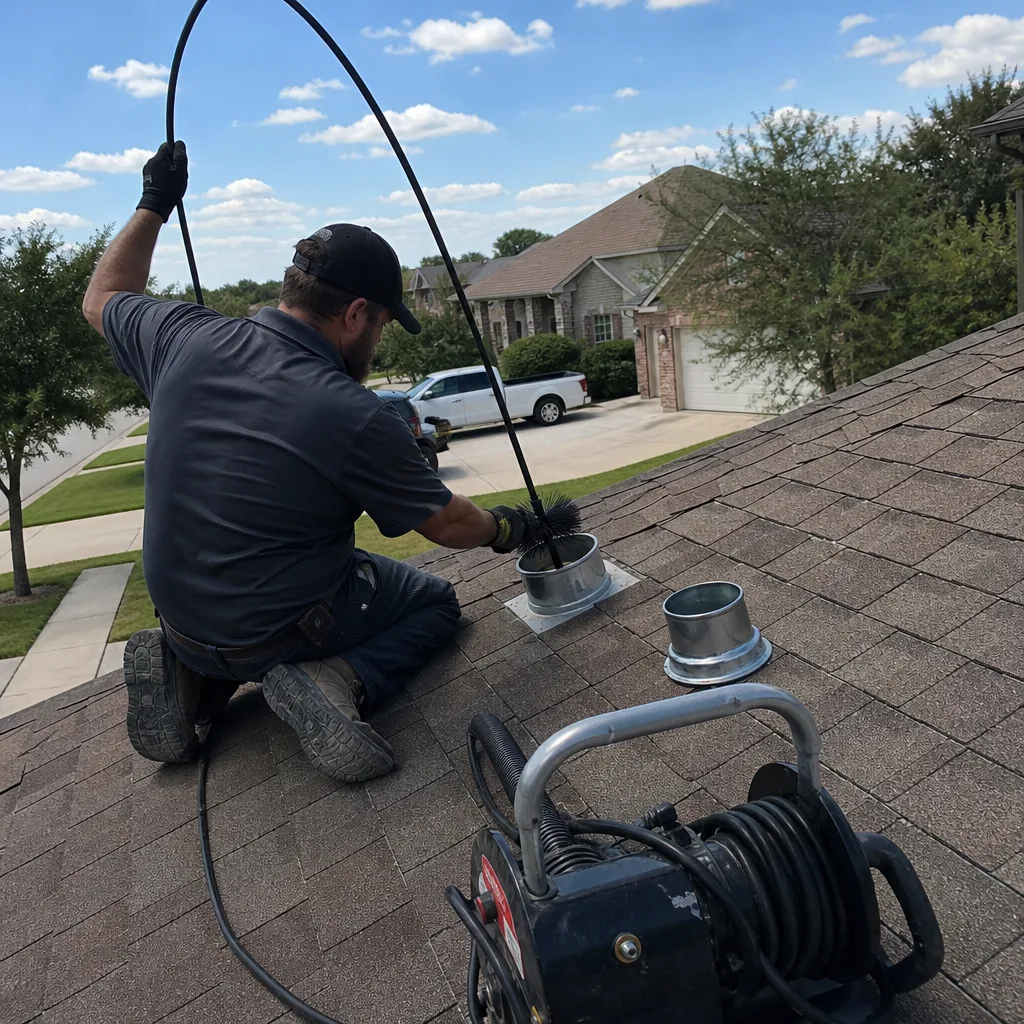
Dryer vent cleaning: $89-$149 standalone, or $60-$90 when bundled with duct cleaning. This is not duct cleaning. The dryer vent is a separate exhaust line that runs from your laundry room to the exterior wall or roof. It accumulates lint, not household dust, and requires different equipment. In Round Rock, long vent runs to second-floor laundry rooms are common and prone to blockage. A clogged dryer vent is a genuine fire hazard; the National Fire Protection Association reports dryer fires cause $200 million in annual damage. We clean dryer vents with rotary brushes and high-velocity air, and we verify airflow at the exterior termination. Dryer Vent Cleaning in Round Rock is available as a standalone service or bundled.
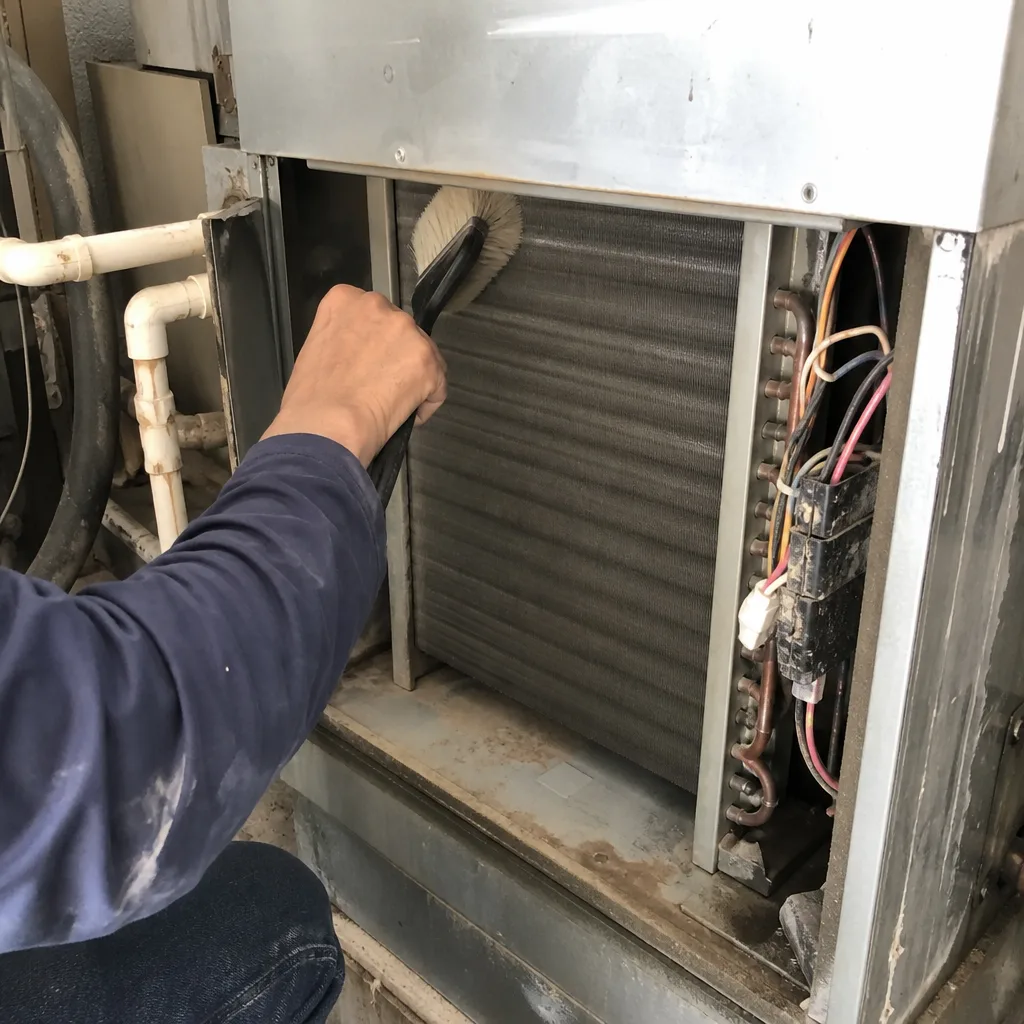
Coil cleaning: $180-$280. The evaporator coil sits in your air handler, separate from the ductwork. It gets dirty, but duct cleaning does not clean it. Some companies “include” coil cleaning in a duct cleaning quote by spraying chemical foam into the return while the system runs. This is not cleaning; it’s chemical distribution. Proper coil cleaning requires access to the air handler, physical cleaning of the coil fins, and verification of drain pan function. We price it separately because it’s a separate job, and we perform it with equipment from manufacturers like Honeywell and Aprilaire.
EPA-registered sanitizing treatment: $0.35-$0.55 per square foot of duct surface. This is not a fogger in the living room. Proper sanitizing requires application of an EPA-registered antimicrobial to the interior duct surface after cleaning, with dwell time per manufacturer specification. We calculate surface area based on duct dimensions and run count, name the product by brand (we use Guardsman-registered formulations), and include the application in the written scope. We do not recommend sanitizing for every job; it’s appropriate after rodent intrusion, water damage, or when occupants have specific respiratory sensitivities.
What you shouldn’t pay for: “Deep cleaning” upgrades, “premium” brushes, or “enhanced” filtration that aren’t defined in writing. If the add-on doesn’t have a specific product name, application method, and measurable outcome, it’s a revenue line, not a service.
Red Flags That Signal a Bait-and-Switch
These patterns are common in the Round Rock market. We’ve documented them in customer interviews and in our own mystery-shopping of competitors.
- The phone quote that doubles on arrival. You mention 14 duct runs; they quote $299. The technician arrives and “discovers” additional returns, a second zone, or “heavy contamination.” The new price: $749. The original quote was never in writing, so you have no recourse.
- The “whole house” price that excludes the return system. Supply ducts blow air into rooms; returns pull it back. Both get dirty. A quote that covers “all vents” but not the return plenum or return trunk is cleaning half your system.
- No equipment visible. A legitimate truck-mounted extraction system requires a van or trailer with visible hoses, compressor, and filtration stack. If the technician carries only a portable vacuum and a brush, you’re not getting negative-pressure extraction.
- No photo documentation offered. Every duct run can be photographed before and after. If the company doesn’t provide this, you have no verification that the work occurred. At CleanRun, photo documentation is standard on every visit, included in the base price, and delivered as part of the job record.
- Pressure to decide immediately. “I can only honor this price if you book today” is urgency theatre, not business practice. Our prices are valid for 30 days from the written estimate.
- Vague product names for sanitizing or treatments. “Our special antimicrobial” or “hospital-grade disinfectant” without an EPA registration number or manufacturer name is unverifiable. We name our products and provide registration numbers on request.
What Documentation You Should Receive
The work is only as good as the record that proves it. Here’s what a legitimate duct cleaning job produces, and what we deliver on every CleanRun visit.
Written scope and price, signed before work begins. Haven Standard Clause 1 requires a written price before any work starts. You receive a document listing each duct run, each service, and each price. No work begins until you sign. This is not a formality; it’s the foundation of accountability.
Before and after photo record of every duct run. Our technicians photograph the interior of each supply and return run before cleaning and after cleaning. These images are compiled into a customer deliverable, typically delivered digitally within 24 hours. You can see the 3-inch debris build-up at the first elbow. You can see the clear duct after extraction. This practice, which we’ve held since 2013, is the single most effective way to distinguish real work from vacuum noise.
Written warranty. Our 365-Day Done Right Promise is backed in writing on every job. If the work is not right, we make it right. Not a policy subject to manager approval. A written guarantee with a named response process.
Equipment roster. On request, we provide the manufacturer and model of the equipment used on your job: Rotobrush or Nikro for agitation, Abatement Technologies or Honeywell for filtration and air handling, Guardsman for sanitizing applications. You can verify these independently.
Post-service airflow verification. We measure and record airflow at selected registers before and after cleaning, noting any significant changes that might indicate a blockage or leak created during service.
This documentation is not an extra. It’s the standard deliverable that makes the work accountable. If a company can’t or won’t provide it, you’re buying a promise, not a service.
Common Mistakes to Avoid
- Using square footage as your primary comparison point. A 3,000-square-foot home with 10 duct runs costs less to clean than a 2,000-square-foot home with 18 runs and a multi-zone system. Always compare on duct run count and system configuration.
- Assuming “vent” means “duct run.” In pricing language, “vent” often means only the register cover. Ask specifically: “Does your price include the entire duct run from trunk to register, or just the visible vent?”
- Ignoring the return system. Return ducts and the return plenum typically contain more debris than supply ducts because they pull unfiltered air. A quote that omits returns is incomplete.
- Booking based on coupon price without written confirmation. The $79 special rarely survives contact with reality. Get the full scope in writing before scheduling, or expect an upsell.
- Skipping dryer vent cleaning because “it’s just lint.” In Round Rock’s newer neighborhoods, long vertical dryer vent runs to second-floor exteriors are common and dangerous when clogged. Lint is highly combustible.
- Accepting fogging or spray treatments as “sanitizing” without verification. True duct sanitizing requires application to interior surfaces with proper dwell time. A fogger in the living room treats your furniture, not your ducts.
- Not asking about access conditions specific to your home. Pier-and-beam crawl spaces, attic plenums, and flex-duct systems all require different approaches. A company that doesn’t ask about these before quoting is guessing.
When to Call a Professional
Call for a professional assessment if you notice visible dust emission from registers, uneven airflow between rooms, musty odors when the system cycles, or if your home was built between 2015 and 2022 and has never had duct cleaning. Browse more guides & resources to learn what to expect. In Round Rock’s rapid-growth construction era, original construction debris in ductwork is nearly universal. If you’ve received a quote that seems too low to include full system cleaning, a second opinion costs nothing. CleanRun Air Duct Cleaning Round Rock offers free estimates in Round Rock, and we put our written price next to any competitor’s quote at no charge. Call (737) 259-5752 to schedule.
Frequently Asked Questions
For a typical single-family home with 12-16 duct runs, expect $480-$780 in 2026. Homes with multi-zone systems, attic return plenums, or 18+ duct runs range $720-$940. The price depends on duct run count and system configuration, not square footage. Call (737) 259-5752 for a written estimate based on your specific system.
The $79-$199 quotes typically cover register wiping and minimal vacuuming of the first few feet of ductwork, not full system cleaning. The equipment, time, and documentation required for legitimate negative-pressure extraction of all duct runs, trunk lines, and return plenums cannot be delivered at those prices. The difference is what actually happens inside your ductwork, not profit margin.
Demand before and after photo documentation of every duct run, delivered as part of the standard job record. At CleanRun, this has been mandatory since 2013. If a company won’t photograph the interior of your ducts, you have no verification that cleaning occurred beyond the registers you can see.
For most Round Rock homes, every 5-7 years with normal occupancy and standard filtration. Homes with pets, recent construction, or occupants with respiratory conditions may need cleaning every 3-4 years. First cleanings for homes built 2015-2022 often reveal significant construction debris and establish a baseline for future scheduling.
Duct cleaning removes accumulated debris and can reduce particulate circulation, but it’s not a medical treatment. For allergy management, combine duct cleaning with high-efficiency filtration (MERV 13 or higher, from manufacturers like Aprilaire or Honeywell), consistent filter changes, and humidity control. We assess your full system and recommend appropriate combinations, not duct cleaning in isolation.
Duct cleaning covers the distribution network: supply and return ducts, trunk lines, registers, and plenums. HVAC Cleaning in Round Rock includes the air handler components: evaporator coil, blower assembly, and drain pan. These are separate services with separate pricing. Coil cleaning in particular should never be “included” in a duct cleaning price without specific access and cleaning methods described in writing.
The Bottom Line
The price of duct cleaning in Round Rock is not mysterious. It’s the sum of specific labor steps, equipment costs, and time requirements that can be named, itemized, and verified. The $79 coupon and the $600 documented cleaning are not the same service at different prices. They’re different services entirely, and the homeowner who understands the line-item structure can evaluate any quote against a real standard. Count your duct runs. Ask what’s included. Get the price in writing before work starts. And demand the photo record that proves the work happened. At CleanRun Air Duct Cleaning Round Rock, we’ve operated this way since 2013, across 52,000 homes, because accountability is not a marketing claim. It’s a practice you can see in the images we deliver.
Written by Tomas Reyes, Owner at CleanRun Air Duct Cleaning Round Rock, serving Round Rock since 2013.