
Last updated September 23, 2026
Whole-system duct and dryer vent check with before-and-after photos - you see exactly what came out of your vents
That "$99 whole-house special" is a bait ad - the real number appears once they are in your hallway, or the "clean" is a shop-vac at the register. We photograph the inside of your ducts before and after instead.




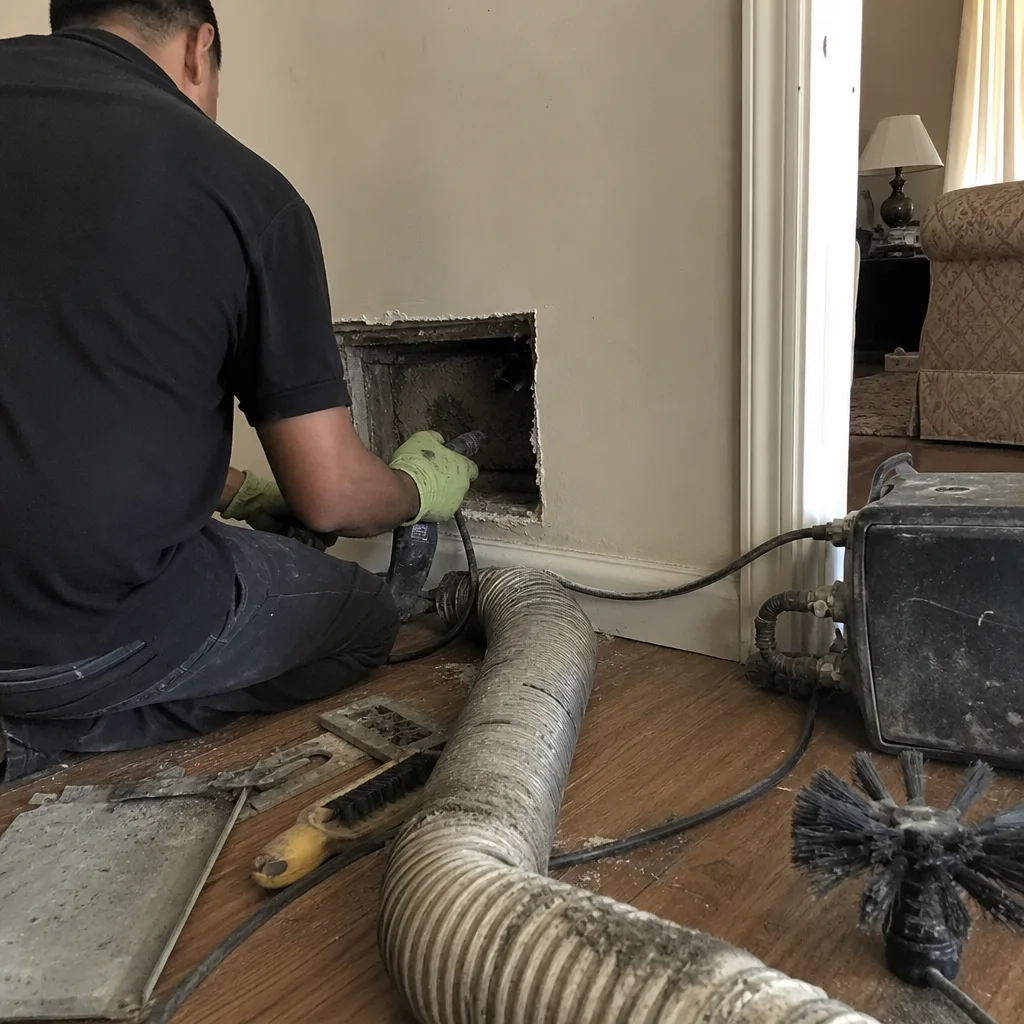 Before
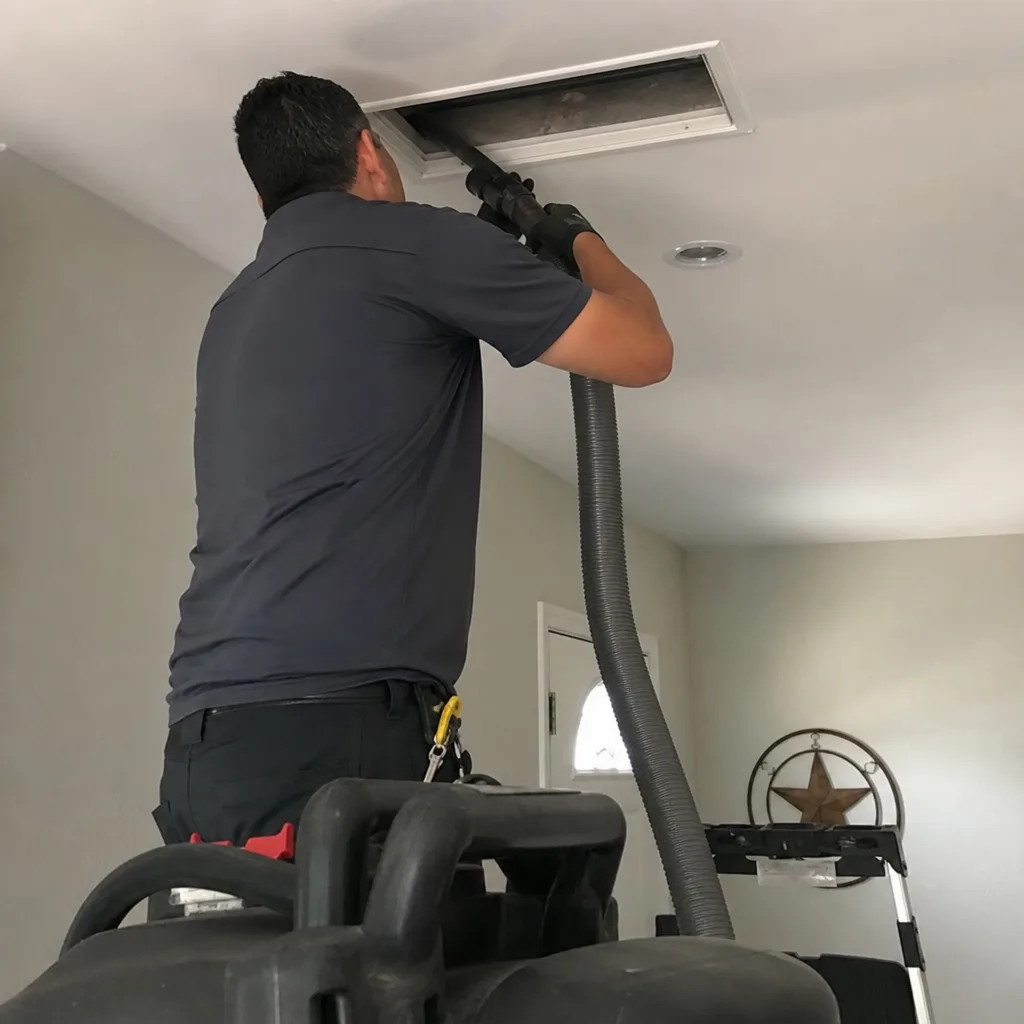 After
After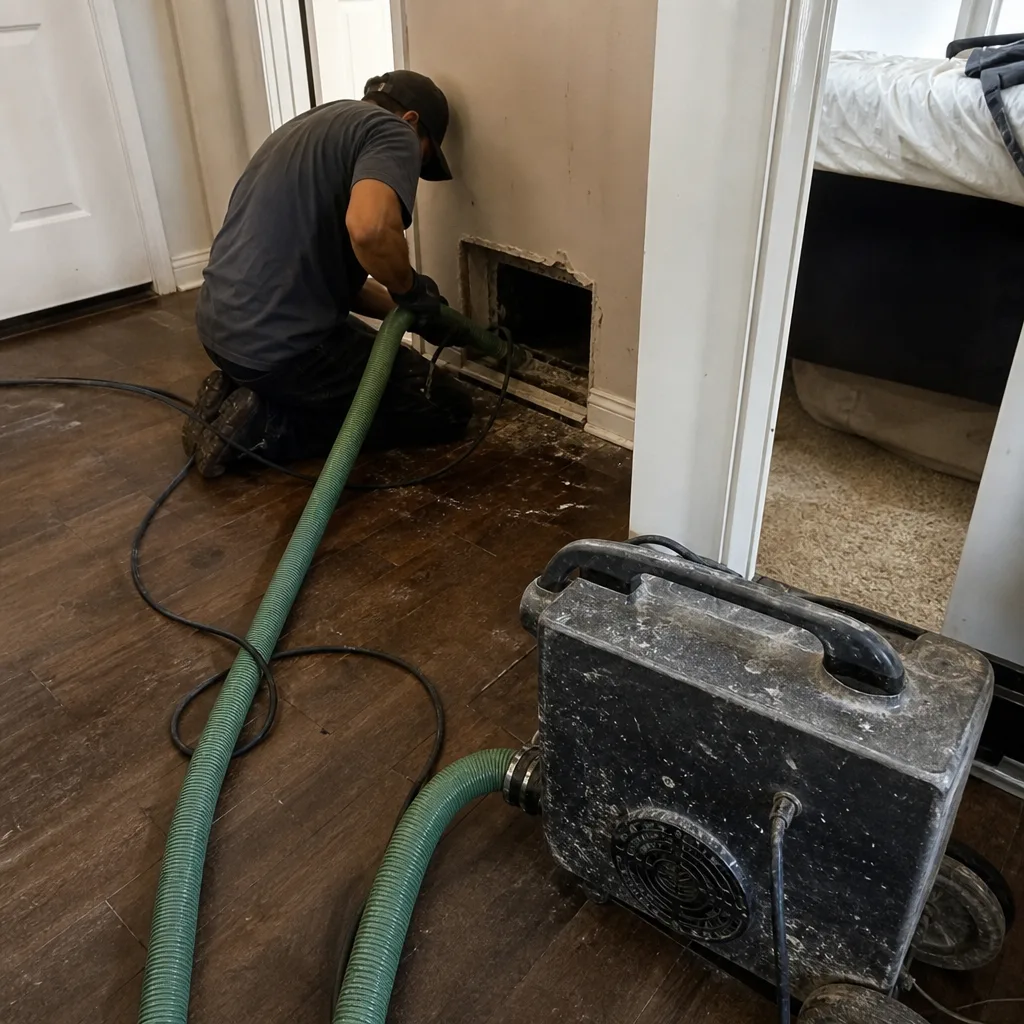 Before
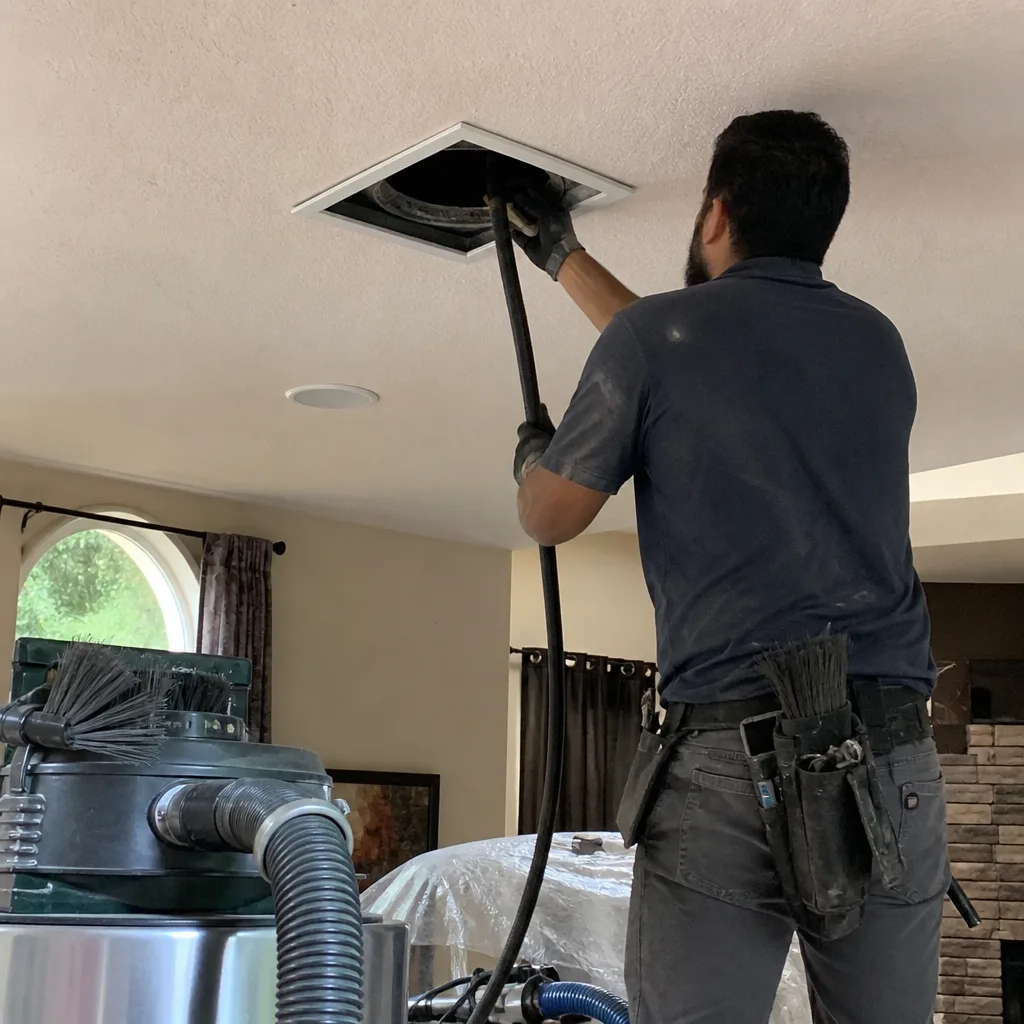 After
After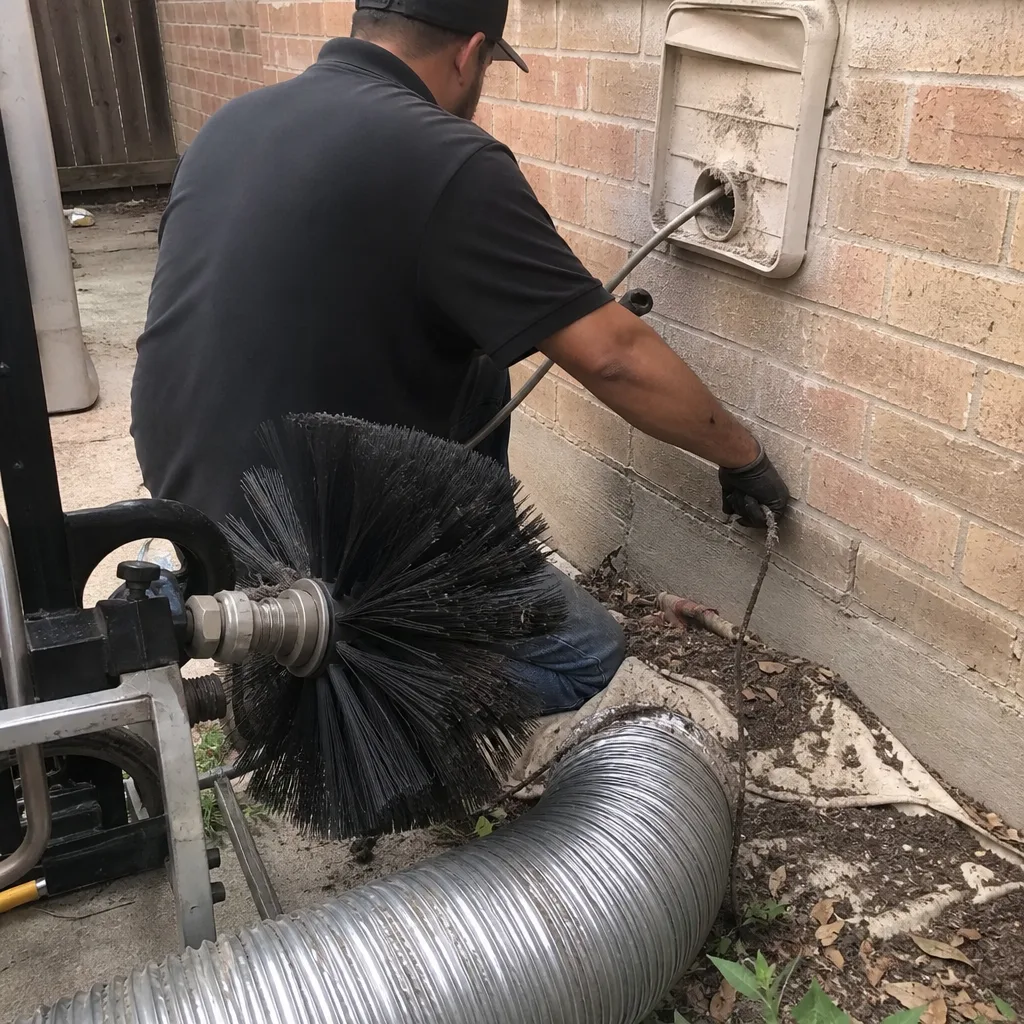 Before
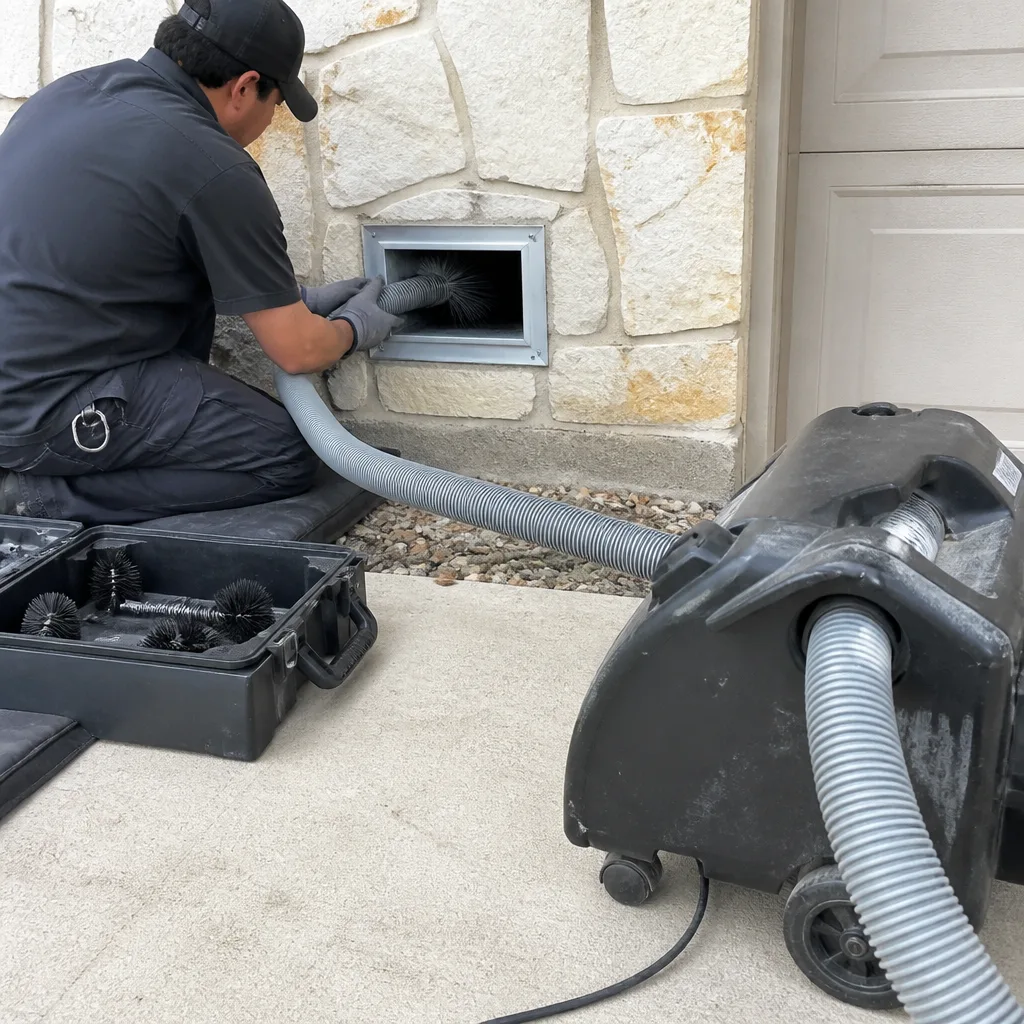 After
AfterAir Duct Cleaning Warning Signs: A Round Rock Homeowner’s Reference Guide
Here’s the problem with most “warning signs” articles: they list symptoms that could point to five different systems in your home. Dusty registers? Could be a clogged filter, a leaking return boot, or yes, dirty ducts. But treating the wrong cause wastes money and leaves the real issue untouched. In Round Rock, where summer humidity pushes 80% and construction from the 2015-2023 boom left drywall debris in duct systems across neighborhoods like Teravista, Forest Creek, and Behrens Ranch, misdiagnosis is expensive. This guide names only the signs that specifically and verifiably point to the ductwork interior, explains the mechanism behind each one, and tells you exactly what a camera inspection should show to confirm it. For a deeper dive, see The Complete Guide to Air Duct Cleaning in Round Rock. No symptom here is self-diagnosable without evidence.
Quick Answer
The warning signs that specifically indicate dirty ductwork are: visible debris accumulation inside the plenum or trunk lines (confirmed by camera), persistent musty odors that intensify when the blower cycles on, uneven room temperatures caused by measurable airflow restriction, and post-renovation contamination with distinctive drywall dust particle profiles. Dusty registers alone are not a reliable indicator. Each sign requires photographic or airflow-test verification before scheduling cleaning.
Table of Contents
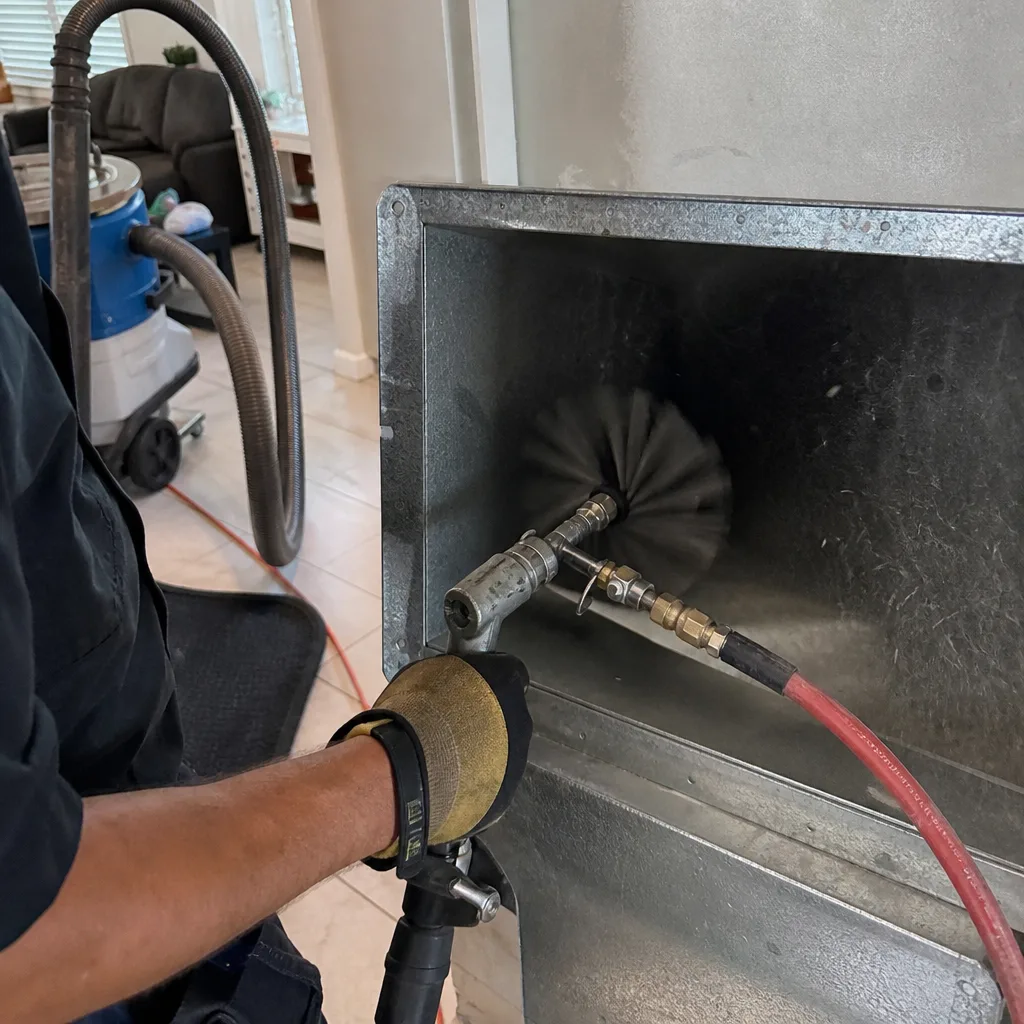
- Visual Debris: What a Phone Camera Should Show Inside the Ductwork
- Odor Mapping: The Register Test That Identifies Duct-Interior Smells
- Uneven Room Temperatures: When This Points to Duct Restriction
- Post-Renovation Contamination: Drywall Dust Has a Distinctive Signature
- The One Sign That Warrants Same-Week Action
- The Register Dust Myth: Why Surface Dust Misleads Homeowners
- How Round Rock’s Climate and Construction Boom Affect Duct Contamination
BeforeAfterVisual Debris: What a Phone Camera Should Show Inside the Ductwork
The only definitive warning sign of dirty ductwork is debris you can photograph inside the duct itself. Not on the register. Not on the filter. Inside the plenum, trunk line, or branch duct run.
Here’s how to check without special equipment. Remove a supply register and extend your phone into the boot, camera facing down the duct run. Use the flashlight. What you’re looking for determines whether cleaning is warranted:
- Normal: Light dust coating, metallic duct surface visible, no accumulation at joints or elbows.
- Cleanable accumulation: Visible debris layer 1/8 inch or thicker, particularly at the first elbow or joint where airflow changes direction; fibrous material, hair, or construction residue clinging to duct walls.
- Active contamination: Mold growth (fuzzy, not just discolored), standing moisture, or pest debris requiring remediation before any cleaning.
The distinction matters. In our work across Round Rock since 2013, we’ve documented thousands of duct runs with Air Duct Cleaning in Round Rock, and the pattern is consistent: debris accumulates at points of turbulence, not evenly. A duct run with 3/4 inch of packed hair at the first elbow and clean walls downstream still needs cleaning, even if most of the run looks acceptable.
What the photo record should show: CleanRun’s standard deliverable includes before-and-after images of every duct run, with the camera position noted. If a company cannot show you comparable images from your specific system, you cannot verify what was or wasn’t cleaned. This is Haven Standard Clause 1 in practice: written scope, written price, documented result.
Trade note: The plenum (the large distribution box attached to your air handler) is the most telling inspection point. It’s accessible by removing a panel, and contamination there indicates the entire downstream system has been exposed. A clean plenum with dirty branch lines suggests a localized return leak; a contaminated plenum means the whole network needs attention.
Odor Mapping: The Register Test That Identifies Duct-Interior Smells
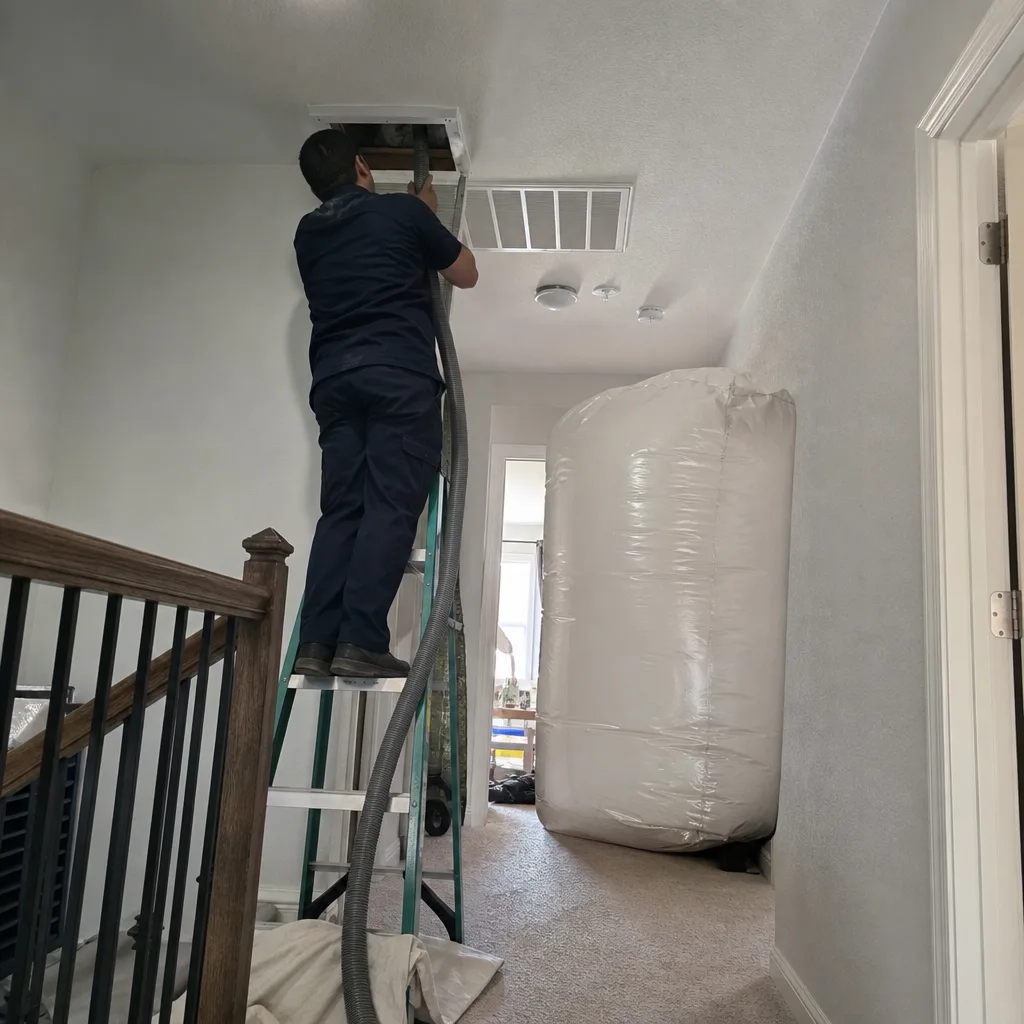
Not every smell that travels through your ducts originates in your ducts. The air handler, condensate drain pan, attic insulation, and even a dead rodent in a wall cavity can all produce odors that seem to come from “the vents.” Distinguishing duct-interior odors from system-exterior odors determines whether duct cleaning will solve the problem or waste your money.
Here’s the register test any homeowner can run:
- Close all supply registers except one in the affected room.
- Run the system fan for 10 minutes with cooling or heating off.
- Smell directly at the open register, then at the return grille, then at the air handler cabinet.
- Note which location produces the strongest odor and whether the smell changes in character (musty versus chemical versus rotten).
- Repeat with a register in a different zone, comparing intensity.
What the pattern tells you:
- Strongest at one register, weak at others: Likely localized contamination in that branch duct run or boot. A camera inspection should show debris or moisture at the first accessible point.
- Strongest at the return grille and uniform at all supplies: Source is likely the return pathway, filter compartment, or air handler interior, not the supply ductwork. HVAC cleaning, not duct cleaning, is the appropriate service.
- Musty smell that intensifies when cooling starts, fades when fan-only runs: Condensate drain pan or evaporator coil issue. The moisture source must be addressed before any cleaning, or the odor returns within weeks.
- Chemical or solvent smell, uniform distribution: Off-gassing from new materials (carpet, paint, cabinetry) drawn into return ducts. Duct cleaning will not remove this; source control and increased ventilation will.
In Round Rock’s clay-heavy soils, we’ve found that musty odors in homes near Brushy Creek or the San Gabriel River watershed often trace to elevated ground moisture affecting crawl space ductwork. The smell enters through seams and joints, but the remediation is sealing and moisture control, not cleaning alone. A company that sells cleaning without diagnosing the moisture pathway is selling you a temporary fix.
CleanRun’s approach: We run the register test during every estimate, document the results in writing, and photograph any accessible odor source. If the smell originates outside the ductwork, we say so and recommend the appropriate service, even if that’s not what we sell. The 365-Day Done Right Promise only works when the right work is scoped from the start.
Uneven Room Temperatures: When This Points to Duct Restriction
A bedroom that runs 6 degrees warmer than the hallway in July is a common complaint in Round Rock, where attic ductwork endures 140°F summer temperatures and flexible duct runs sag over time. But uneven temperatures have multiple causes, and only one pattern specifically indicates duct restriction worth cleaning.
First, eliminate the non-duct causes:
- Refrigerant issue: Poor cooling across the entire home, not just one zone. The air coming from the register feels lukewarm, not weak.
- Oversized equipment: Short cycling, rapid temperature swings, humidity that won’t drop below 60% despite cooling. Common in newer Round Rock construction where builders specified capacity for peak load without accounting for variable-speed options.
- Insulation failure: Supply air warms dramatically between the air handler and the register. Feel the ductwork in the attic; hot spots on the exterior indicate insulation breakdown, not interior restriction.
The duct-restriction pattern is specific: strong airflow at the register (ruling out a disconnected duct), but the air temperature at the register is within 2 degrees of other registers, yet the room never reaches setpoint. This indicates the volume of conditioned air reaching the room is insufficient, not that the air is improperly conditioned.
Measure it: Hold a thermometer at the register for 3 minutes with the system running. Compare to a register in a comfortable room. If temperatures match within 2 degrees but the problem room’s airflow feels weaker, you have a restriction or leak in that duct run.
Common restriction sources we’ve documented in Round Rock:
- Flexible duct collapse: The inner liner tears at a bend, and the insulation layer compresses inward, reducing diameter by 30-50%. Camera inspection shows a pinched passage, not debris.
- Debris dam at a transition: Construction debris, particularly from the 2015-2023 building boom, accumulates where a round flex duct connects to a rectangular trunk. The camera shows a partial blockage with fibrous or granular material.
- Filter bypass debris: When a filter is improperly seated or the wrong size, unfiltered air draws debris directly into the return duct, which then distributes to supply runs. The return duct near the air handler shows the heaviest accumulation.
Cleaning resolves only the debris-dam and filter-bypass scenarios. Collapsed duct requires repair or replacement. A company that cleans without inspecting for mechanical damage sells you half a solution. CleanRun’s written scope distinguishes between cleanable restriction and repair needs before any work begins.
Post-Renovation Contamination: Drywall Dust Has a Distinctive Signature
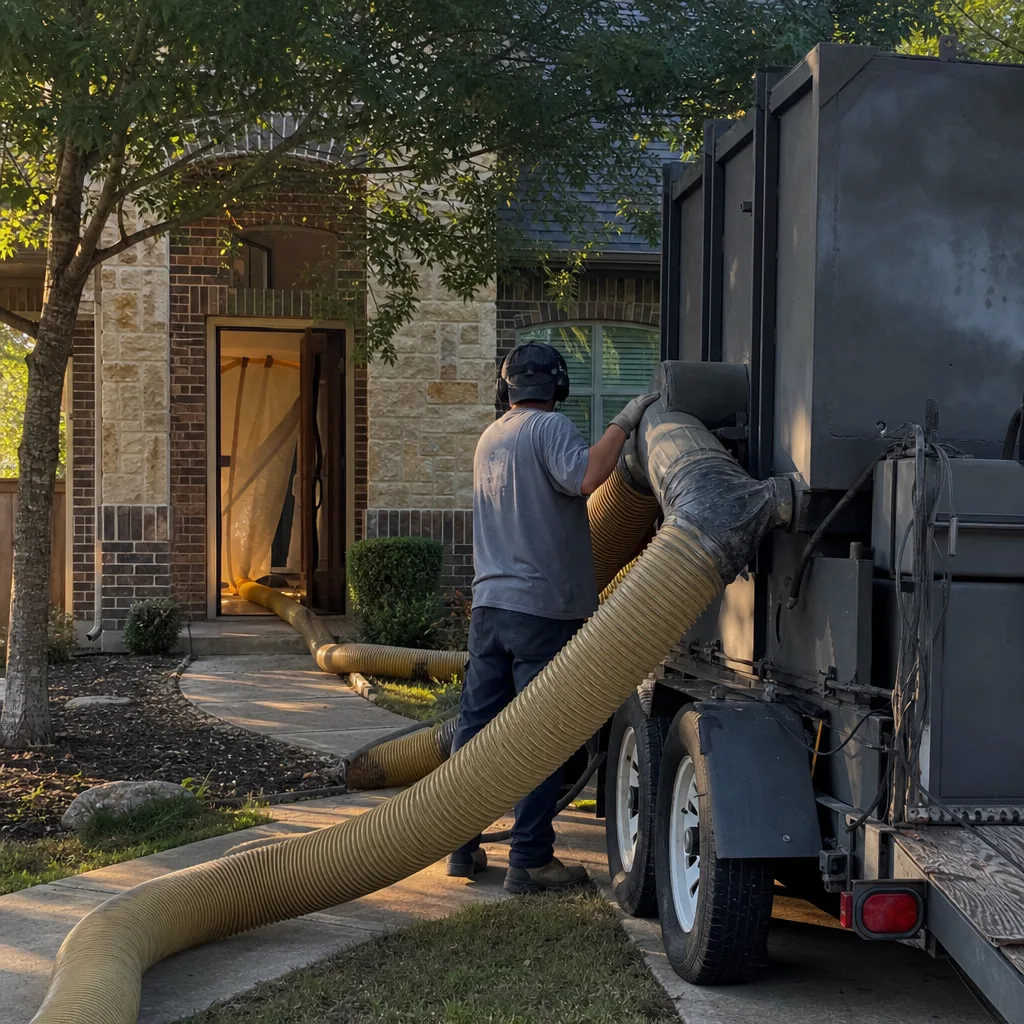
Round Rock’s growth surge added tens of thousands of homes between 2015 and 2023, and renovation activity in established neighborhoods like Old Town, Meadow Lake, and Round Rock West continues at pace. Post-renovation duct contamination is common, but not all construction debris looks the same in a camera inspection, and not all of it responds to standard cleaning.
Drywall dust has a distinctive particle profile: extremely fine, uniform in size, light gray to white, and electrostatically charged so it adheres to metal duct surfaces in a thin, even film. Unlike household dust, which accumulates in clumps at turbulence points, drywall dust coats entire surfaces. In before photos, it looks like a flat gray paint overspray, not a fuzzy buildup.
Why this matters: Standard negative-pressure extraction with contact brushing removes clumped debris effectively. Drywall dust film often requires a different approach. The fine particles can pass through standard filters and redeposit downstream. Professional-grade equipment matters here. Rotobrush systems with HEPA filtration and sufficient CFM (cubic feet per minute) to maintain negative pressure throughout the duct network are the baseline for post-renovation work. Equipment like Abatement Technologies’ portable HEPA units and Guardsman-branded containment tools are specified for this particle size for a reason.
The warning sign to look for: If your renovation included drywall work and you notice a persistent fine dust resetting on surfaces within 48 hours of cleaning, or if your camera inspection shows that even gray film, the ductwork needs attention. The dust entered through return grilles during construction, or through gaps in the system if the contractor ran the HVAC during drywall work (a practice that should never occur, but often does).
Timeline: Post-renovation cleaning should occur after all trades are complete and before occupancy, if possible. Cleaning occupied homes with active renovation nearby is temporary; the source remains active. CleanRun’s HVAC Cleaning in Round Rock includes post-renovation assessment as a distinct service category with adjusted scope and equipment specification.
The One Sign That Warrants Same-Week Action
Most duct contamination develops gradually and can be scheduled at normal availability. One sign does not fit this timeline: visible mold growth inside the ductwork, confirmed by camera inspection, with active moisture present.
The distinction is documented and specific. Mold on a register surface is surface mold; wipe it and monitor. Mold growing on the interior of a metal duct, particularly downstream of the evaporator coil where condensate can migrate, indicates a moisture problem that will accelerate. In Round Rock’s humid climate, from May through October, we’ve seen 2-inch patches expand to coat entire branch runs within 10-14 days when the moisture source remains active.
Same-week action is warranted because:
- Active mold releases spores continuously when the blower operates.
- Spore concentration increases non-linearly with colony size; delay compounds exposure.
- The moisture source (drain pan overflow, coil icing, duct sweating from missing insulation) typically worsens without intervention.
What same-week action looks like: Not necessarily same-week cleaning. First, the moisture source must be identified and stopped. Then, remediation of affected materials may be required before cleaning. Then, cleaning with appropriate containment and HEPA filtration. A company that promises to “just clean it out” without addressing moisture sells you a recurring problem.
CleanRun’s documented photo record is particularly valuable here: dated images of mold extent, moisture source location, and post-remediation verification. The 365-Day Done Right Promise applies to the full sequence, not just the cleaning step.
All other signs on this list, including significant debris accumulation and persistent odors, can be scheduled at normal availability. The debris was months or years in forming; an additional week does not change the scope or outcome.
The Register Dust Myth: Why Surface Dust Misleads Homeowners

Dusty registers are the most commonly cited “warning sign” for duct cleaning, and they’re the most commonly misread. A register is a grille with louvers; dust settles on louvers for reasons that rarely involve the duct interior.
Here’s how to tell what your register dust actually indicates:
- Remove the register and inspect the boot (the short duct section behind it). If the boot is clean and the register alone is dusty, the cause is surface air patterns in the room, not duct contamination. Ceiling registers collect dust from rising warm air; floor registers collect it from foot traffic and settling.
- Check the filter. A filter loaded beyond its rated pressure drop allows bypass airflow that deposits unfiltered particles at the nearest register, typically the largest or closest to the air handler. The ductwork is clean; the filter is the problem.
- Inspect the register boot seal. In Round Rock homes built during the rapid construction years, we’ve found frequent gaps between the boot and the ceiling or floor surface. Return air gets drawn through these gaps, pulling attic dust or wall cavity debris directly to the register face. The duct interior is clean; the envelope is leaky.
- Look for directional patterns. Dust streaking in a consistent direction indicates airflow pattern, not source. Dust evenly coating all surfaces indicates prolonged low-velocity accumulation, typical of a room with closed vents.
- Pre-drywall debris: Ductwork installed early in construction serves as a collection point for sawdust, insulation scraps, and fastener debris. Standard construction cleanup does not include interior duct inspection. We’ve extracted handfuls of material from new-home ducts in Teravista and Paloma Lake that builders never checked.
- Sealing quality: Rapid construction schedules often mean duct sealing with mastic or tape that fails within 2-3 years. Leaky return ducts in vented attics draw hot, dusty attic air continuously. The warning sign is abnormally rapid filter loading and dust accumulation at ceiling registers.
- Flexible duct handling: Flex duct kinked during installation, then hidden above insulation, reduces airflow and creates turbulence points where debris accumulates. This shows as uneven temperatures and visible restriction at the kink point on camera.
The camera test resolves this definitively. If the duct run beyond the boot shows clean metal, register dust is not a duct cleaning indicator. If the camera shows debris accumulation starting at the boot connection and continuing downstream, then the register dust and the duct contamination share a cause, and cleaning is appropriate.
CleanRun’s estimates include this inspection at no charge. We photograph the boot, the first accessible section of duct, and the register itself. If the duct is clean, we say so, and we tell you what we found instead. Haven Standard Clause 1: written price before work starts, which requires accurate scope, which requires honest diagnosis.
How Round Rock’s Climate and Construction Boom Affect Duct Contamination
Round Rock’s specific conditions create contamination patterns that generic guides miss. Understanding these local factors helps interpret warning signs accurately.
Climate effects:
Central Texas humidity, particularly from May through October, keeps airborne particles adhesive. Dust that would settle and remain inert in drier climates sticks to duct walls in Round Rock’s summer conditions. This accelerates accumulation but also means debris tends to adhere in place rather than circulating continuously. The warning sign is stable, visible buildup rather than fluctuating airborne dust.
Spring pollen loads, especially cedar in January-February and oak in March-April, overwhelm standard filtration. Homes with 1-inch pleated filters see bypass loading that deposits pollen-derived debris in return ductwork. The camera shows seasonal layering: a base of household dust with distinct pollen strata that can be dated by color and texture.
Construction effects:
The 2015-2023 building surge in Round Rock produced specific duct contamination patterns:
Soil and geology:
Round Rock’s namesake limestone geology produces alkaline dust that differs chemically from clay-region soils. This dust is more abrasive to duct surfaces and more resistant to standard cleaning agitation. Professional equipment with adequate contact brushing, such as Rotobrush systems with appropriate brush stiffness, is necessary for effective removal. Light vacuum-only service, the typical “$79 special,” leaves this material largely in place.
Local code note: Round Rock follows the 2021 International Mechanical Code with local amendments, including requirements for duct sealing in new construction and additions. Older homes, particularly pre-2000 construction in the original Round Rock core, often have unsealed ductwork that would not meet current standards. This is not inherently a problem requiring cleaning, but it explains why some homes show contamination patterns that sealed systems do not.
Common Mistakes to Avoid
- Cleaning based on register dust alone. As detailed above, register dust typically indicates filter, boot seal, or room air pattern issues. Cleaning the ductwork without addressing the actual source wastes money and leaves the symptom unchanged.
- Accepting a per-vent price. Per-vent pricing incentivizes the company to define “a vent” narrowly and add charges on arrival. CleanRun’s whole-system pricing, agreed in writing before work starts, eliminates this ambiguity. Haven Standard Clause 1 applies to every job.
- Scheduling cleaning without a camera inspection. Any company that cannot show you the interior condition of your ducts cannot scope the work accurately. The photo record is not a bonus; it’s a diagnostic necessity.
- Ignoring the moisture source with mold. Cleaning mold without stopping the moisture that feeds it guarantees recurrence. In Round Rock’s humid climate, this is particularly costly.
- Assuming new construction means clean ducts. We’ve documented significant debris in homes less than two years old, particularly where construction-phase protection was inadequate. Age of home does not predict duct condition.
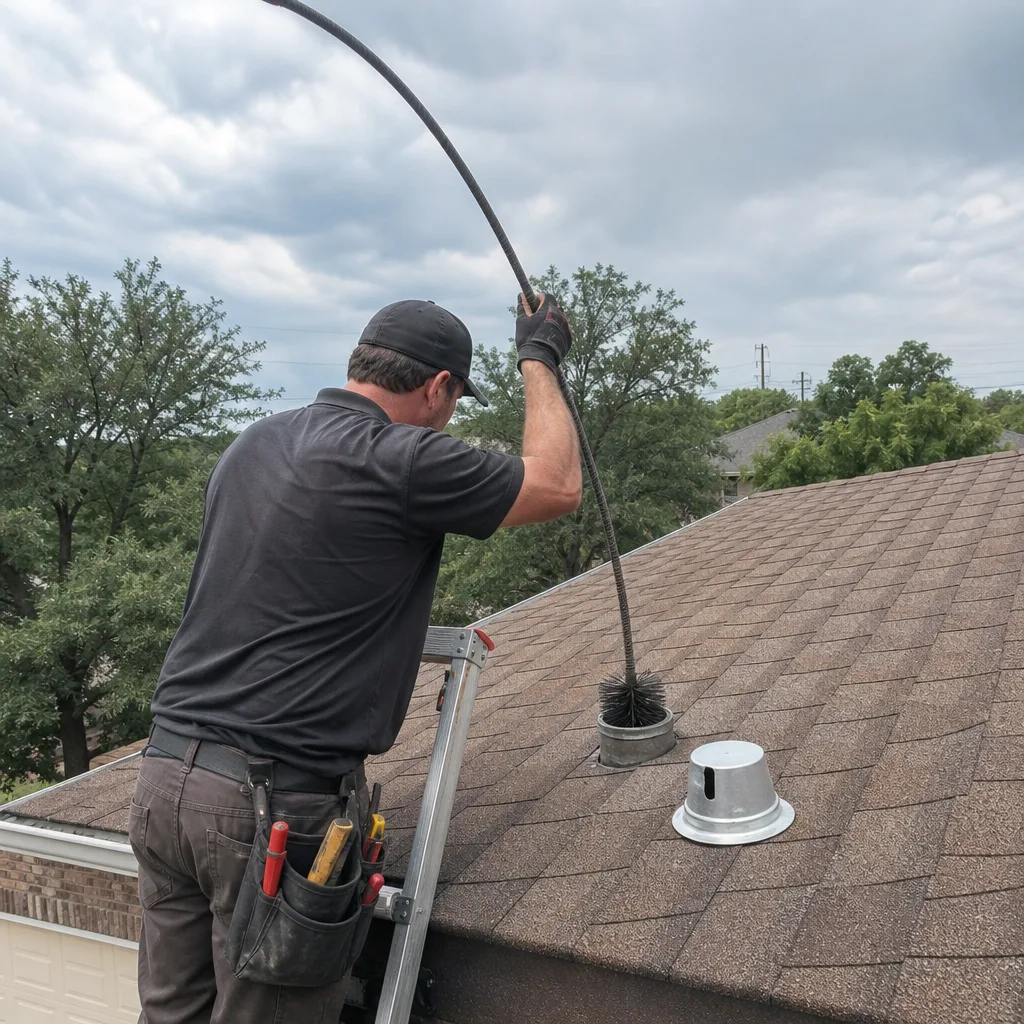
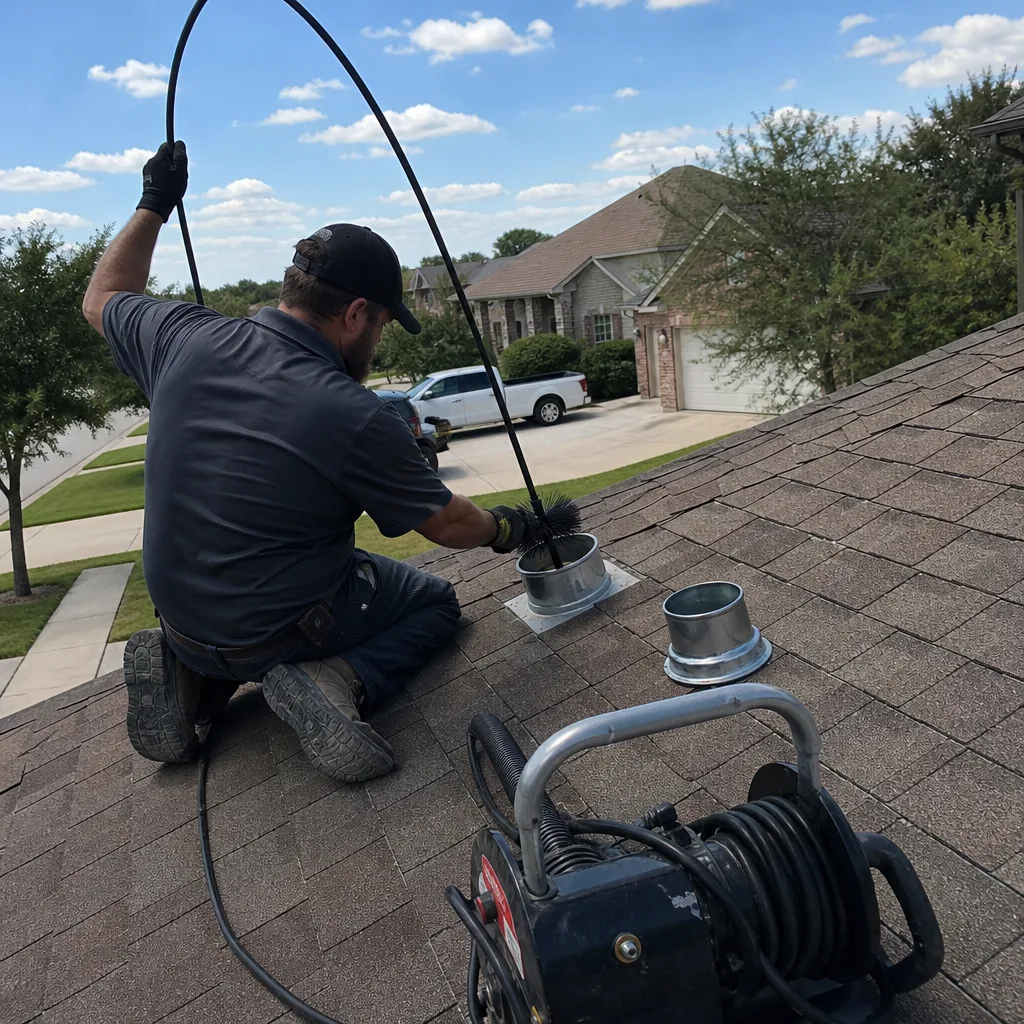
- Confusing duct cleaning with dryer vent cleaning. These are distinct services with distinct equipment needs. Dryer Vent Cleaning in Round Rock addresses lint accumulation in a single exhaust line; duct cleaning addresses the entire HVAC distribution network. A company that conflates them may lack proper equipment for either.
When to Call a Professional
Call a professional when you’ve confirmed one of the specific warning signs above through direct observation, and you need documentation of scope before agreeing to any work. The right professional will inspect first, photograph findings, explain mechanisms in plain language, and provide a written price before any cleaning begins.
CleanRun Air Duct Cleaning services offers free estimates in Round Rock. Every estimate includes camera inspection of accessible ductwork, the register odor test if smells are a concern, and a written scope with whole-system pricing. Call (737) 259-5752 to schedule. All calls are answered by a live person, and technicians are background-checked, uniformed, and identified by name before arrival under Haven Standard Clause 3: Verified Crews.
Frequently Asked Questions
Whole-system air duct cleaning in Round Rock typically ranges from $400 to $800 for a standard single-system home, depending on duct configuration, accessibility, and contamination level. This covers all supply and return duct runs, the plenum, and registers, with before-and-after photography of every run included. CleanRun provides a written, flat price before any work starts; no per-vent add-ons, no arrival surprises. Call (737) 259-5752 for an exact quote on your system.
Low quotes typically reflect limited scope (only visible registers, not full duct runs), inadequate equipment (shop vacuums instead of negative-pressure HEPA systems), or bait-and-switch pricing where the initial figure rises dramatically on arrival. The $79-$99 coupon special is a well-documented industry pattern: the technician arrives, identifies “additional vents” or “heavy contamination,” and the final invoice reaches $600-$1,200. CleanRun’s written price under Haven Standard Clause 1 is the full price. The equipment roster, including Rotobrush and Abatement Technologies systems, is specified in writing so customers can verify capability independently.
You know because you receive a documented photo record of every duct run, before and after, as a standard deliverable. CleanRun has provided this on every job since 2013. The images show camera position, date stamp, and the interior condition of each run. If a company cannot or will not provide comparable documentation, you cannot verify what occurred inside your ductwork. This is why the photo record is central to the 365-Day Done Right Promise.
For most Round Rock homes, every 5-7 years with standard occupancy and proper filtration. Homes with pets, recent renovation, or occupants with respiratory sensitivity may benefit from 3-5 year intervals. The correct interval is determined by camera inspection, not calendar. A system that shows clean ductwork at year 6 needs no service; one with significant accumulation at year 3 does. CleanRun’s estimates include condition assessment that informs this timing.
Homeowners can and should replace filters regularly and keep registers clean. Interior duct cleaning requires negative-pressure containment equipment, contact agitation tools, and HEPA filtration that captures particles down to 0.3 microns. Without this equipment, DIY attempts dislodge debris without removing it, temporarily worsening airborne concentration. The physical risks are modest for most ductwork, but the effectiveness risk is significant. For a comparison of approaches, see DIY vs Professional Air Duct Cleaning: The Round Rock Homeowner’s Decision Guide. Professional service with documented results is the verifiable approach.
For more guides & resources on maintaining your HVAC system, explore our blog. Hard water affects the humidification components and condensate systems connected to ductwork, not the ducts themselves. Mineral scale in drain pans and on evaporator coils can produce odors and airflow restriction that seem duct-related. The register odor test described above distinguishes these. If your home has a whole-house humidifier, annual maintenance including scale removal is essential; duct cleaning does not address this component.
The Bottom Line
Warning signs worth acting on are those you can verify: camera-visible debris inside the ductwork, odors that map to specific interior locations, temperature unevenness with confirmed airflow restriction, and post-renovation contamination with identifiable particle profiles. Dusty registers, vague “stuffiness,” and calendar-based scheduling without inspection are not reliable indicators. In Round Rock’s climate and construction context, accurate diagnosis prevents wasted spending and ensures the right intervention. Every sign in this guide requires evidence, not assumption, and the right professional provides that evidence in writing and in photographs before proposing any work.
Written by Tomas Reyes, Owner at CleanRun Air Duct Cleaning Round Rock, serving Round Rock since 2013.