
Last updated September 23, 2026
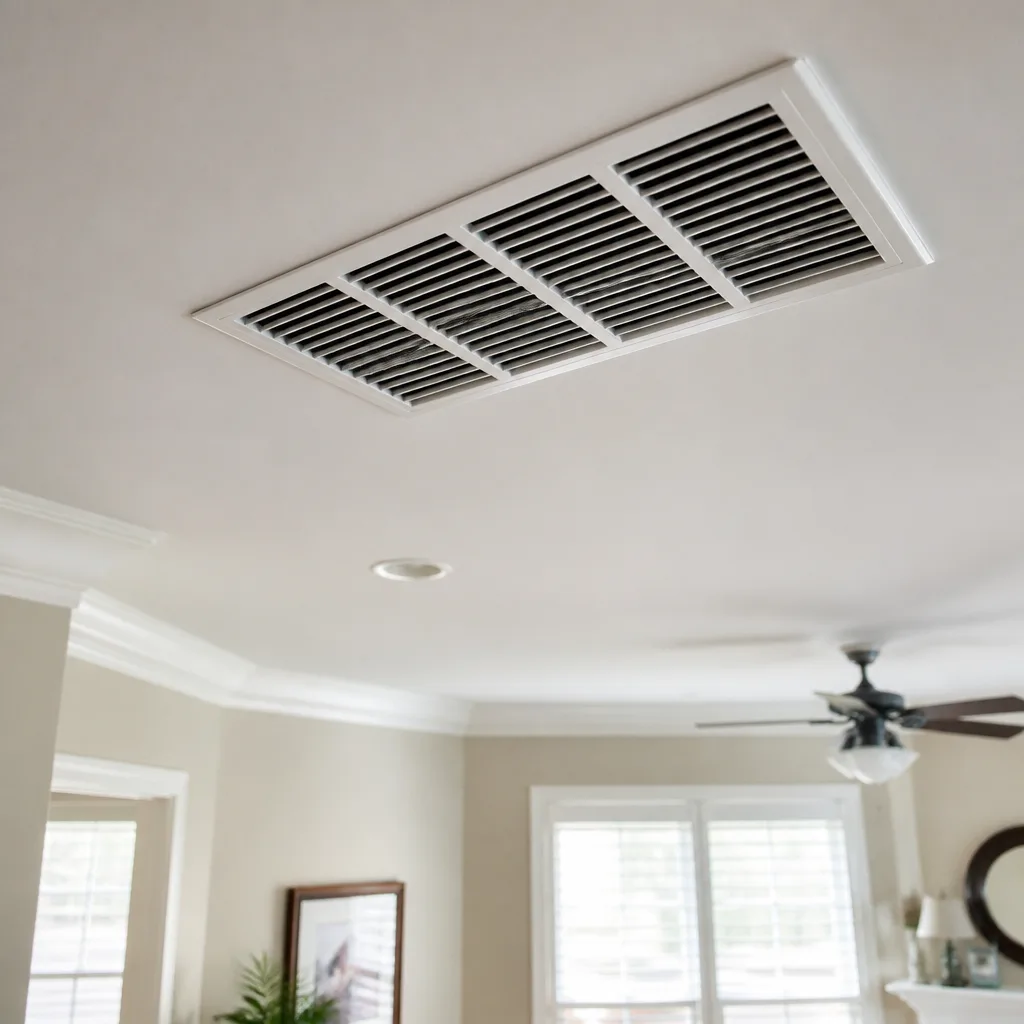
Whole-system duct and dryer vent check with before-and-after photos - you see exactly what came out of your vents
That "$99 whole-house special" is a bait ad - the real number appears once they are in your hallway, or the "clean" is a shop-vac at the register. We photograph the inside of your ducts before and after instead.
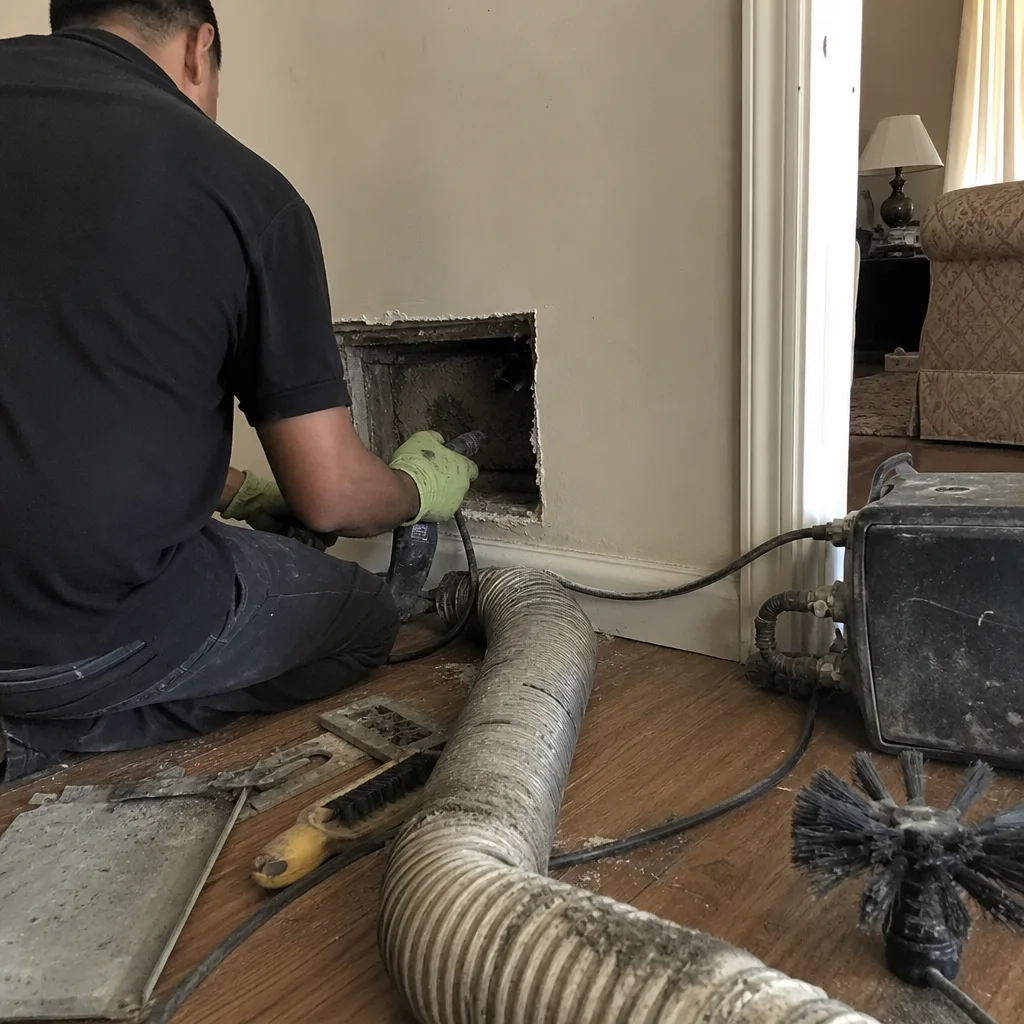 Before
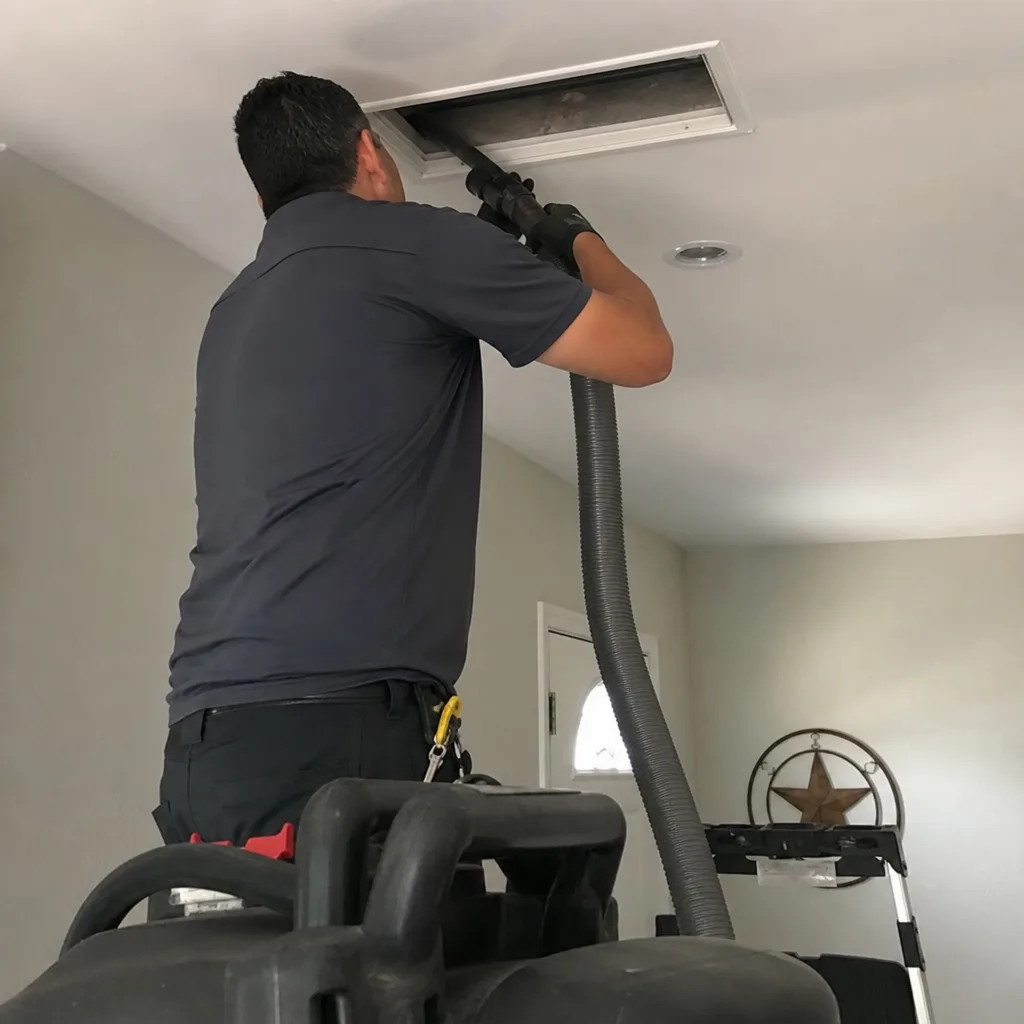 After
After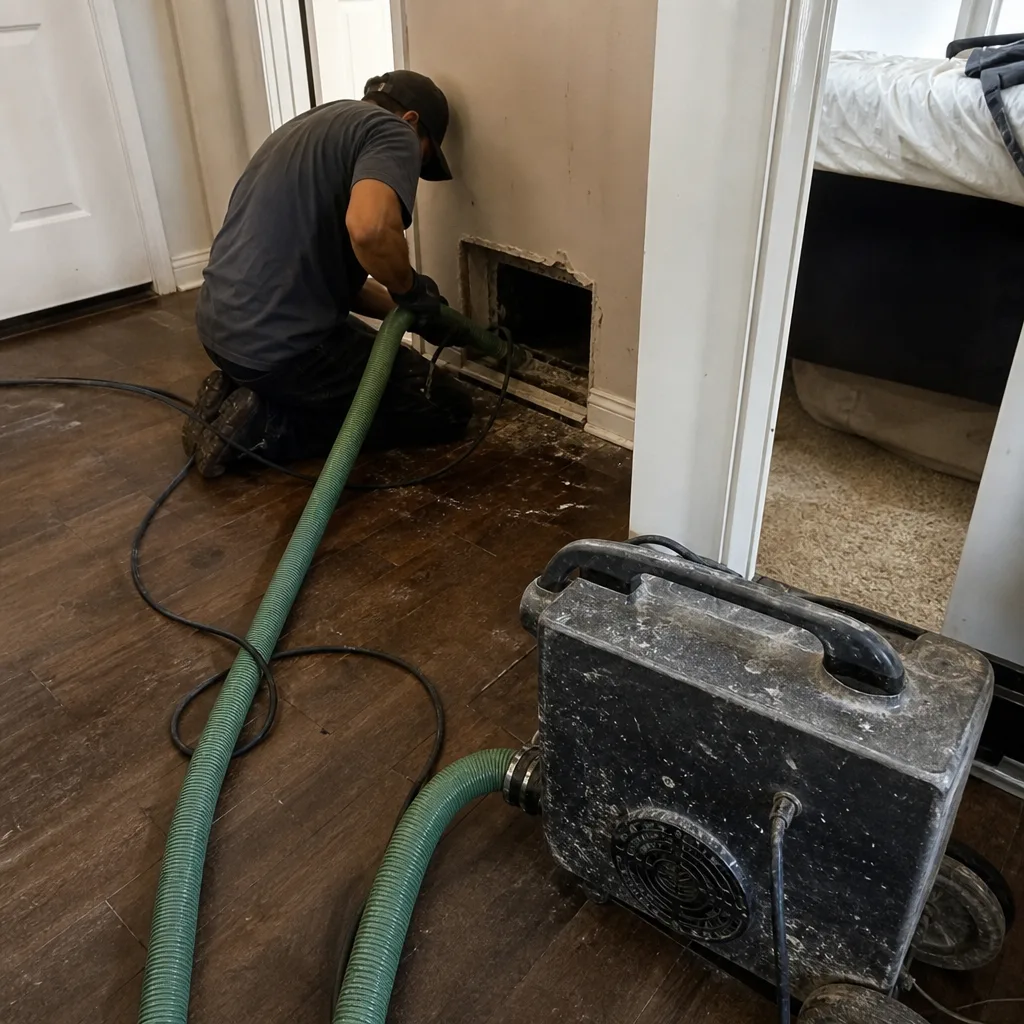 Before
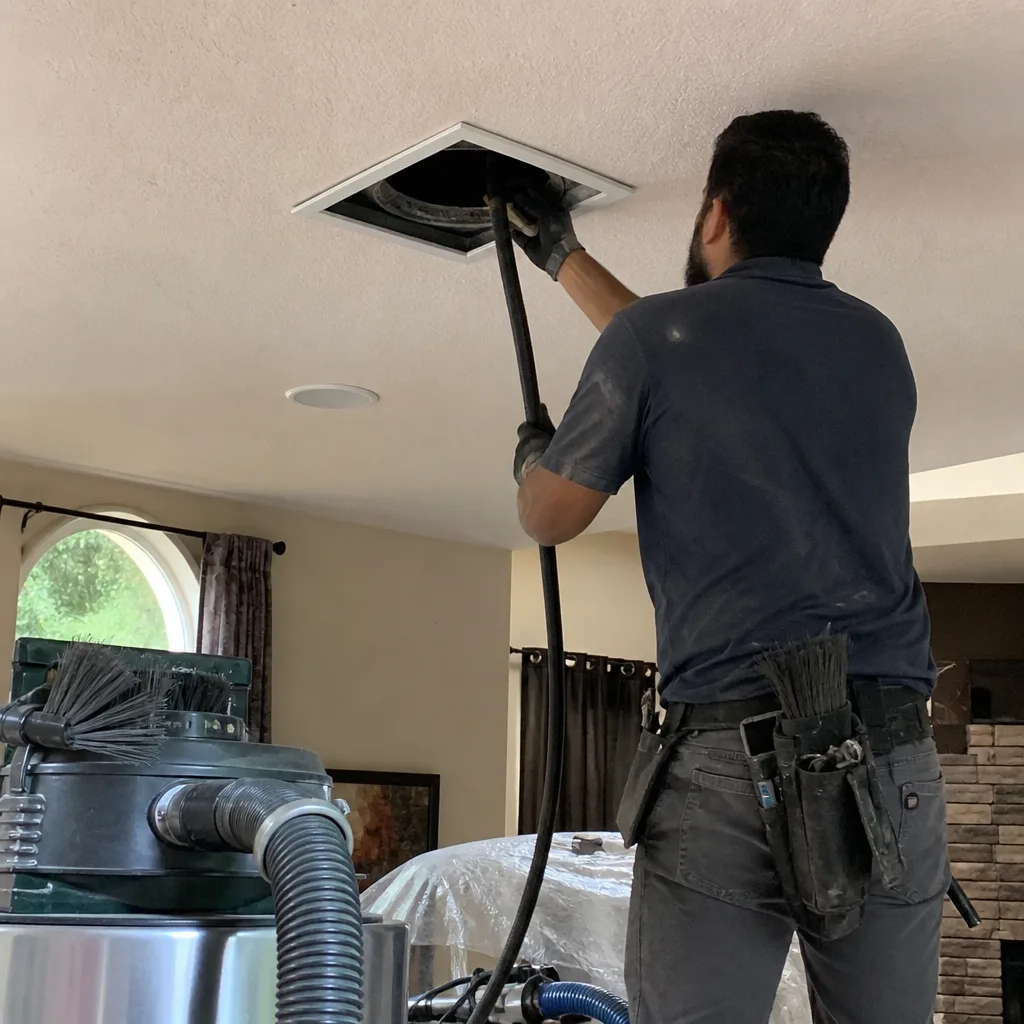 After
After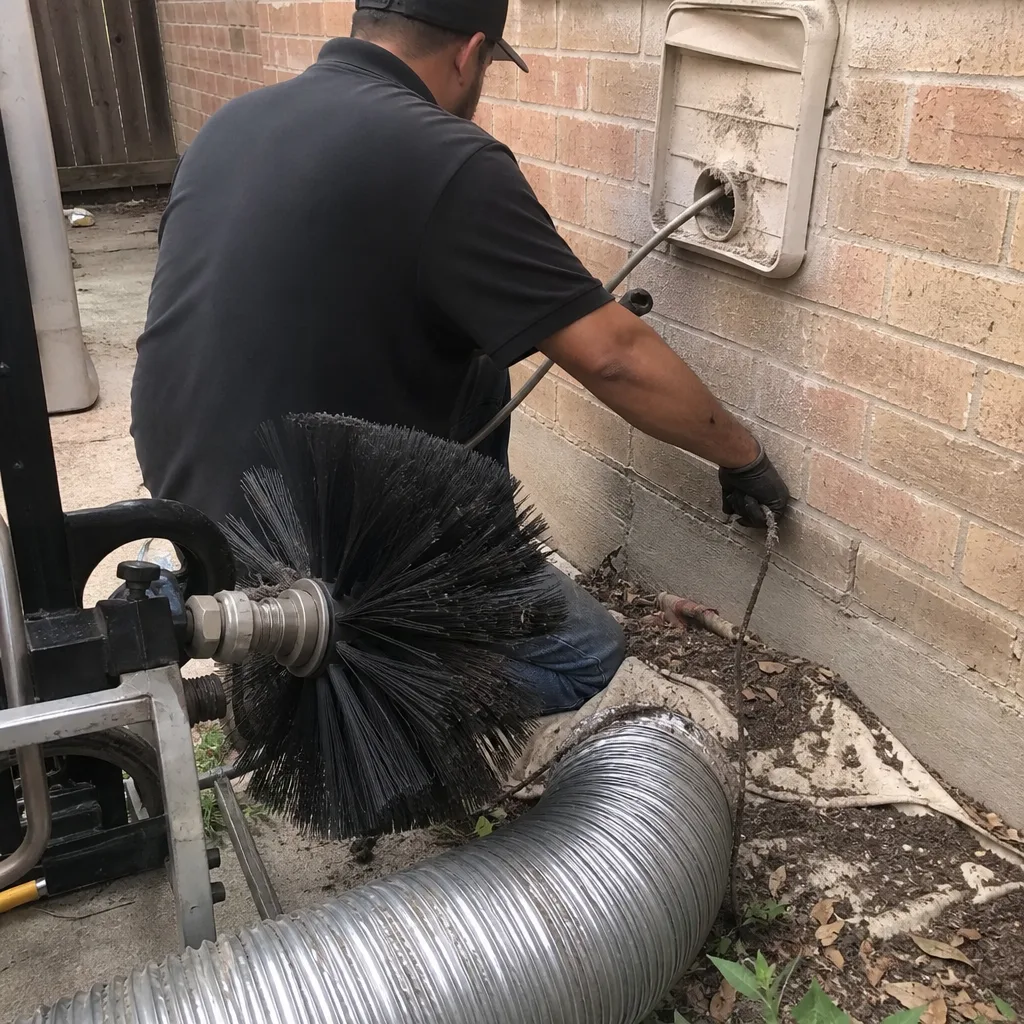 Before
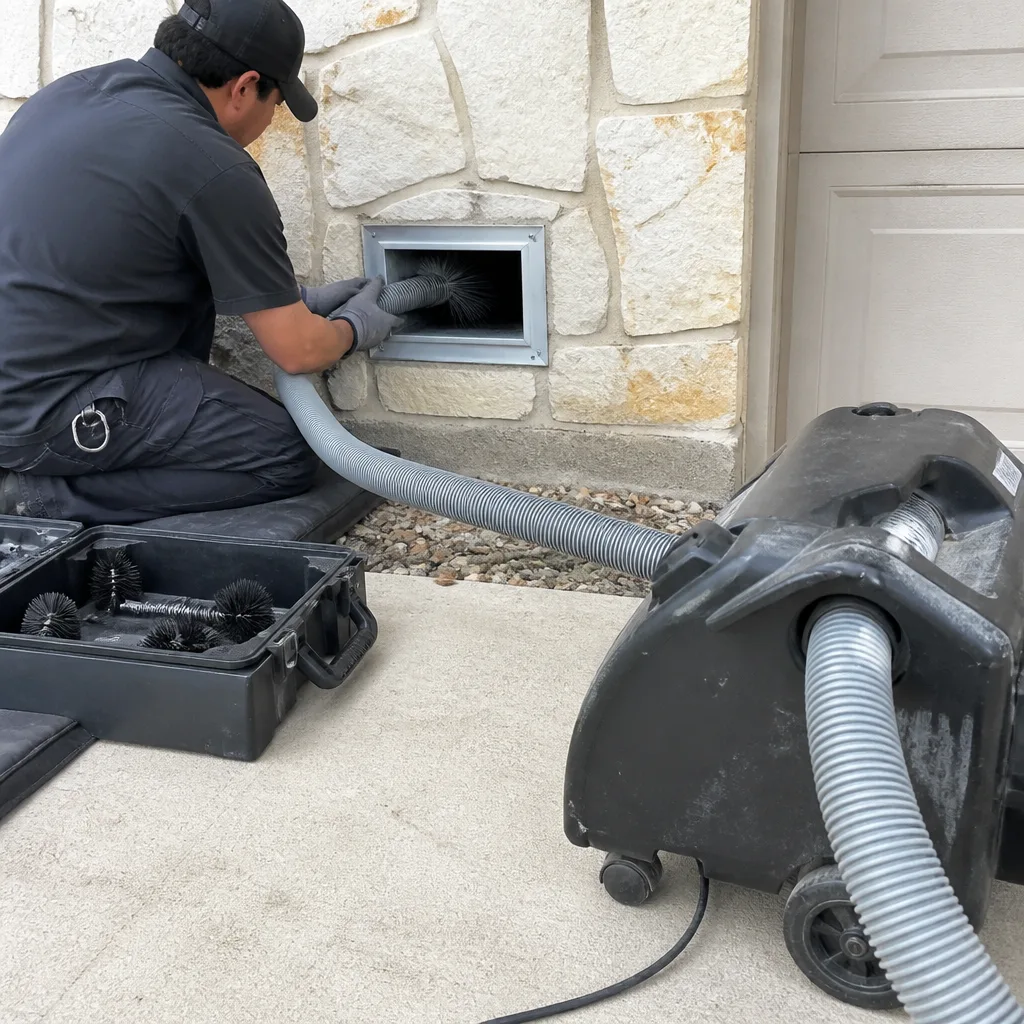 After
AfterHow to Hire a Air Duct Cleaning Contractor in Round Rock: A Step-by-Step Guide
In Round Rock, searching “air duct cleaning near me” returns dozens of results, many of them lead generators that resell your information to the lowest-bidding subcontractor. The company whose name is on the ad is often not the company whose technician shows up. We’ve been cleaning ducts in Round Rock since 2013, and we’ve seen the aftermath: homeowners who thought they hired a local outfit discover a van with out-of-state plates, no written quote, and a bill that tripled once the crew was inside the attic. This guide-along with our Seasonal Air Duct Cleaning Care for Round Rock: Year-Round Homeowner’s Guide-gives you seven specific questions to ask before anyone crosses your threshold, and shows you what an honest answer sounds like versus a deflection. The goal is to make bad contractors disqualify themselves before you hand over a key.
Quick Answer
To hire a legitimate air duct cleaning contractor in Round Rock, verify they are a direct service provider (not a lead-gen reseller), demand a written estimate that lists equipment by brand name and prices by duct run count, confirm photo documentation is included as a standard deliverable, and check that their remedy clause is in writing, not verbal. A competent contractor will answer these questions without hesitation; a questionable one will redirect to “we’ll discuss pricing when we arrive.”
Table of Contents
- How to Verify Whether You’re Talking to a Direct Provider or a Lead-Gen Reseller
- What a Legitimate Written Estimate Contains
- NADCA Membership vs. NADCA Certification: The Difference Matters
- Why Equipment Brand Names Belong in Your Estimate
- The Three Contract Terms That Protect You After the Job
- The Before-Hire Checklist: Pass/Fail Criteria
- Round Rock-Specific Factors That Affect Your Job
BeforeAfterHow to Verify Whether You’re Talking to a Direct Provider or a Lead-Gen Reseller
The lead-generation model in home services is simple and invisible to most homeowners. A company buys ads for “air duct cleaning Round Rock,” captures your phone number or form submission, then sells that lead to three or four subcontractors who bid against each other for the job. The subcontractor who pays the most gets your address. You never chose them. The brand you thought you hired was a marketing shell.
Here is how to expose this on the phone. Ask these three questions in this order:
- “Will your employee be performing the work, or do you subcontract to other companies?” A direct provider answers immediately: “Our employees, in our uniforms, in our trucks.” A reseller will say “we work with a network of certified technicians” or “our partners are fully vetted.” The word “partner” or “network” is your signal to hang up.
- “What is your license number, and under what business name is it registered?” In Texas, the Air Conditioning and Refrigeration Contractors license is administered by TDLR. A direct provider gives you a number tied to their actual business name. A reseller either cannot produce one or gives you a number that traces to a different corporate entity. You can verify any TDLR license online in under two minutes.
- “If I call your office tomorrow with a follow-up question, will the person who answers know which technician was in my home?” Lead-gen operations are call centers. They do not know your technician’s name because they never met them. At CleanRun Air Duct Cleaning Round Rock home, every call is answered by a live person who has access to the job record, including the technician’s name, the photo documentation, and the written scope.
In Round Rock specifically, we’ve encountered crews dispatched from as far as San Antonio and Houston to cover leads sold by national aggregators. The technician may be competent or not; you have no way to know, because you never selected them. The aggregator’s “satisfaction guarantee” typically requires you to complain back to the call center, which then negotiates a partial refund rather than fixing the work.
Haven Standard Clause 3, Verified Crews, exists because of this problem. It requires that the technician’s identity be confirmed to the customer before arrival, with background check documentation available on request. If a company cannot describe its crew verification process in specific terms, you are not talking to a direct provider.
What a Legitimate Written Estimate Contains
The $79 coupon model depends on a deliberate information gap. The coupon gets the truck to your driveway; the upsell happens once the technician is inside and has established rapport. The legitimate alternative is a written estimate delivered before work starts, with enough detail that you could compare it line-by-line against another company’s proposal.
Here is what belongs in that document:
- Duct run count and pricing per run. A “duct run” is the continuous path from your HVAC system’s plenum (the main distribution box) to a single register. Most Round Rock homes built between 2015 and 2025 have 12 to 20 duct runs. The estimate should state how many runs are included in the base price and the cost per additional run. Flat-rate pricing by “system” is acceptable only if the system size is defined by run count, not vague square footage.
- Equipment listed by manufacturer and model. “Commercial-grade vacuum” means nothing. “Nikro HP20G gas-powered HEPA vacuum” or “Rotobrush aiR+ XP with HEPA filtration” means something you can look up. At CleanRun, we list our equipment roster in every estimate: Rotobrush, Nikro, Abatement Technologies, Honeywell, Aprilaire, and Guardsman. Customers can verify specifications independently.
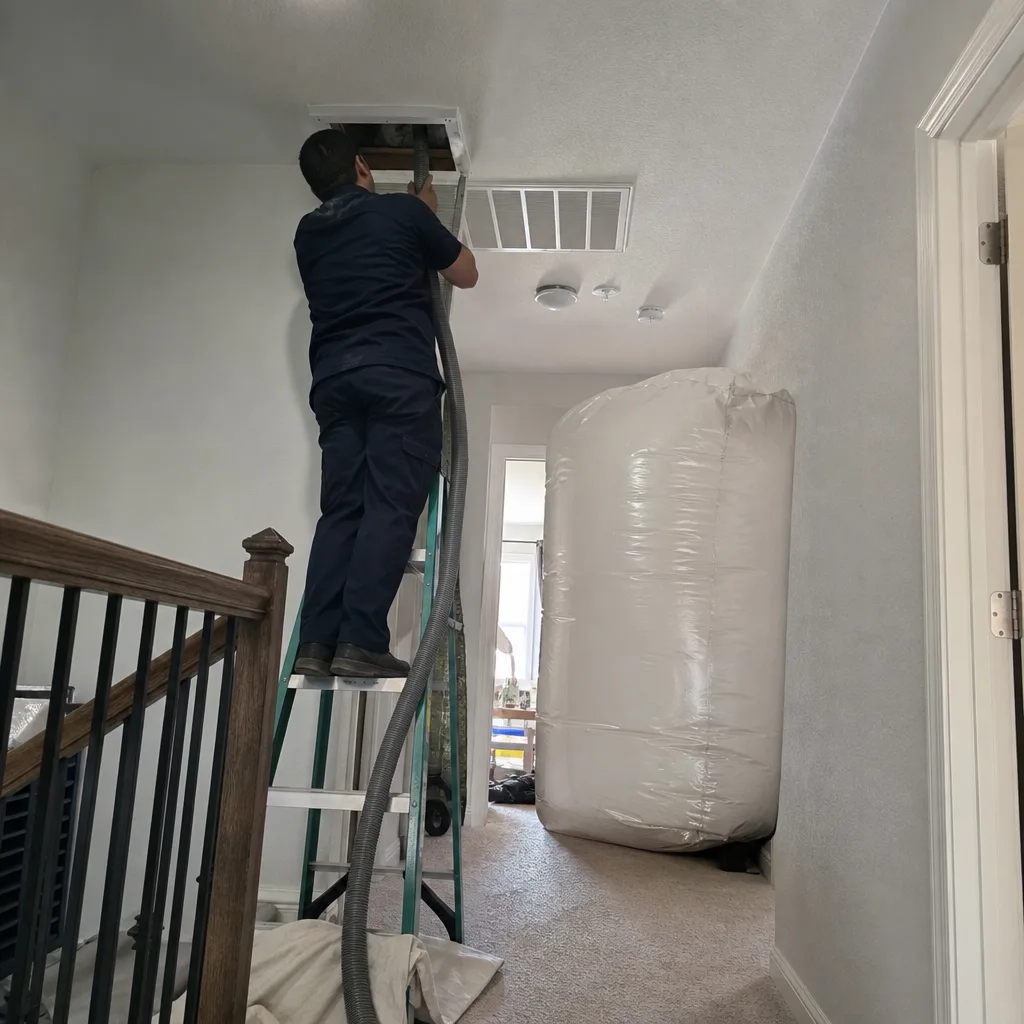
- Scope of access. The estimate should state which access points the crew will create or use, and whether any drywall or ceiling repair is included if new access is required. In Round Rock’s newer construction, we often find that builders sealed register boots with tape that degrades in attic heat; removing this tape for proper cleaning is standard, but cutting new access panels is not.
- Sanitizing defined in chemical terms. If the estimate includes “sanitizing” or “disinfecting,” it should name the EPA-registered product and its registration number. “EPA-registered botanical disinfectant” is acceptable; “organic sanitizer” is not. The difference matters for homes with asthma or chemical sensitivity, which is common in Round Rock’s allergy-prone climate.
- Total price, payment terms, and expiration date. No “plus materials” or “subject to conditions.” The price is the price. Haven Standard Clause 1 requires this on every job.
We have reviewed competitor estimates brought in for our Air Duct Cleaning in Round Rock Free Second Opinion service. The most common omission is the duct run count. A quote for “$299 whole house” without defining “whole house” leaves the contractor free to claim your home has more runs than average once the truck is parked.
NADCA Membership vs. NADCA Certification: The Difference Matters
The National Air Duct Cleaners Association (NADCA) maintains two distinct programs, and most homeowners, and many contractors, conflate them.
NADCA Membership is a business-level affiliation. Any company that pays dues and agrees to the code of ethics can list itself as a NADCA member. Membership does not require any individual at the company to pass a technical exam. It is a marketing credential, not a competence credential.
NADCA Certification is an individual credential. The Air Systems Cleaning Specialist (ASCS) exam tests knowledge of HVAC system design, cleaning methods, containment, and indoor air quality standards. A certified individual has passed a proctored exam and maintains continuing education. The Ventilation Maintenance Technician (VMT) certification is a second, more basic individual credential.
When a company advertises “NADCA certified,” ask: “Which of your technicians holds the ASCS certification, and can I see the certificate?” A legitimate answer names a person and offers documentation. A deflection sounds like “we’re a NADCA certified company” or “all our techs are trained to NADCA standards.” The first is membership masquerading as certification. The second is meaningless; “trained to standards” has no definition.
In Round Rock’s competitive market, we’ve seen membership badges displayed prominently on vehicles while no ASCS-certified technician has worked for the company in years. The badge costs a few hundred dollars annually. The certification requires study, examination, and recertification. The distinction is worth your attention.
CleanRun maintains NADCA membership and encourages technicians to pursue individual certification, but we do not claim certification where it does not exist. Evidence-first means naming what is true, not what sounds impressive.
Why Equipment Brand Names Belong in Your Estimate
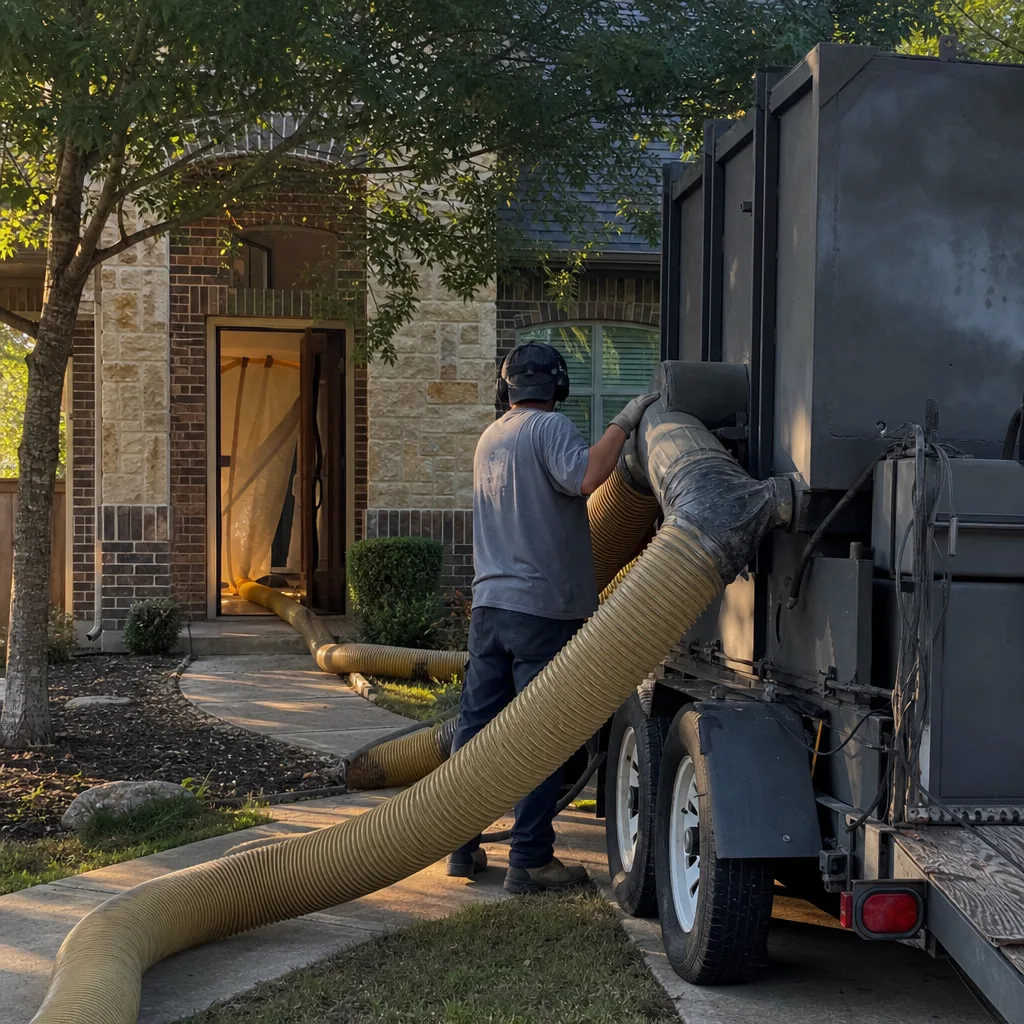
The duct cleaning industry has a hardware problem: a shop vacuum with a long hose can be presented as “professional equipment” to a customer who has never seen the alternative. The actual tools of competent duct cleaning are specific, manufactured by recognized companies, and documented in manufacturer literature.
Here is what professional-grade equipment looks like in practice:
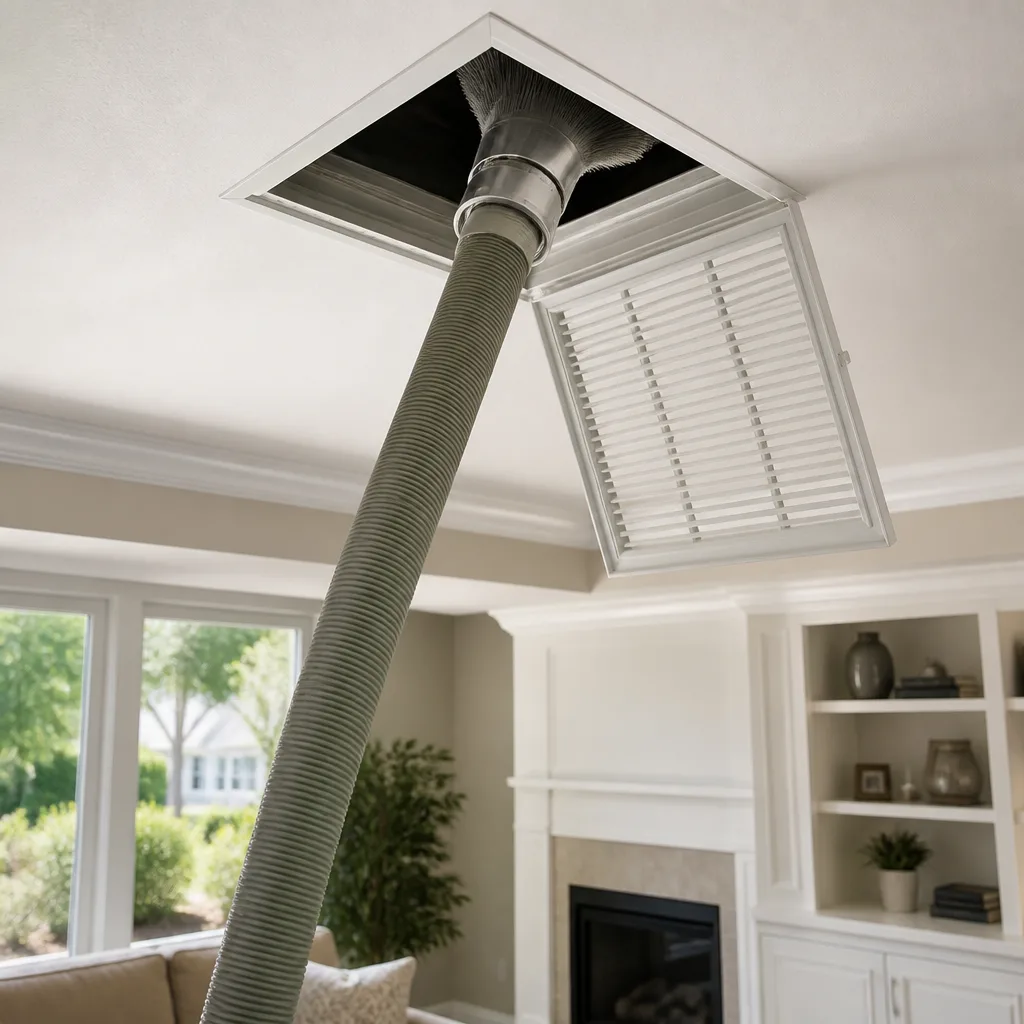
- Negative-pressure extraction systems. These create suction at the main trunk line, pulling debris toward a collection unit rather than blowing it into your living space. Nikro and Abatement Technologies manufacture portable HEPA-filtered collectors designed for residential use. A shop vacuum, even a large one, does not create sufficient airflow or containment.
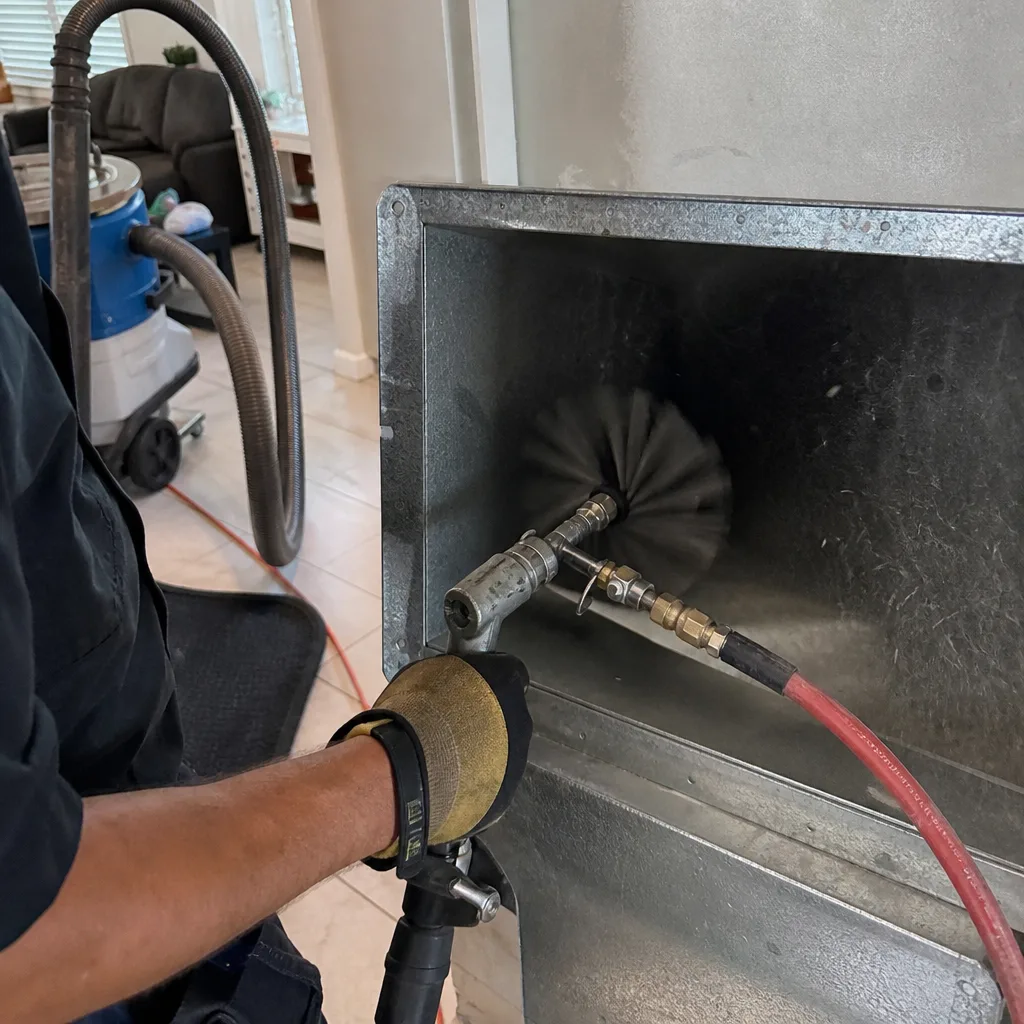
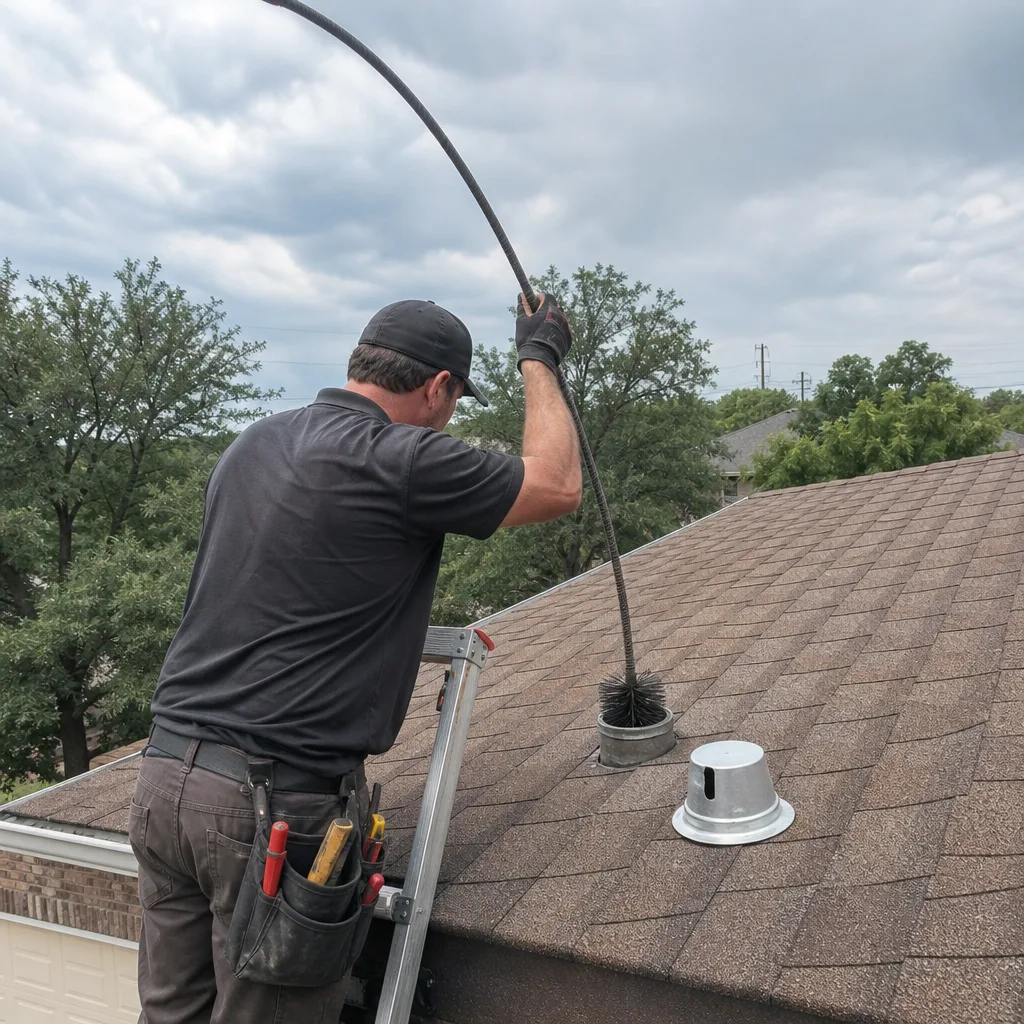
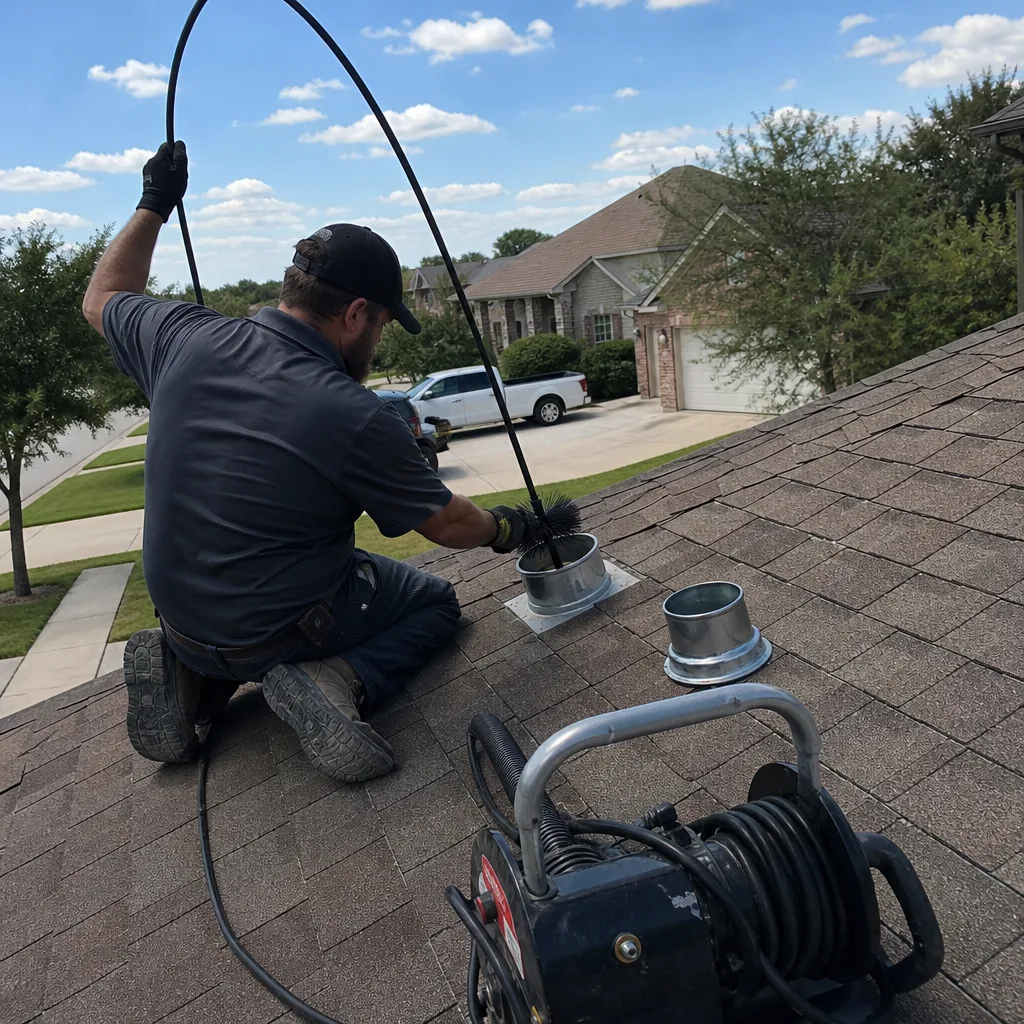
- Agitation devices. Compressed air whips, rotary brushes, or pneumatic tools dislodge debris that has adhered to duct walls. Rotobrush manufactures mechanical brush systems with integrated HEPA vacuum capture. The brush diameter must match the duct size; a 6-inch brush in an 8-inch flex duct misses the corners where debris accumulates.
- HEPA filtration on exhaust. Without HEPA filtration, the vacuum exhaust returns fine particulate to your home or attic. Honeywell and Aprilaire produce HEPA media rated to 99.97% efficiency at 0.3 microns. The estimate should state whether HEPA is used and at what stage of the system.
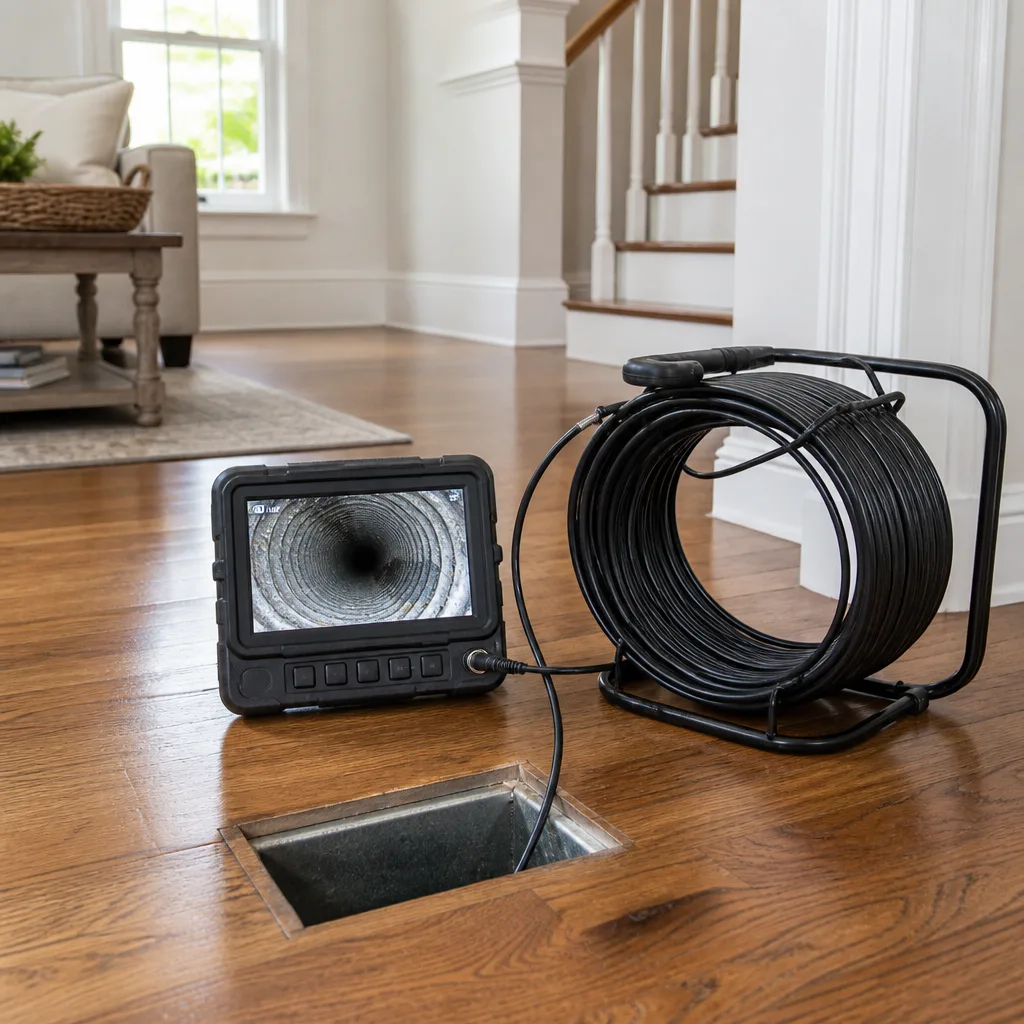
- Access and inspection tools. Guardsman and other manufacturers produce remote camera systems that allow documentation of conditions inside the ductwork. The photo record CleanRun delivers on every job is captured with equipment of this type.
When a contractor says “we use commercial equipment,” ask for brand names. Then search those brands. If the search returns consumer-grade products or no results at all, you have your answer. In Round Rock’s 2015-2025 construction, we frequently find flexible ductwork with internal fiberglass lining; aggressive agitation with improper tools damages this lining and releases fibers into the airstream. Equipment specification is not pedantry. It is how you prevent damage to your system.
The Three Contract Terms That Protect You After the Job
A written estimate becomes a contract when you sign it. Most homeowners sign without reading past the price. These three terms belong in every duct cleaning contract, and their absence is a reason to decline service:
- Photo documentation delivery. The contract should state that photographs of the interior of every duct run, before and after cleaning, will be provided to you as a standard deliverable, not available “on request” or “for an additional fee.” At CleanRun, this is automatic: the photo record is part of the job file, delivered with the invoice. We have held this practice since our first job in 2013. Without photos, you have no evidence that the work occurred. A contractor who resists photographic documentation has something to hide.
- Scope-change authorization. The contract should require your written approval before any work beyond the original estimate is performed. This prevents the mid-job discovery of “mold” or “heavy buildup” that supposedly requires immediate additional service at double the original price. In Round Rock’s humid spring seasons, we do encounter legitimate mold conditions in evaporator cabinets, but we photograph them, explain the finding, and provide a separate written estimate before any additional work proceeds. No exceptions.
- Written remedy clause. The contract should state what happens if the work is not satisfactory. “Call the office” is not a remedy clause. “365-Day Done Right Promise: if the work is not right, we make it right, in writing, backed by [company name]” is a remedy clause. The 365-Day Done Right Promise at CleanRun is not a policy subject to manager approval; it is a written guarantee on every job. Ask to see it before signing.
These terms protect you because they create accountability after the technician leaves. The duct cleaning industry has low barriers to entry and high customer churn; a company that knows you cannot prove poor workmanship has no incentive to perform good work. Documentation and remedy clauses change that calculation.
The Before-Hire Checklist: Pass/Fail Criteria
Use this checklist during your initial phone call. Score each item pass or fail. A single fail is a reason to continue shopping.
| Question | Pass Answer | Fail Answer |
|---|---|---|
| Are your technicians employees or subcontractors? | “Our W-2 employees, in our uniforms.” | “We partner with certified techs” or “Our network covers Round Rock.” |
| What is your TDLR license number? | Provides number immediately; matches business name on TDLR lookup. | “I’ll have to check” or gives number tied to different entity. |
| Will I receive a written estimate before work starts? | “Yes, with line-item pricing by duct run, delivered before we begin.” | “The tech will go over pricing on site” or “We can email something after.” |
| What equipment brands do you use? | Names specific manufacturers (Rotobrush, Nikro, etc.) and describes function. | “Commercial-grade HEPA vacuums” or “Professional tools.” |
| Is photo documentation included? | “Photos of every run, before and after, delivered with your invoice.” | “Available on request” or “We can take some if you want.” |
| What does your remedy clause say? | Quotes written guarantee with specific duration and process. | “We stand behind our work” or “Just call if there’s a problem.” |
| Do you have NADCA-certified technicians? | Names individual(s) with ASCS certification, offers to show certificate. | “We’re a NADCA certified company” or “All our techs are trained.” |
We designed this checklist based on the most common failure modes we’ve observed in Round Rock since 2013. The lead-gen reseller, the equipment bait-and-switch, the verbal-only guarantee: each is exposed by a specific question. You do not need technical expertise to use this checklist. You need to listen for evasion.
If a contractor passes all seven items, you are likely talking to a legitimate operation. If they fail one, you have saved yourself a bad experience. The evaluation happens on the phone, not after the technician is in your attic.
Round Rock-Specific Factors That Affect Your Job
Round Rock’s housing stock and climate create conditions that a competent local contractor should address in the estimate.
New construction debris. Homes built between 2015 and 2025 in Round Rock neighborhoods like Teravista, Paloma Lake, and Forest Creek often contain significant construction debris in ductwork: drywall dust, wood scraps, and insulation fragments. We have photographed 2-inch accumulations at plenum connections in homes less than two years old. The estimate should acknowledge this possibility and state whether additional cleaning time is included or priced separately.
Clay soil and foundation movement. Round Rock’s expansive clay soils cause foundation shifts that stress duct connections. Separated duct runs in the slab or attic reduce system efficiency and create debris collection points. A thorough inspection before cleaning should note accessible separation points; repair may be needed before cleaning is effective. HVAC Cleaning in Round Rock often reveals these issues when the evaporator coil and blower are inspected.
Allergen load. Central Texas cedar pollen, oak pollen, and mold spores create some of the highest allergen counts in the nation. Ductwork that leaks or lacks proper filtration becomes a distribution system for these particles. The estimate should address filter recommendations and whether the duct cleaning includes seal-testing or is cleaning-only.
Attic heat. Round Rock attics reach 140°F in summer. Tape adhesives fail, flex duct sags, and insulation degrades. A contractor working in these conditions needs proper hydration protocols and should not rush the job to escape the heat. Ask how long the company allows per job; a “two homes per morning” schedule suggests speed over thoroughness.
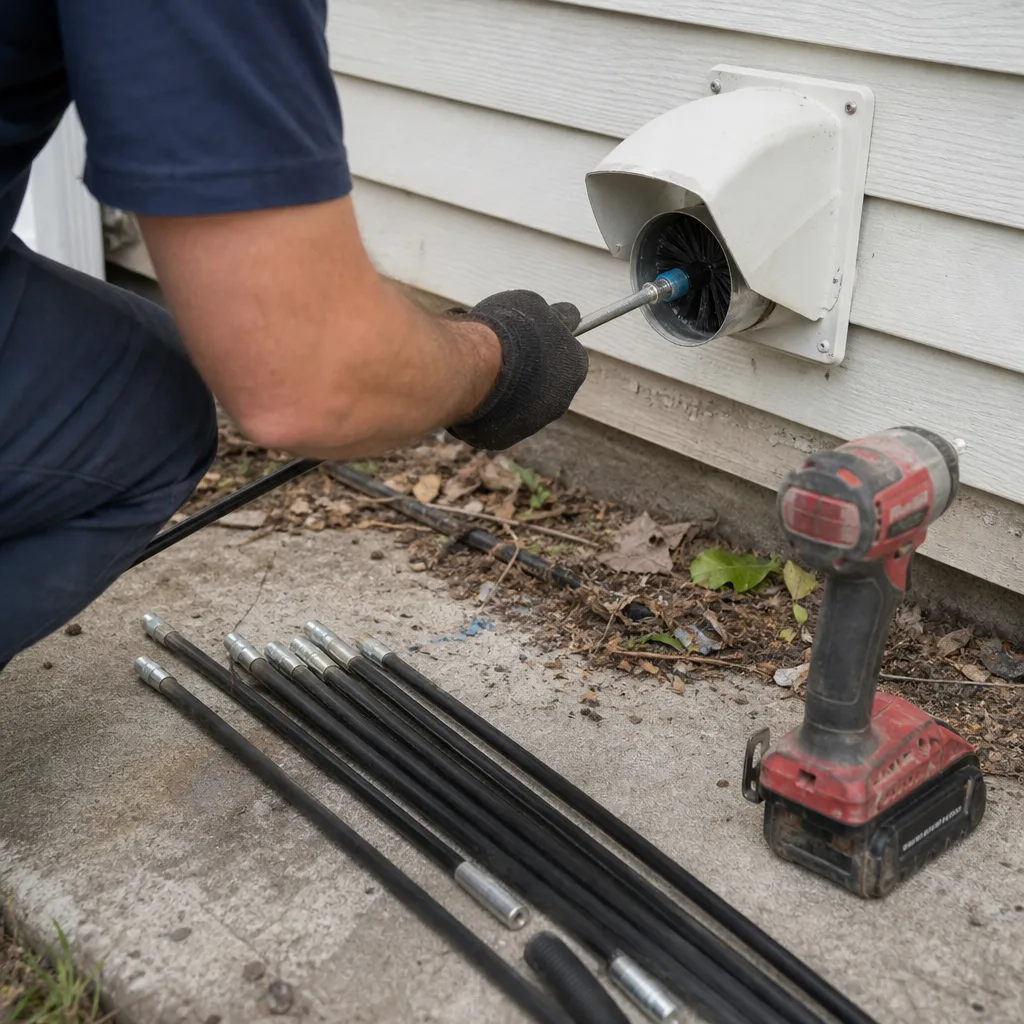
For Dryer Vent Cleaning in Round Rock, these same factors apply: lint accumulation accelerates in long vent runs common in newer two-story designs, and attic routing exposes plastic transition ducts to heat degradation that creates blockage points.
Common Mistakes to Avoid
- Booking based on coupon price alone. The $79 offer covers a visual inspection and surface vacuuming of accessible registers, not full-system cleaning. The average legitimate whole-system cleaning in Round Rock ranges from $400 to $800 depending on home size and duct configuration. Anyone promising full service at coupon price is planning to upsell or performing inadequate work.
- Assuming NADCA membership equals technical competence. As discussed above, membership is a business affiliation. Verify individual certifications or ask for evidence of equivalent training.
- Neglecting to verify insurance. Ask for a certificate of insurance naming your property address as additional insured for the day of service. This is standard in commercial work and should be available for residential jobs on request. A contractor who cannot produce this within 24 hours is uninsured or underinsured.
- Accepting verbal promises about guarantees. “We’ll take care of you” is not a guarantee. The 365-Day Done Right Promise at CleanRun is printed, signed, and attached to every invoice. If a company will not put its remedy in writing, it does not intend to honor it.
- Failing to ask about access creation. Some duct systems require new access panels for thorough cleaning. Who repairs the drywall? Who matches the paint? These questions should be answered before work starts, not discovered when the crew is packing up.
- Ignoring the photo record. Even honest contractors can miss a run. The photo documentation is your verification that every duct was addressed. Do not waive this deliverable to save a nominal fee.
- Hiring without checking TDLR status. Texas requires HVAC contractors to hold proper licensing. The TDLR database is public and free. A five-minute check prevents hiring an unlicensed operator whose work may void your HVAC warranty.
When to Call a Professional
Schedule duct cleaning when you observe visible dust emission from registers, persistent odors after HVAC startup, uneven heating or cooling between rooms, or after any renovation that generated construction dust. In Round Rock’s pollen-intensive climate, homeowners with allergy or asthma symptoms often benefit from cleaning combined with upgraded filtration. If your dryer vent has not been cleaned in two years, or if drying cycles have lengthened, that service should precede or accompany duct cleaning.
CleanRun Air Duct Cleaning Round Rock offers free estimates in Round Rock. Every estimate is written, itemized, and delivered before any work begins. Call (737) 259-5752 to schedule.
Frequently Asked Questions
Whole-system Air Duct Cleaning services in Round Rock typically ranges from $400 to $800 for homes with 12 to 20 duct runs, with larger homes or complex configurations extending toward $1,200. The price varies by duct run count, accessibility, and whether sanitizing or seal repair is included. Call (737) 259-5752 for a written estimate specific to your home; estimates are free.
Low quotes usually exclude necessary components of the job, as explained in our Air Duct Cleaning Cost Breakdown: The Round Rock Homeowner’s Reference for 2026: they price per vent rather than per duct run, omit photo documentation, use consumer-grade equipment, or plan to upsell aggressively once on site. A $79 coupon covers register surface cleaning, not full-system negative-pressure extraction. The honest price is the one that includes everything before work starts.
Demand a photo record of the interior of every duct run, before and after cleaning, delivered as a standard part of the job. At CleanRun, this documentation is automatic and has been since 2013. Without photos, you have only the contractor’s word. With photos, you have evidence.
Every three to five years for typical residential systems, or sooner after renovation, pest intrusion, or noticeable contamination. In Round Rock’s high-pollen environment, homes with standard 1-inch filters may accumulate debris faster and benefit from more frequent inspection. Dryer vent cleaning should occur annually.
Sanitizing in duct cleaning means applying an EPA-registered antimicrobial product to interior duct surfaces after debris removal. It is not routine maintenance; it is indicated when microbial growth is documented or when occupants have specific health concerns. The product should be named in your estimate with its EPA registration number. We do not recommend sanitizing as an automatic add-on.
Surface cleaning of registers and visible duct openings is possible for a homeowner, but full-system cleaning requires negative-pressure equipment, containment protocols, and access to the plenum and main trunk lines. Attempting to clean beyond accessible areas without proper containment risks releasing concentrated debris into your living space. We recommend professional service for whole-system cleaning.
The Bottom Line
Hiring an air duct cleaning contractor in Round Rock comes down to documentation and verification. Ask direct questions. Demand written answers. Check credentials independently. The contractors who survive this process are the ones with nothing to hide: direct employees, named equipment, photo records, and written guarantees. Those who deflect, obscure, or redirect to “we’ll explain when we arrive” have already told you what you need to know. Use the checklist, explore our more guides & resources, and make your decision on the phone. And never sign an estimate that does not include the three contract terms that protect you after the technician leaves.
Written by Tomas Reyes, Owner at CleanRun Air Duct Cleaning Round Rock, serving Round Rock since 2013.