
Last updated September 23, 2026
Whole-system duct and dryer vent check with before-and-after photos - you see exactly what came out of your vents
That "$99 whole-house special" is a bait ad - the real number appears once they are in your hallway, or the "clean" is a shop-vac at the register. We photograph the inside of your ducts before and after instead.
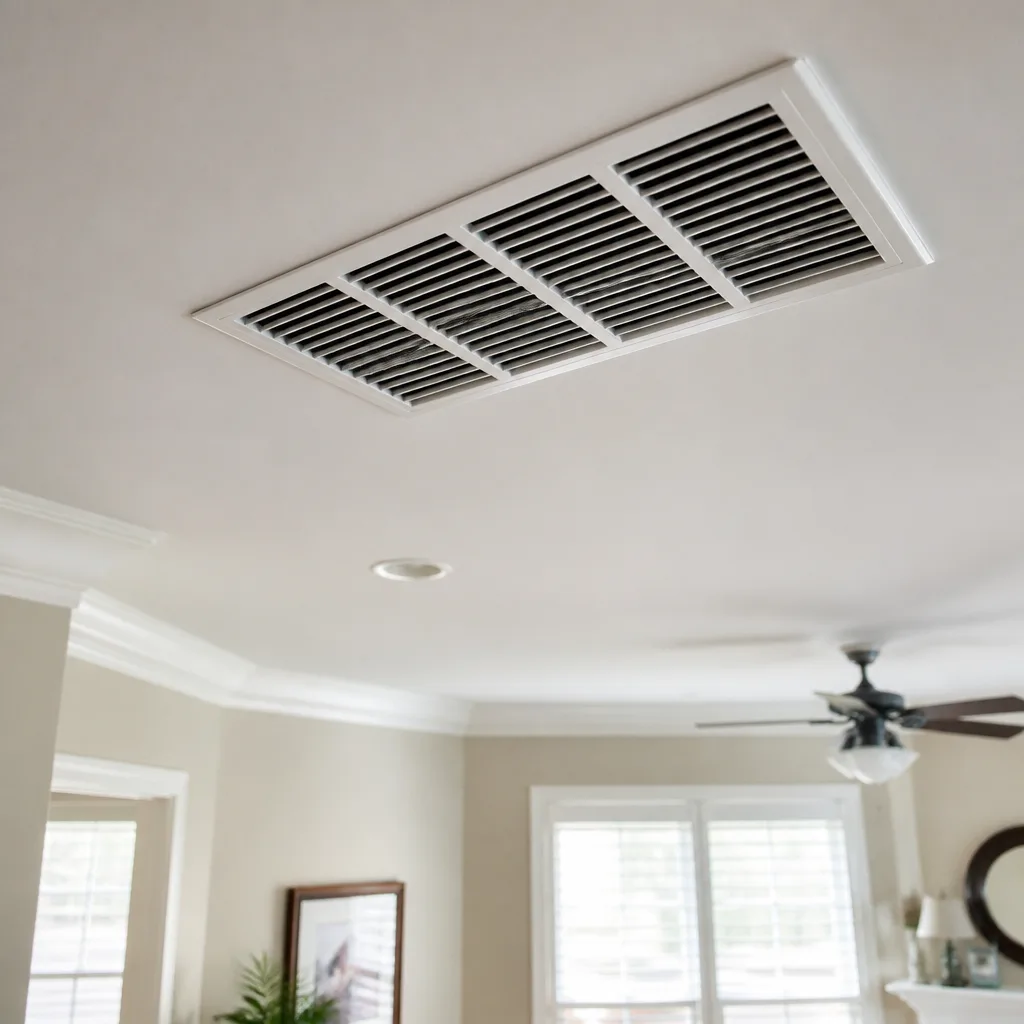
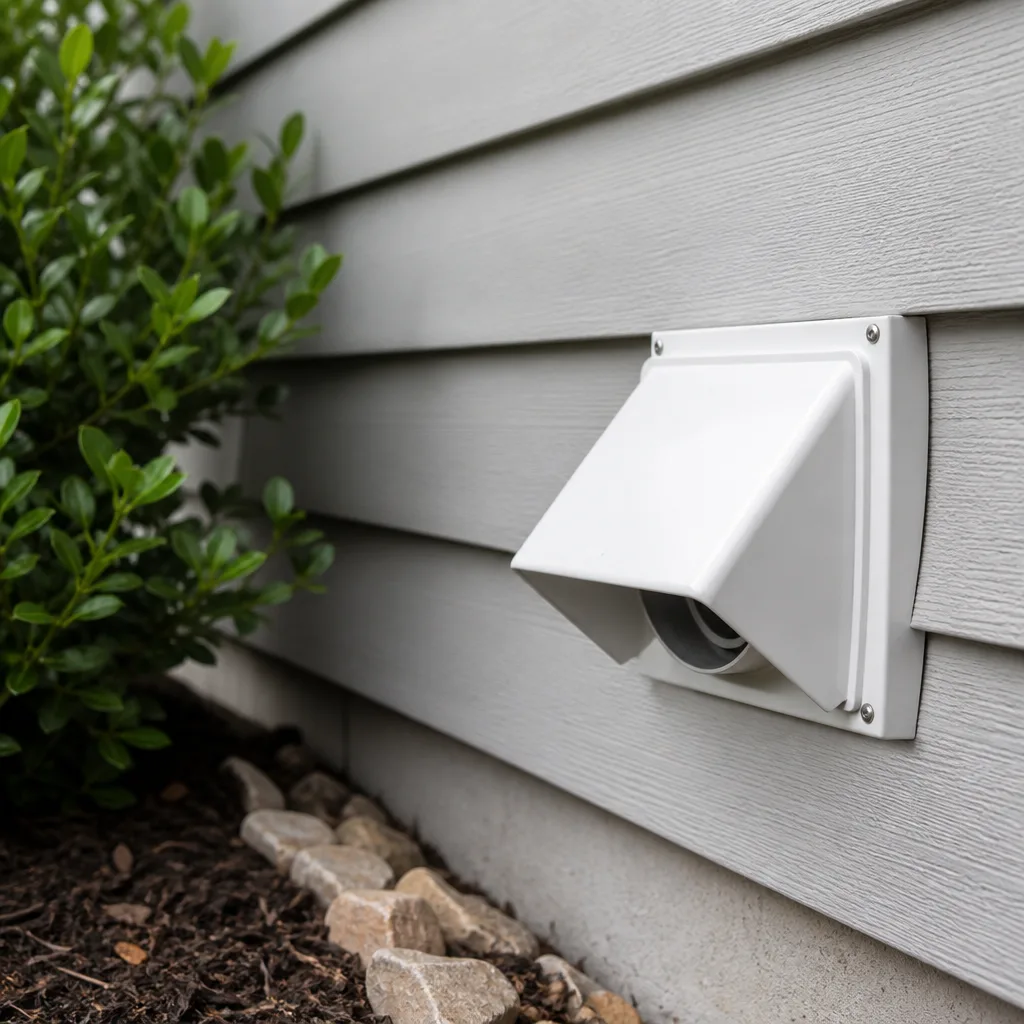
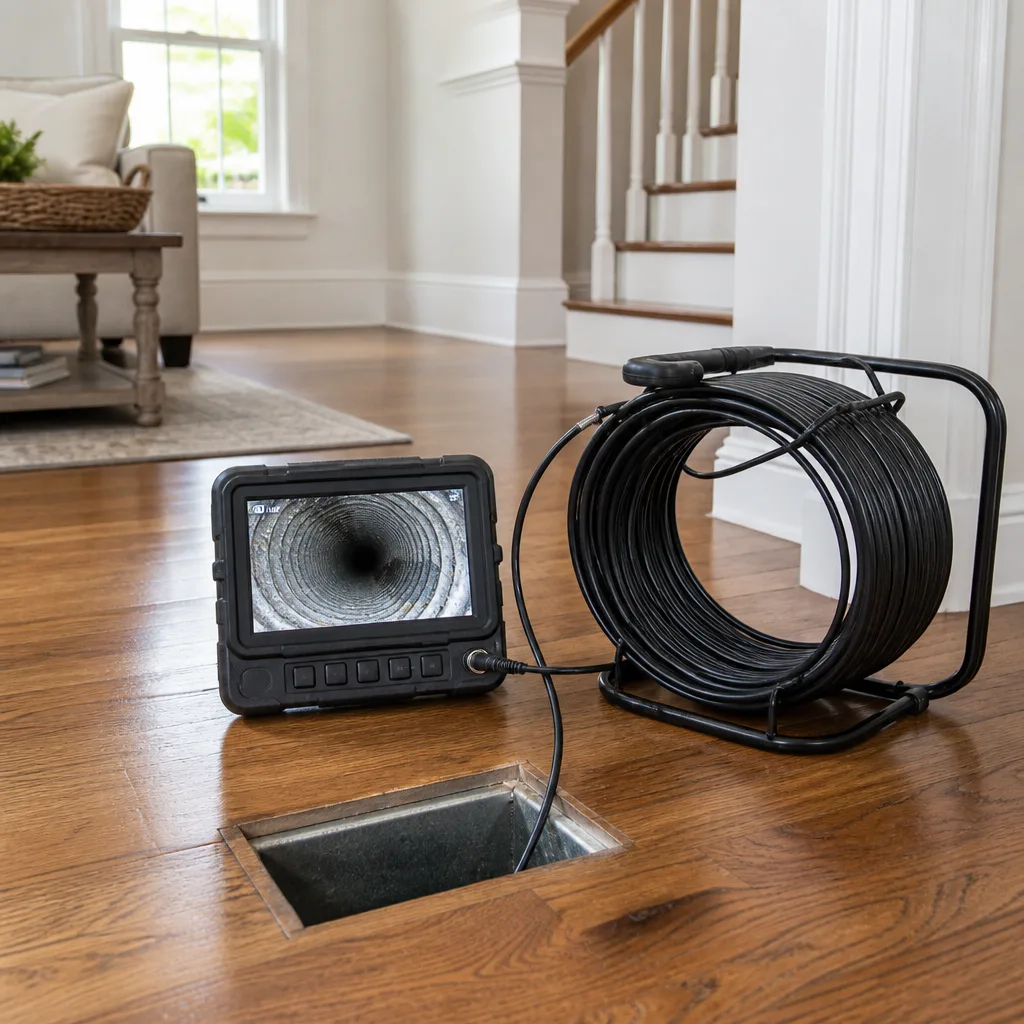
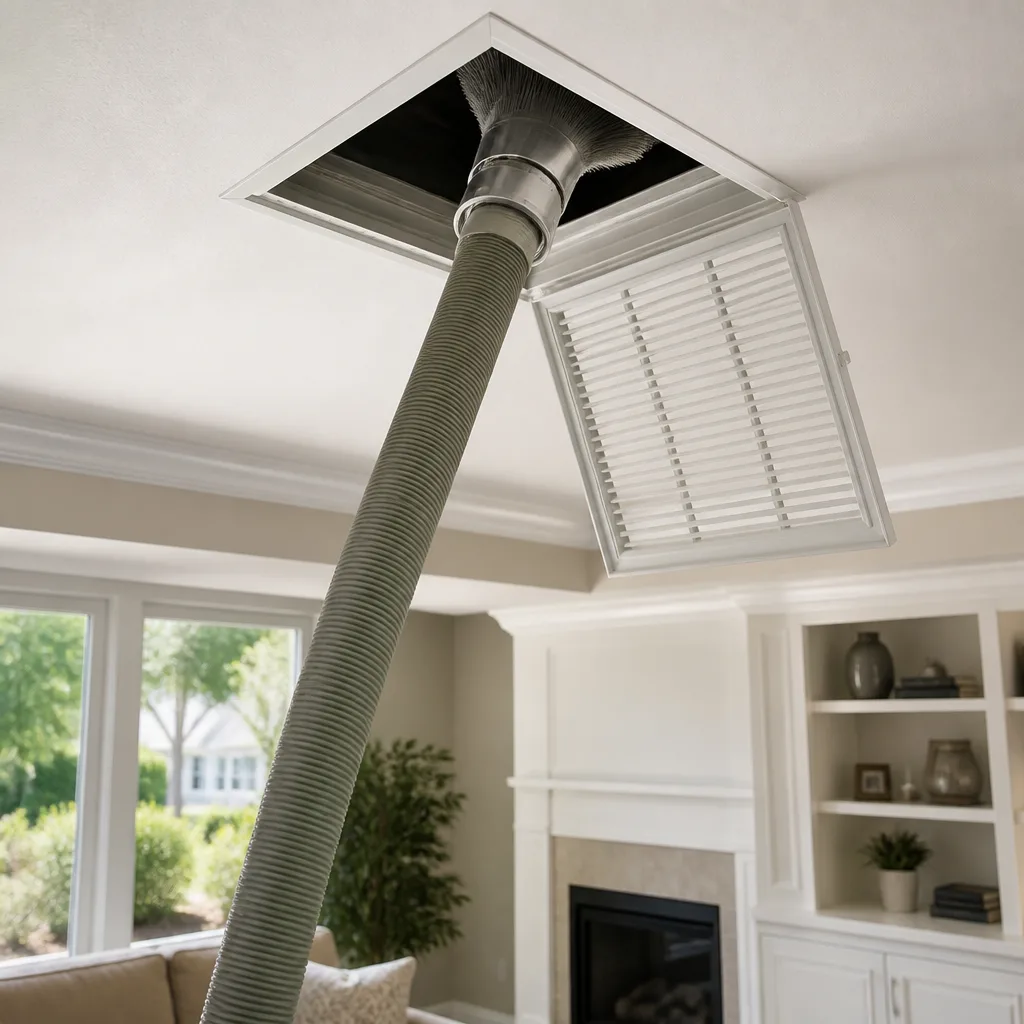
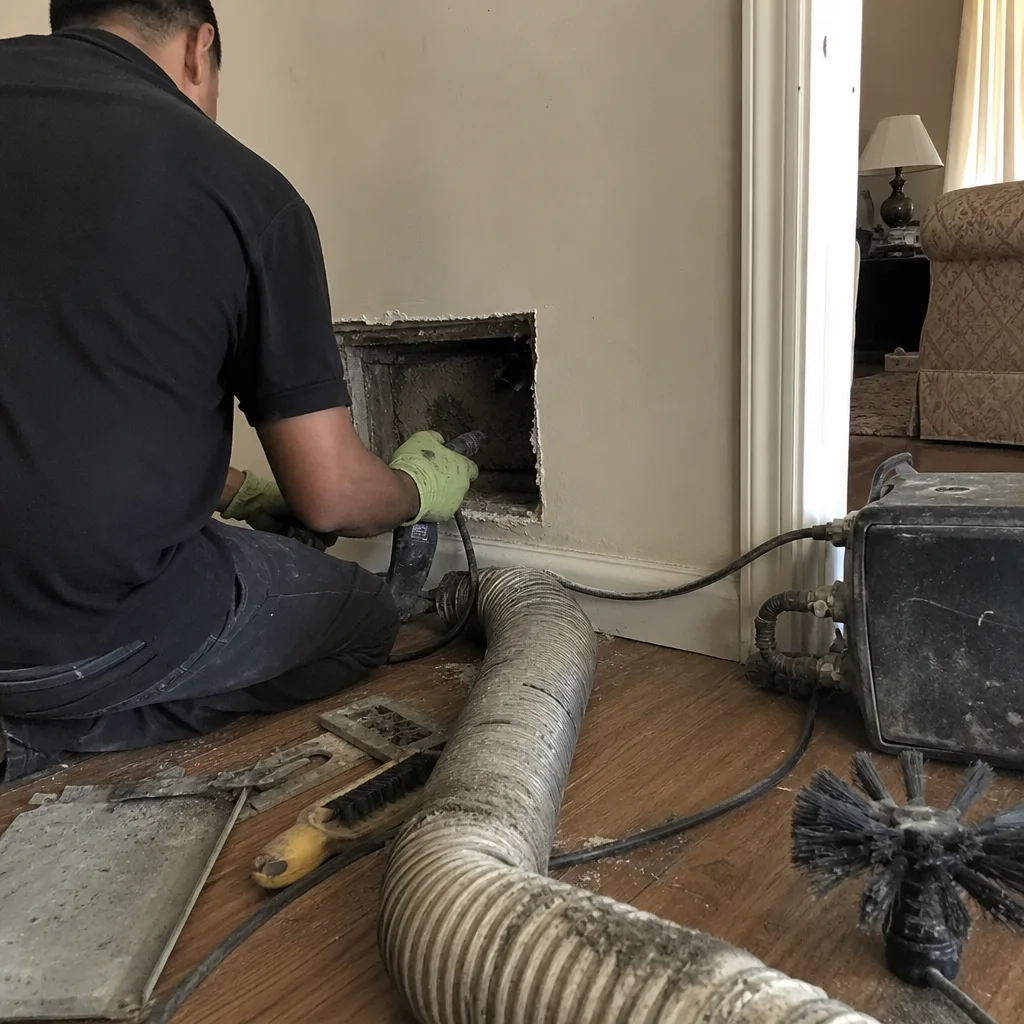 Before
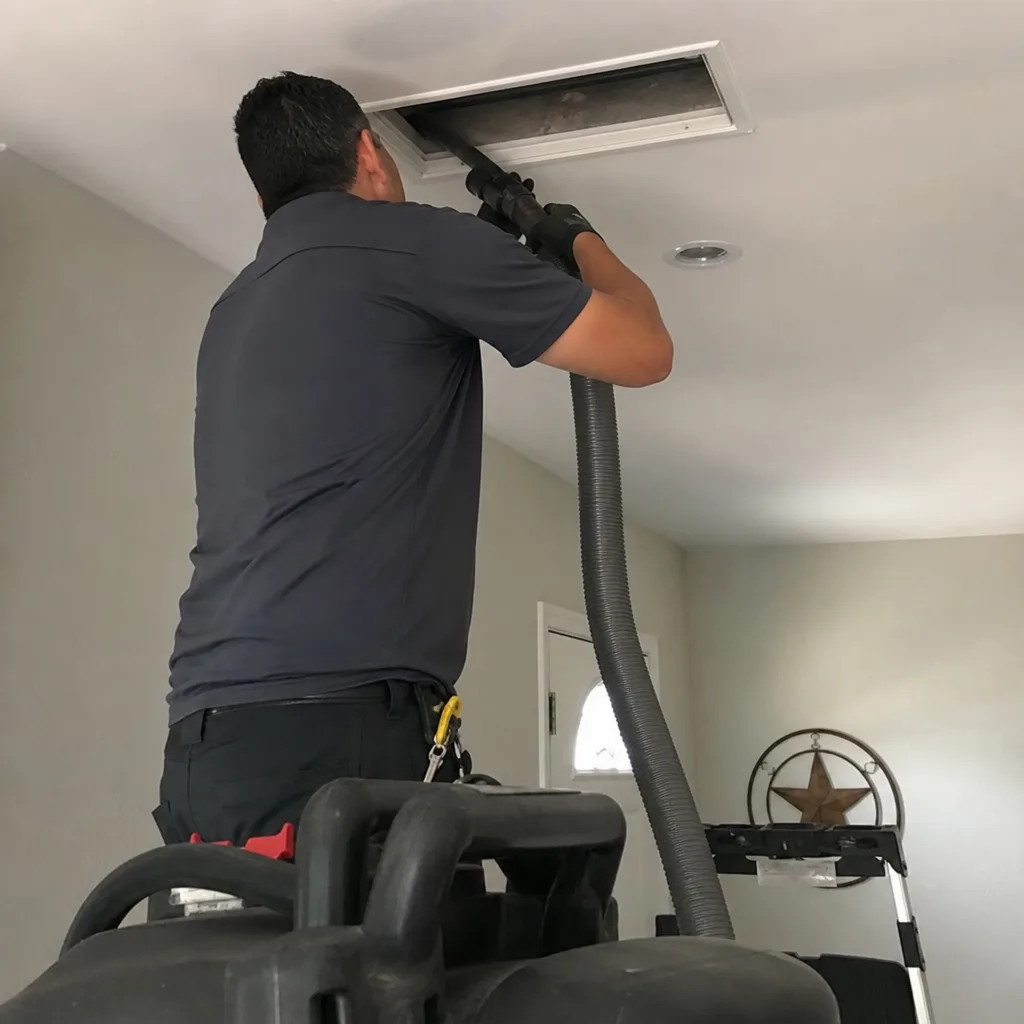 After
After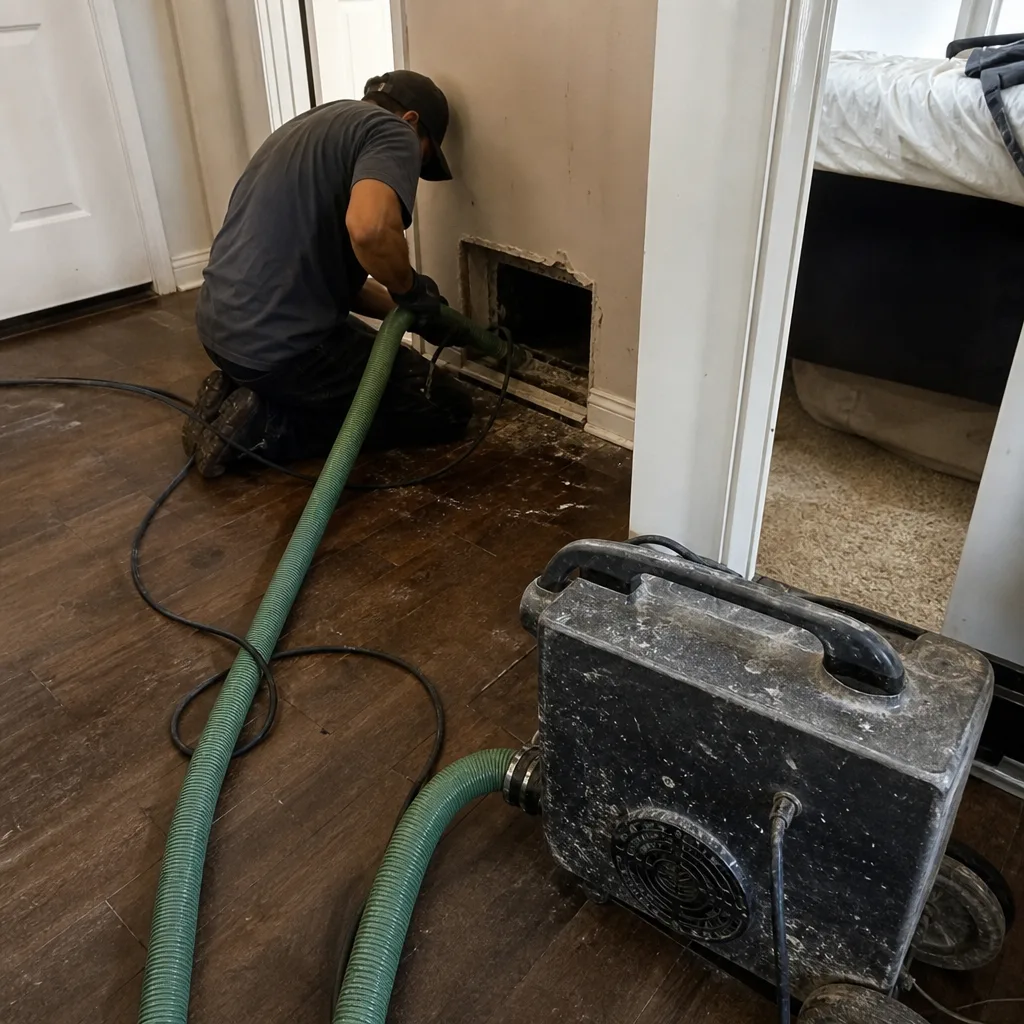 Before
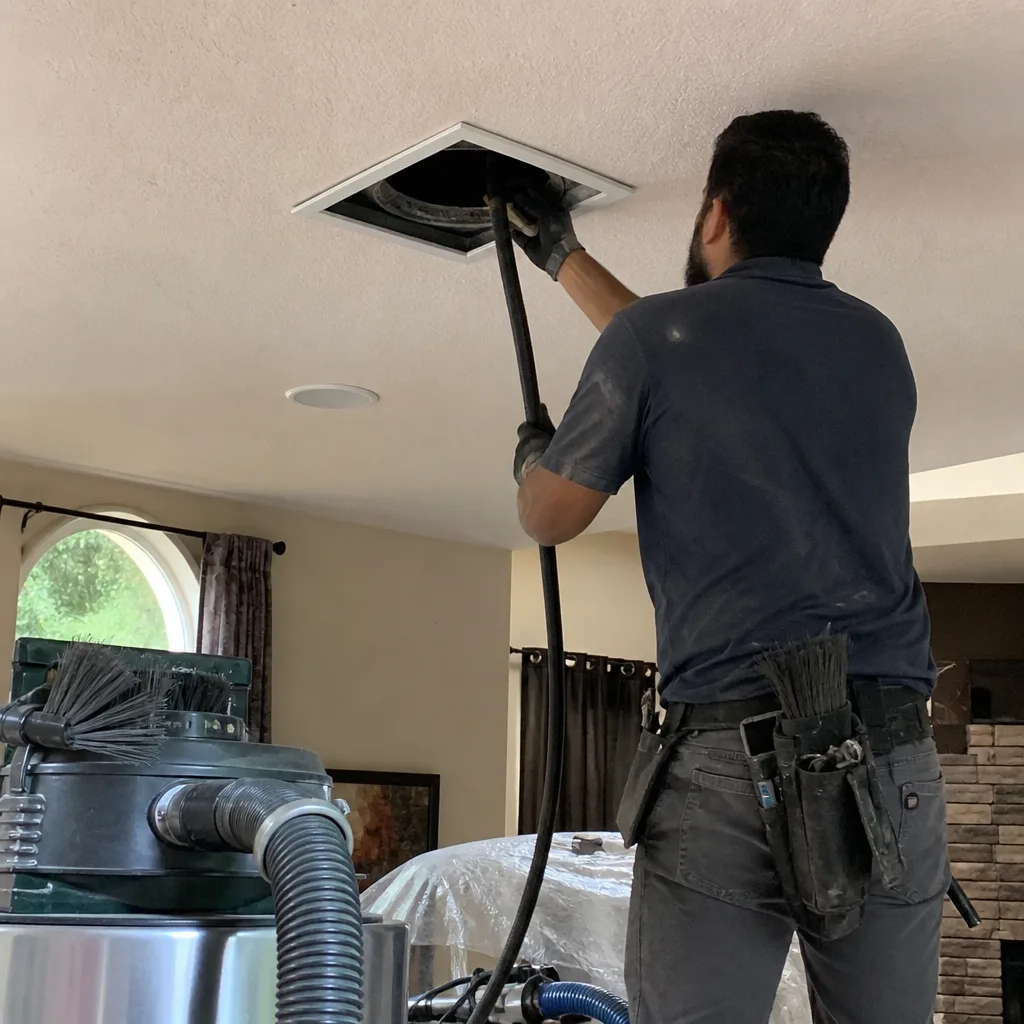 After
After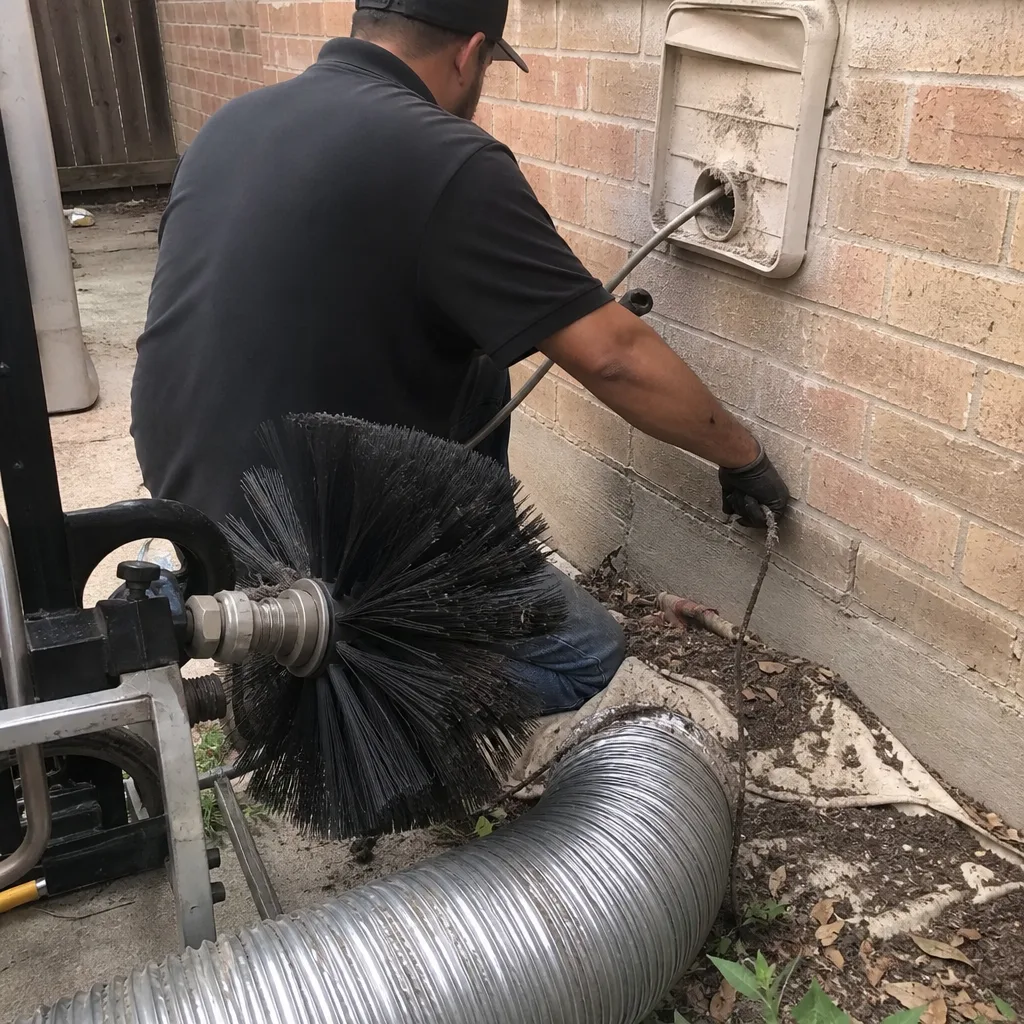 Before
 After
AfterDIY vs Professional Air Duct Cleaning: The Round Rock Homeowner’s Decision Guide
The best consumer-grade duct cleaning kit on the market - a flexible drill-brush attachment and a shop vac - generates roughly 1/20th the suction of a truck-mounted negative-pressure system. It cleans the part of the duct you can already reach with your hand. In Round Rock, where summer attic temperatures routinely hit 140°F and flex duct runs in 1990s-era homes can stretch 25 feet or more from plenum to register, that distinction matters more than most homeowners realize. This guide defines exactly where DIY capability ends and where professional negative-pressure equipment becomes the only tool that reaches the contamination that actually affects your air quality and HVAC efficiency.
Quick Answer
DIY duct cleaning handles the first 6-12 inches of each duct run and the register grilles - a real but limited contribution worth doing for visible surface dust. Professional negative-pressure cleaning with truck-mounted or portable extraction systems is required to dislodge and remove settled debris from full duct runs, which is where the bulk of contamination accumulates in Round Rock homes. For most homeowners, the correct approach is DIY maintenance on accessible surfaces plus our Air Duct Cleaning services for professional source-removal cleaning every 3-5 years.
Table of Contents
- What DIY Duct Cleaning Actually Accomplishes
- The Physics of Negative-Pressure Source Removal
- DIY Tasks That Are Genuinely Worth Doing
- Where DIY Creates Problems It Cannot Fix
- Cost Breakdown: DIY Supplies vs. Professional Cleaning in Round Rock
- Round Rock-Specific Factors That Affect the Decision
- The One Scenario Where DIY Is the Correct First Step
- Common Mistakes to Avoid
- When to Call a Professional
- Frequently Asked Questions
BeforeAfterWhat DIY Duct Cleaning Actually Accomplishes
Let’s be precise about what happens when a homeowner in Round Rock removes a register grille and inserts a brush-and-vacuum tool into the duct boot. The accessible zone - the sheet-metal transition piece connecting the floor or ceiling to the flex duct run - typically extends 6 to 12 inches before the first bend or the start of the flexible duct itself. In this zone, DIY tools remove loose dust, hair, and surface debris effectively. We’ve photographed thousands of duct runs in Round Rock homes, and the boot area is consistently where the most visible, recently deposited material collects.
Beyond that zone, consumer equipment faces three hard limits:
- Suction deficit: A standard shop vac moves approximately 80-120 cubic feet per minute (CFM) at the hose end. Truck-mounted negative-pressure systems used by professionals operate at 4,000-5,500 CFM with sufficient static pressure to overcome resistance in long duct runs. The ratio is not merely quantitative - it’s the difference between surface cleaning and source removal.
- Agitation without extraction: Drill-mounted brushes can knock debris loose from duct walls, but without adequate airflow to capture and transport that debris out of the system, the material simply resettles deeper in the run. We’ve documented this in Round Rock’s Forest Creek and Behrens Ranch neighborhoods, where homeowners reported “more dust after cleaning than before.”
- Access limitations: Flex duct, the corrugated plastic-and-wire tubing standard in homes built 1985-2010 in Round Rock, cannot be navigated by rigid tools beyond the first few feet. The corrugations trap debris; only high-velocity air streams can dislodge material from these cavities.
The honest assessment: DIY duct cleaning is maintenance, not remediation. It addresses symptoms at the point of air delivery without reaching the reservoir of accumulated debris upstream. That reservoir - in the long horizontal runs through 140°F attics, in the plenum above the air handler, in the return trunk collecting particles from every room - is where the measurable impact on air quality and system efficiency resides.
The Physics of Negative-Pressure Source Removal
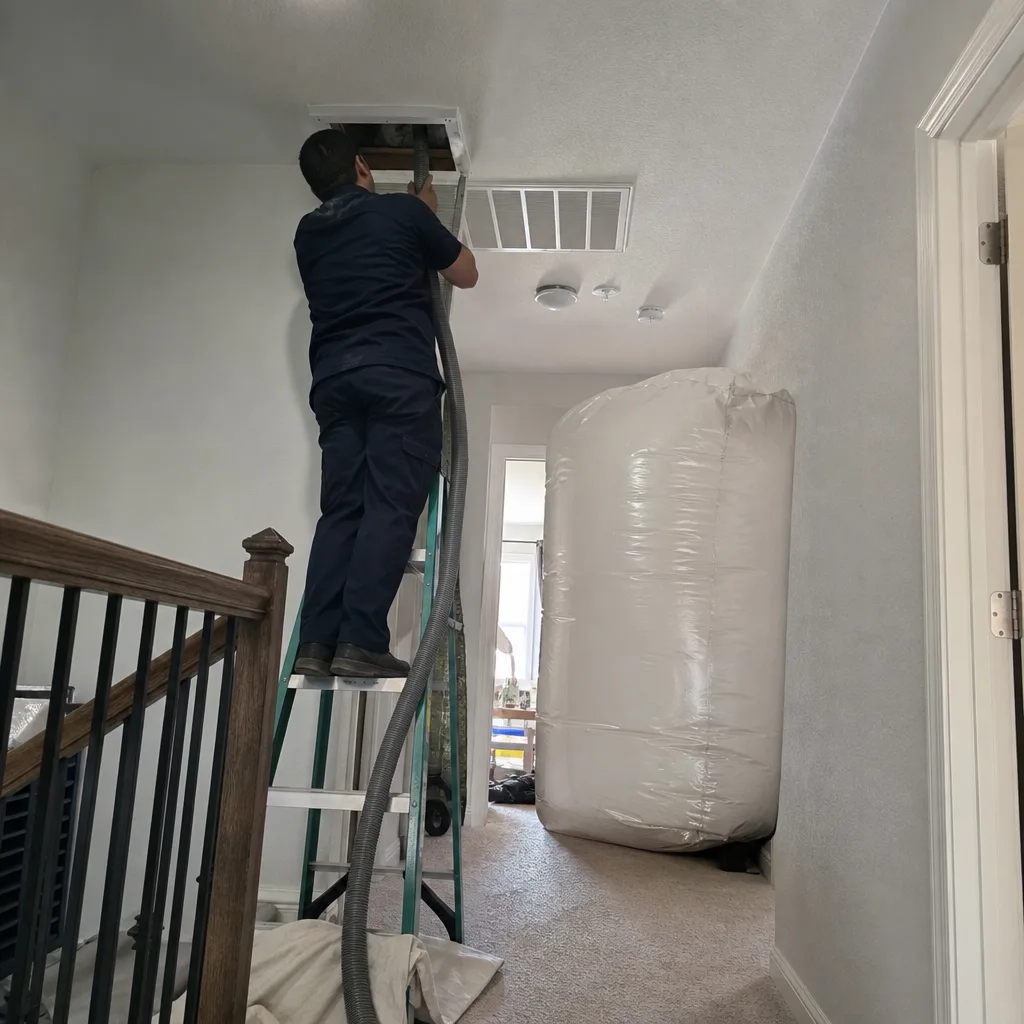
Professional duct cleaning operates on a principle called source removal, and the physics are not negotiable. To understand why equipment matters, consider what happens inside a typical Round Rock duct run.
A 25-foot flex duct run in a two-story home in Teravista or Walsh Ranch presents approximately 12-15 square feet of interior surface area, corrugated into hundreds of small cavities. Debris that enters this system - skin cells, textile fibers, pollen, construction particulate from the original build - settles according to particle size and airflow patterns. Larger particles drop at elbows and low-velocity zones. Finer material electrostatically adheres to the plastic liner. Over years, this accumulation can reach 1/4 to 1/2 inch in depth at collection points.
Removing this material requires simultaneous agitation and extraction at specific performance thresholds:
- CFM requirement: The Air Duct Cleaning in Round Rock standard established by NADCA (National Air Duct Cleaners Association) specifies negative-pressure equipment capable of maintaining 2,000 CFM minimum during operation. This airflow velocity is necessary to keep dislodged debris suspended in the airstream rather than allowing it to resettle. Consumer shop vacuums, even the largest models, cannot approach this threshold.
- Static pressure: The resistance of a long flex duct run, plus the additional load of a HEPA filtration system on the extraction unit, requires significant static pressure - measured in inches of water column - to maintain airflow. Professional portable units from Nikro and Abatement Technologies, or truck-mounted systems, are engineered for this specific application. No consumer vacuum is.
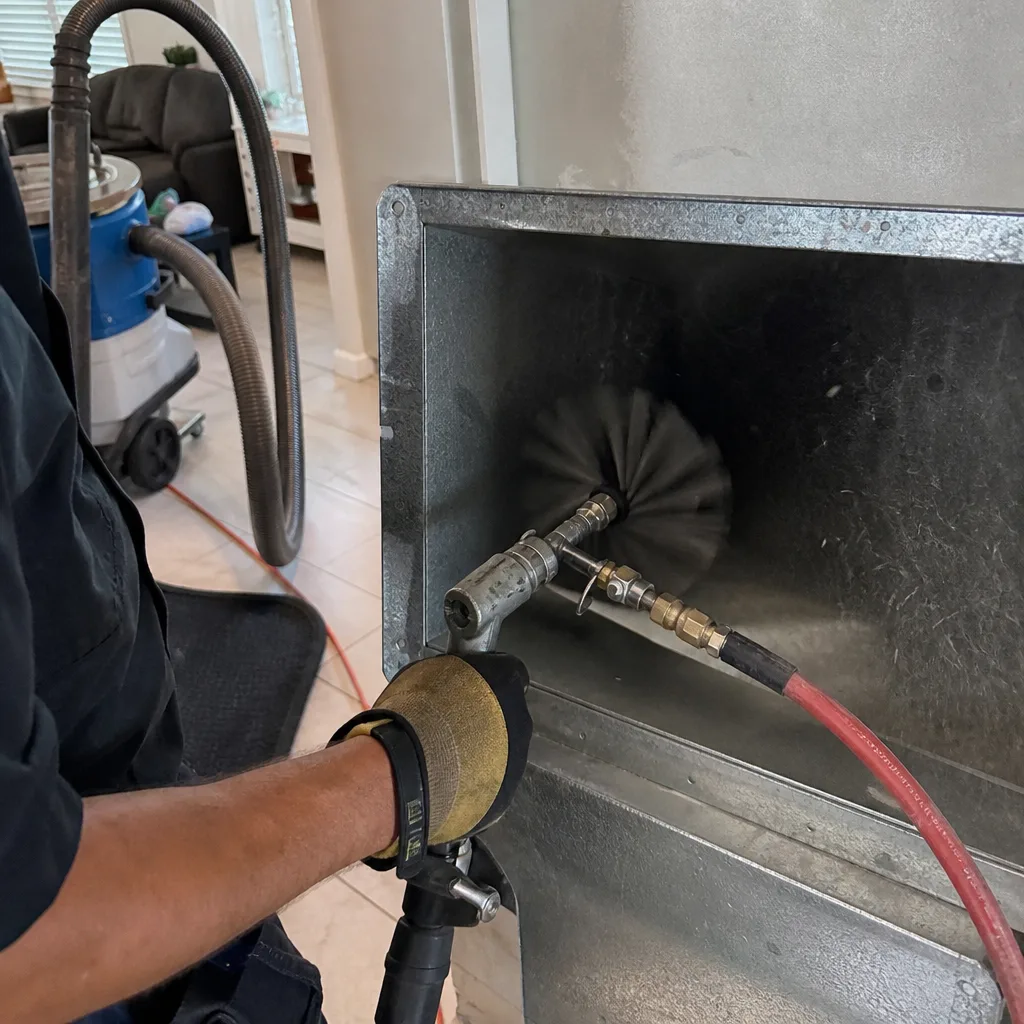
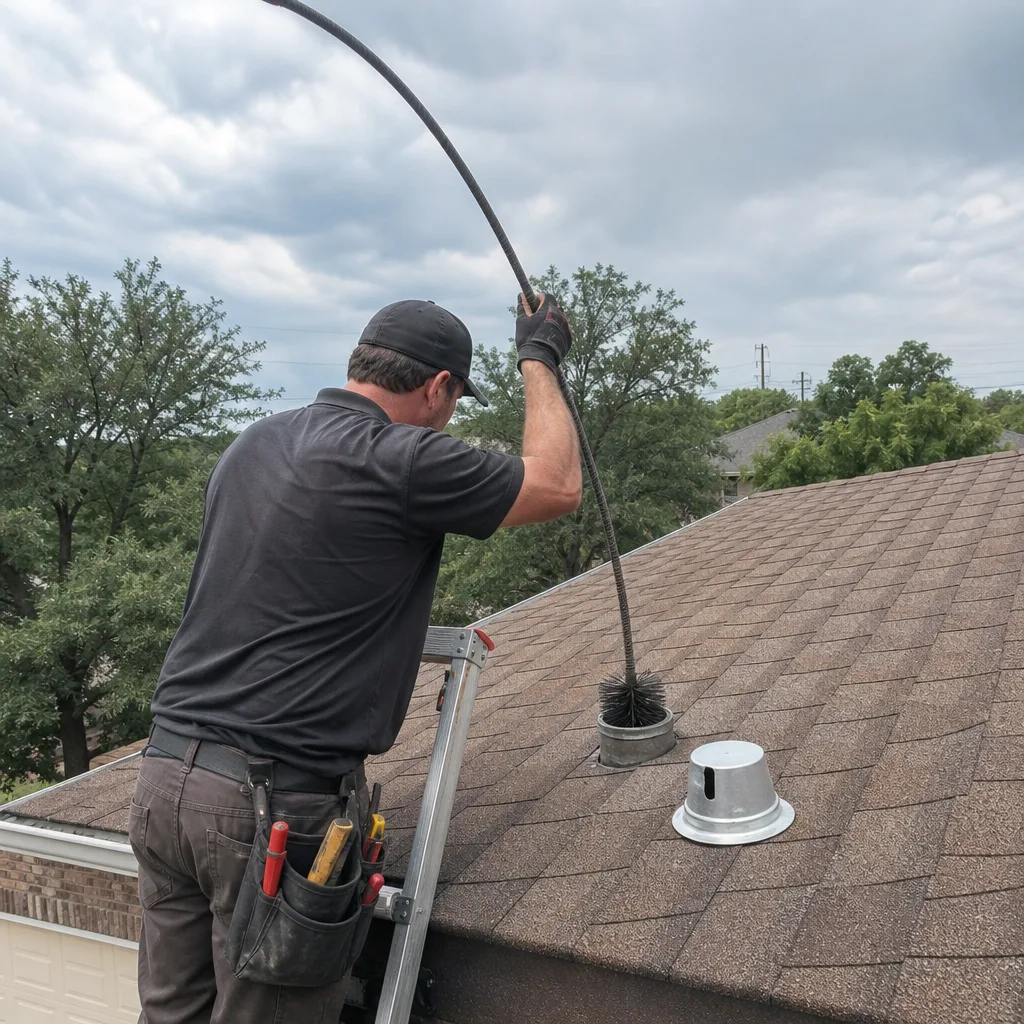
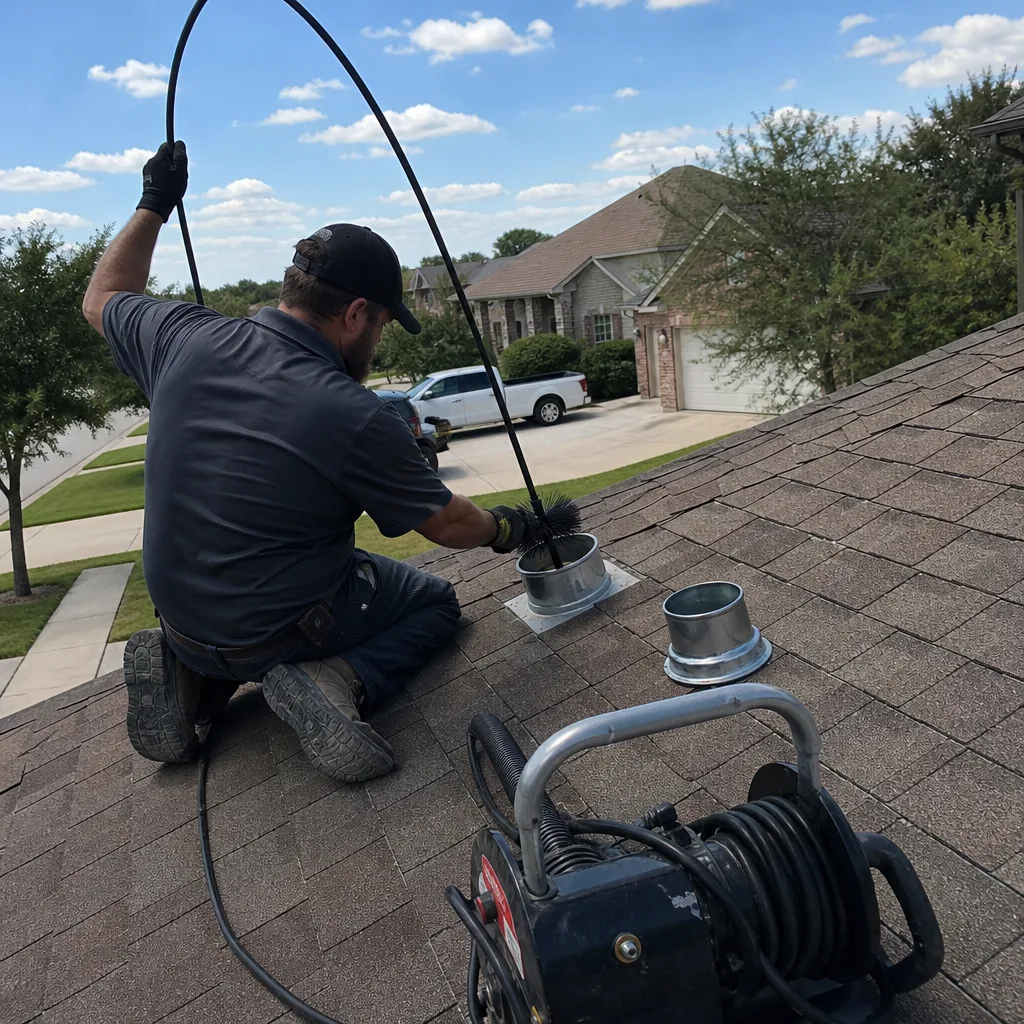
- Agitation method: Professional systems use compressed-air whips, skipper balls, or motorized brushes sized to the duct diameter, deployed on flexible cables that navigate full run lengths. The agitation is sequenced from register back to plenum, with extraction running continuously, so debris is dislodged into an active airflow stream moving toward the collection point.
The result, documented in our photo records since 2013, is measurable removal of accumulated material from the full duct run - not just the first 12 inches. In a typical Round Rock home, our before-and-after photo records show 3-8 ounces of debris removed per duct run, with significantly more from return trunks and the plenum chamber above the air handler. This is material that DIY methods cannot access, and it is material that directly affects the air you breathe and the efficiency of your HVAC system.
DIY Tasks That Are Genuinely Worth Doing
DIY effort is not wasted when directed at the right targets. These tasks address real contamination sources, require minimal equipment, and carry no risk of system damage:
- Register grille and boot cleaning (45 minutes, $0-$15)
Remove each grille with a screwdriver. Wash grilles in warm soapy water - the dishwasher works for metal grilles without painted finishes. Wipe the visible boot interior with a damp microfiber cloth on a flexible handle. This removes the hair, dust, and debris that accumulates at the delivery point and is visible to occupants. In Round Rock homes with pets, we find this zone typically contains 40-60% of the visible contamination homeowners notice. - Filter replacement and upgrade (10 minutes, $8-$35)
Replace standard fiberglass filters every 30-60 days during peak cooling season (May-October in Round Rock). Consider upgrading to a pleated MERV 11-13 filter if your HVAC system can handle the static pressure load - check your manufacturer specifications or ask your HVAC technician. The filter is your first and most cost-effective line of defense; no duct cleaning, professional or DIY, substitutes for proper filter maintenance. - Return air grille cleaning (20 minutes, $0)
The large return grille(s) in your home collect significantly more debris than supply registers because they draw air inward. Remove, vacuum the back side with your household vacuum’s brush attachment, and wash if metal. The return path is where we find the heaviest debris loads in professional cleanings; surface maintenance here has proportionally high impact. - Visible boot debris removal post-renovation (15 minutes, $0)
After any interior work - painting, flooring, drywall repair - check register boots for visible construction debris. Remove what you can see and reach. This prevents immediate redistribution into living spaces and is often the correct first response before scheduling professional cleaning.
Total investment for a thorough DIY maintenance session: approximately 90 minutes and $15-$50 in supplies, depending on filter choice. This maintenance should occur every 90 days in Round Rock’s high-pollen spring season and during heavy HVAC use periods.
Where DIY Creates Problems It Cannot Fix
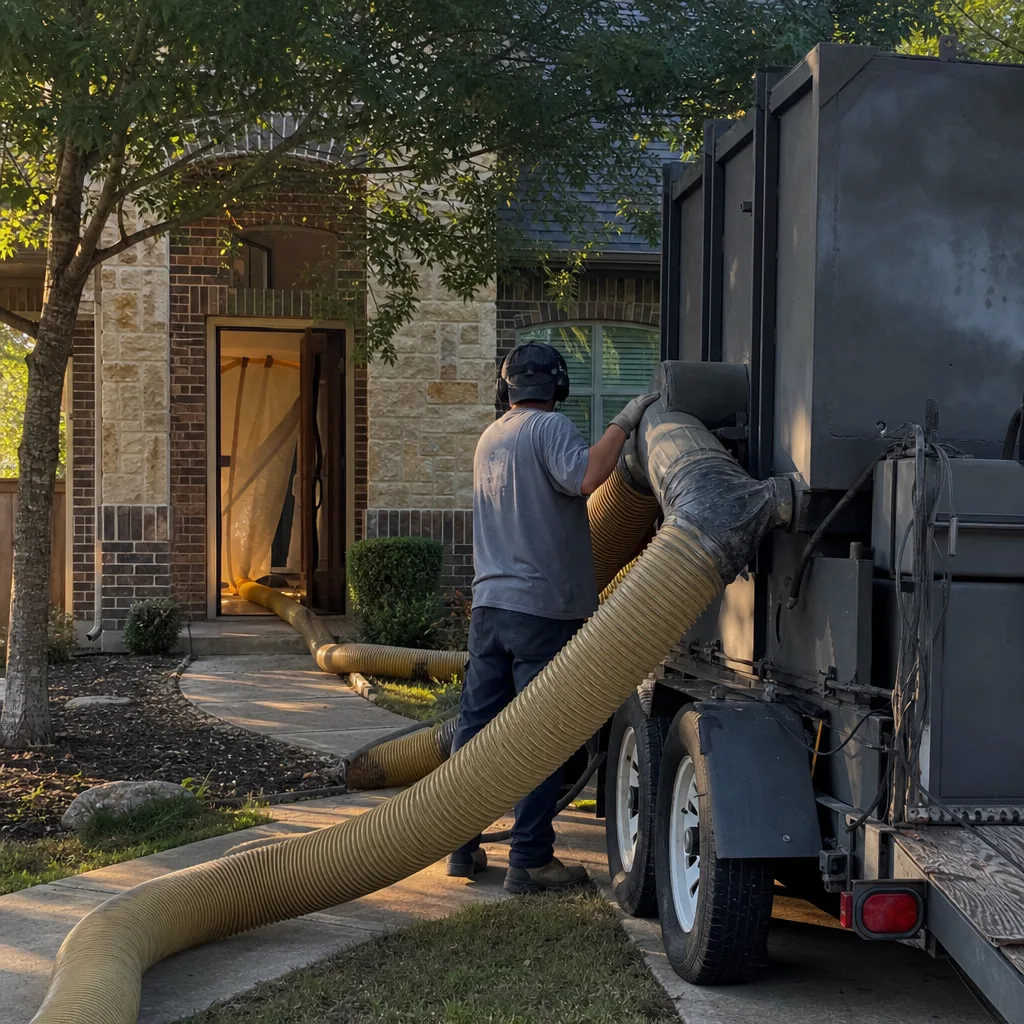
The most significant risk of DIY duct cleaning is not injury or equipment damage - it’s redistribution. When a homeowner agitates debris in a duct run without adequate extraction capacity, the physics work against them.
Here’s what happens: the brush or compressed-air tool dislodges material from the duct walls. Without sufficient airflow to maintain particle suspension and transport, the debris falls back into the duct, but not necessarily where it started. Airflow dynamics shift. Material that was settled in a low-velocity zone gets pushed into a different section of the system, or breaks into smaller particles that pass through the filter and into living spaces.
We’ve documented this specifically in Round Rock’s older neighborhoods - Meadowbrook, Round Rock West, and the original sections of Old Town - where 1970s and 1980s duct systems have accumulated decades of material. Homeowners in these areas report increased dust symptoms after DIY attempts more frequently than in newer construction, because the total debris load is higher and the redistribution effect more pronounced.
Another failure mode: damage to flex duct. The corrugated plastic liner of flex duct is thin - typically 0.003-0.005 inch polyethylene. Aggressive brushing with consumer tools can tear this liner, creating leaks that reduce system efficiency and introduce attic contamination into the airstream. In Round Rock’s 140°F summer attics, torn flex duct is a common find during our professional inspections, and DIY damage is one contributing cause we identify.
The third failure mode is simply false confidence. A homeowner who has cleaned visible surfaces believes the system is clean. The upstream contamination - in the plenum, the trunk lines, the long horizontal runs - continues to affect air quality and system efficiency. Without a CleanRun Air Duct Cleaning Round Rock home photo record or equivalent documentation, there is no verification of what was actually accomplished.
Cost Breakdown: DIY Supplies vs. Professional Cleaning in Round Rock
Honest cost comparison requires framing the expense over a realistic maintenance interval, not as a single event. Here’s the math for a typical 2,000-square-foot Round Rock home with 12-16 duct runs:
| Approach | Initial Cost | Time Investment | Effective Duration | Annualized Cost (3-year) |
|---|---|---|---|---|
| DIY surface maintenance only | $40-$80 (brush kit, filters, cleaning supplies) | 3-4 hours initial, 1.5 hours quarterly | Ongoing surface control; no deep removal | $60-$120/year (filters + time valued at $0) |
| Professional negative-pressure cleaning | $600-$900 (whole-system, documented) | 3-4 hours (your presence not required) | 3-5 years between full cleanings | $120-$300/year |
| Combined: DIY maintenance + professional cleaning every 4 years | $640-$980 over 4 years | 6 hours/year DIY + one professional visit | Full system remediation with ongoing surface control | $160-$245/year |
The professional pricing reflects what we observe in the Round Rock market for documented, equipment-verifiable service. Lower quotes exist - the $79-$199 coupon offers - but these typically involve portable vacuums with inadequate CFM, no photo documentation, and no written scope. Haven Standard Clause 1 requires a written price before work starts; we publish our pricing ranges so homeowners can evaluate whether a quote represents actual source removal or vacuum noise.
The annualized cost difference between DIY-only and professional service is $60-$180 per year - less than most Round Rock homeowners spend on a single month of premium streaming services. The question is not whether you can afford professional cleaning; it’s whether the documented removal of accumulated debris from your full duct system is worth that incremental investment.
Round Rock Specific Factors That Affect the Decision
Several local conditions influence whether DIY or professional cleaning is the appropriate choice for a given Round Rock home:
- Construction era and duct type: Homes built 1985-2005 in Round Rock’s rapid-growth corridors - Teravista, Forest Creek, Walsh Ranch, and the eastward expansion along Gattis School Road - predominantly use flex duct runs of 20-30 feet through vented attics. These systems accumulate debris heavily and are inaccessible to DIY tools beyond the boot. Older homes in Old Town or Round Rock West may have galvanized steel ductwork, which is more durable but often shows decades of accumulation that requires professional agitation equipment.
- Climate and seasonal loading: Round Rock’s spring oak pollen season (March-May) deposits significant organic material in return air paths. Summer attic temperatures accelerate the breakdown of flex duct liners, increasing particulate shedding. The combination means local duct systems experience higher annual loading than systems in milder climates. We typically recommend professional cleaning every 3-4 years in Round Rock, versus 5-7 years in cooler, less pollen-intensive regions.
- Renovation history: Round Rock’s 2015-2023 housing market saw extensive resale activity and renovation. Homes with recent flooring replacement, popcorn ceiling removal, or interior painting often have construction debris in duct systems that DIY methods cannot address. In the Mayfield Ranch and Paloma Lake areas, we’ve found drywall compound and wood flooring dust in return trunks from renovation work completed years prior.
- Code and permit context: Round Rock follows the 2021 International Mechanical Code with local amendments. New construction and major HVAC replacement require duct leakage testing; however, duct cleaning itself is not a permitted activity. This means quality varies widely among providers. The H.A.V.E.N. Standard, including Haven Standard Clause 3 (Verified Crews) and our published license number, exists because the regulatory environment does not enforce equipment or documentation standards.
The One Scenario Where DIY Is the Correct First Step
Post-renovation debris visible at the register boot is the specific situation where immediate DIY action is appropriate and professional scheduling can follow.
When construction work generates visible dust or debris - drywall sanding, tile cutting, wood floor refinishing - the material enters the HVAC system immediately if the system was operated during or shortly after work. This debris is typically concentrated at the return grille and the first few feet of duct, because it enters through the large return opening and drops at the first low-velocity zone.
In this scenario:
- Turn off the HVAC system to prevent further distribution.
- Remove and thoroughly clean the return grille.
- Vacuum the visible boot area with a household vacuum - do not insert tools deep into the duct.
- Replace the filter with a fresh, appropriately rated filter.
- Schedule professional cleaning within 2-4 weeks to address material that has migrated beyond the accessible zone.
The DIY step contains the immediate problem and prevents continued circulation of construction particulate, which can include respirable crystalline silica from drywall compound and wood dust. The professional cleaning follows to remove material that has distributed into the full system. This sequence - immediate containment, then professional remediation - is the approach we recommend to Round Rock homeowners who contact us during or after renovation work. For more guidance, see our How to Hire a Air Duct Cleaning Contractor in Round Rock: A Step-by-Step Guide.
Common Mistakes to Avoid
- Using a shop vac without HEPA filtration for duct work: Standard shop vacuums exhaust fine particulate through the motor housing. In Round Rock’s tight-building-envelope homes common in newer developments, this simply moves contamination from the duct to the living space. Only HEPA-filtered extraction should be used, and even then, CFM remains inadequate for full runs.
- Applying chemical treatments without identifying the underlying problem: Consumer-grade “duct sanitizing” foams and sprays address odor symptoms without removing the debris causing the odor. In Round Rock’s humid summer months, we’ve found that applied moisture from these products can support microbial growth on existing organic debris in the duct system.
- Cleaning only the supply registers and ignoring returns: The return air path collects 3-5 times the debris load of supply ducts because it draws air from all rooms. Focusing DIY effort on supply grilles while neglecting returns is a common misallocation of effort that leaves the heaviest contamination untouched.
- Believing that filter replacement eliminates the need for duct cleaning: Even MERV 13 filters allow some fine particulate passage, and no filter addresses debris already in the system. In Round Rock homes with pets or high occupancy, we find significant accumulation even in homes with diligent filter replacement schedules.
- Accepting a low quote without verifying equipment and documentation: The $79-$199 duct cleaning offers in Round Rock typically involve a shop vac on a truck and no photo record. Ask for the CFM rating of the extraction equipment and whether before-and-after photos of every run are included. If the provider cannot or will not specify, the service is not source removal.
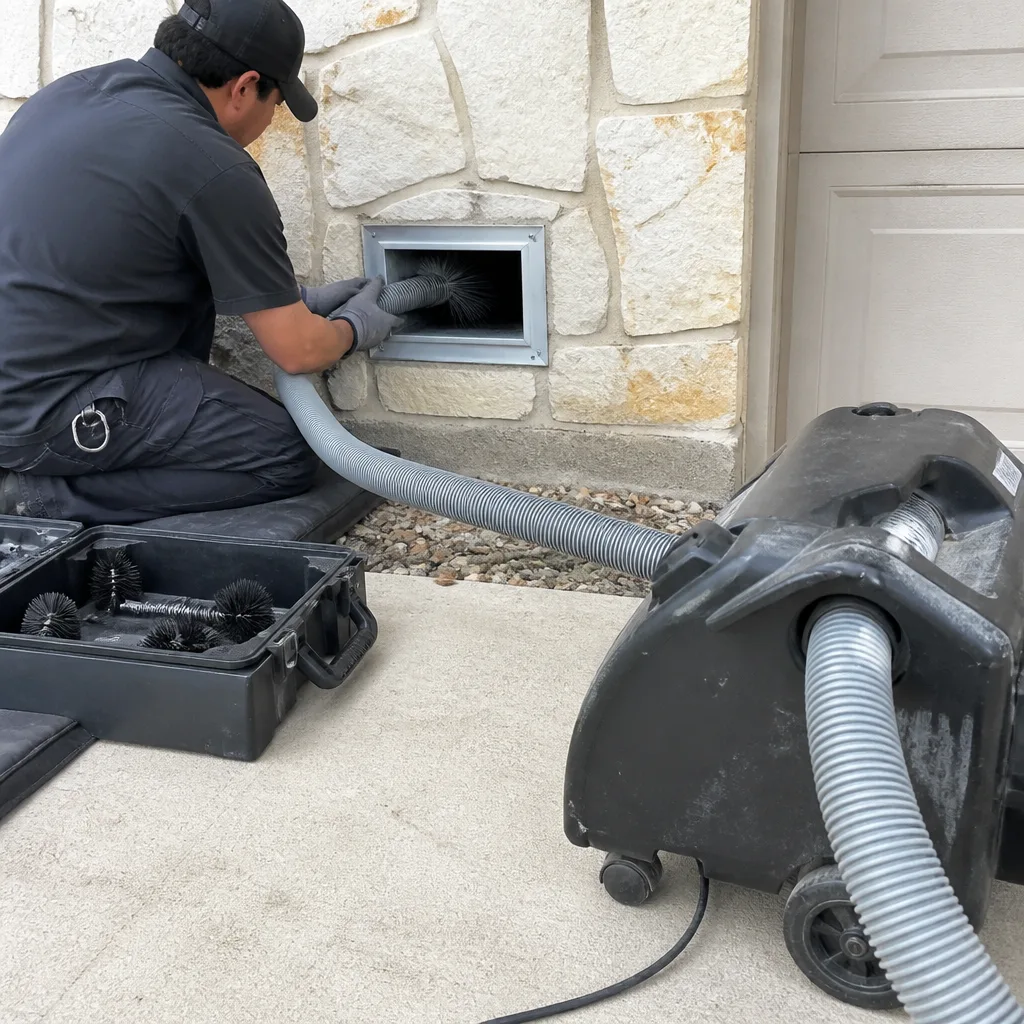
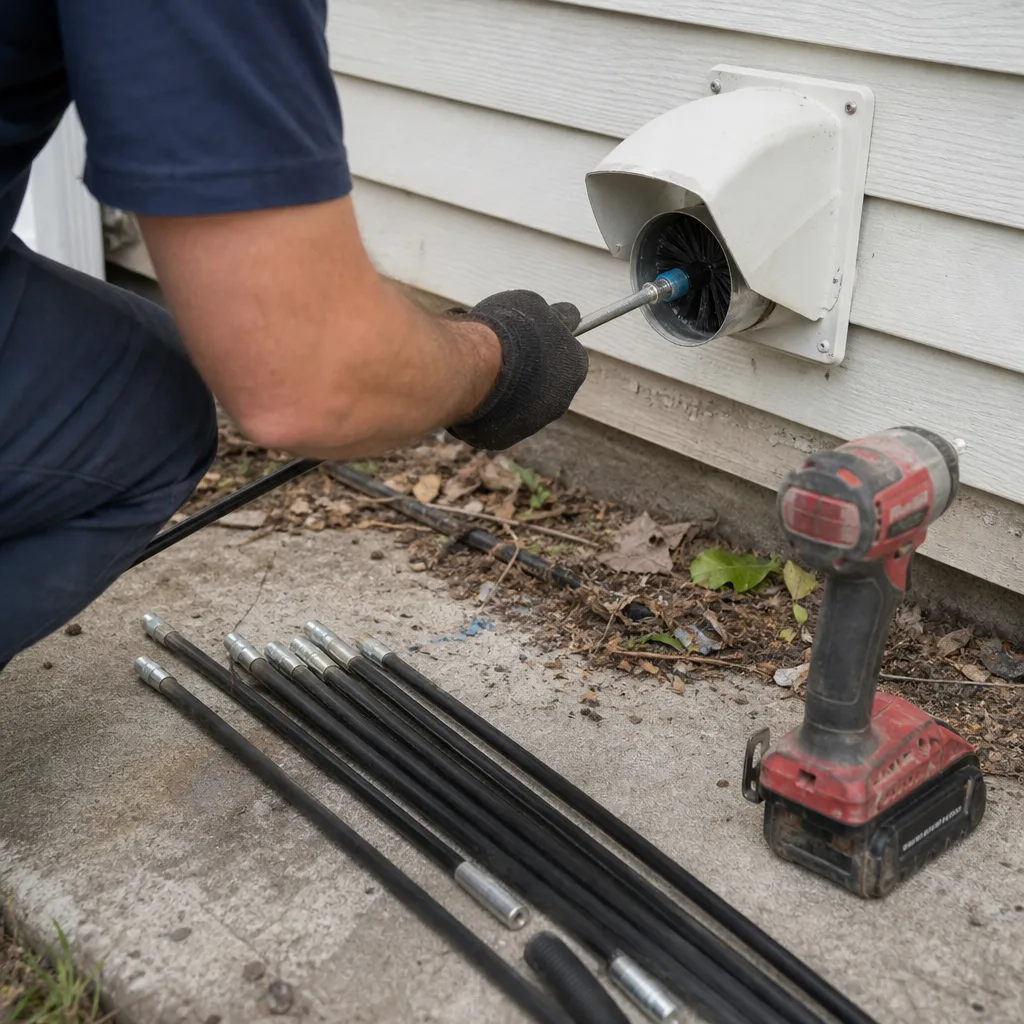
- Attempting to clean dryer vents with duct cleaning tools: Dryer vent cleaning requires specialized equipment - rotary brushes with reverse-blowing capability - and addresses a different hazard (lint accumulation and fire risk). Dryer Vent Cleaning in Round Rock is a distinct service with distinct equipment requirements. DIY dryer vent cleaning from the exterior is possible with proper tools, but interior-to-exterior cleaning without disassembly risks compacting lint into blockages.
- Ignoring the plenum and air handler: The plenum - the sheet-metal distribution box above or below your air handler - is where supply and return trunks connect. It is typically the heaviest contamination zone in the system and is completely inaccessible without opening sealed panels. Professional HVAC Cleaning in Round Rock addresses this zone; DIY methods cannot.
When to Call a Professional
Schedule professional negative-pressure duct cleaning when: your home has not had documented source-removal cleaning in 3+ years; you observe visible debris at multiple registers; you’ve completed renovation work; your HVAC system was operated without filtration during construction; you notice increased dust accumulation on surfaces or reduced airflow at distant registers; or you’re experiencing respiratory symptoms that correlate with HVAC operation.
CleanRun Air Duct Cleaning Round Rock offers free estimates in Round Rock - call (737) 259-5752. Every estimate includes a written price before any work starts, under Haven Standard Clause 1. We bring a documented photo record of every duct run, before and after, as a standard deliverable on every job. Our equipment roster includes Rotobrush, Nikro, and Abatement Technologies systems - brands you can verify independently.
Frequently Asked Questions
Whole-system professional cleaning for a typical 2,000-square-foot home in Round Rock ranges from $600 to $900, depending on duct count, system accessibility, and contamination level. This includes the plenum, all supply and return runs, and the main trunk lines, with a documented photo record of every run. Call (737) 259-5752 for a written estimate specific to your home - estimates are free and delivered before any work is discussed.
Low quotes typically reflect limited scope - often just register cleaning and a brief vacuum of accessible boots - performed with inadequate equipment. A shop vac on a service truck cannot achieve the CFM and static pressure required for source removal. The $79-$199 offers rely on upselling once the technician is in your home, or they simply move surface debris around without extraction. Ask for the equipment CFM rating and whether before-and-after photos of every run are included in the base price.
Demand a documented photo record showing the interior of every duct run before and after cleaning. Since 2013, CleanRun has delivered this as a standard job record - not an add-on, not available upon request, but included on every visit. If a provider cannot show you photos of your specific ducts, you cannot verify that source removal occurred. Written scope and photo documentation are the only evidence that matters.
Most Round Rock homes benefit from professional source-removal cleaning every 3-4 years, shorter than the 5-7 year interval typical in cooler climates. See our Seasonal Air Duct Cleaning Care for Round Rock: Year-Round Homeowner’s Guide for timing recommendations. The combination of heavy spring pollen, high summer attic temperatures accelerating duct degradation, and active construction in a growing metro area increases system loading. Homes with pets, high occupancy, or recent renovation may need more frequent service. DIY surface maintenance on registers and filters should occur quarterly.
Yes. Flex duct liner - the plastic interior surface standard in Round Rock homes built 1985-2010 - is easily torn by aggressive brushing or tools with exposed metal edges. A torn liner creates a leak that draws 140°F attic air into your conditioned air supply and introduces attic insulation and particulate into the system. If you attempt DIY cleaning, restrict your efforts to the metal boot and visible surfaces only; do not insert tools into flex duct runs.
Duct cleaning addresses the distribution network - the ducts, plenum, and registers that move air throughout your home. HVAC cleaning includes the air handler components: the evaporator coil, blower assembly, and condensate pan, which are part of the central mechanical unit. In Round Rock’s climate, where cooling loads are extreme, a clean evaporator coil is essential for efficiency and humidity control. The two services are complementary; we offer both and can assess which your system needs during a free estimate visit.
The Bottom Line
DIY duct cleaning has a defined, useful role: maintaining the accessible surfaces where visible debris collects and where immediate post-renovation containment matters. It does not, and cannot, achieve source removal from the full duct network where the bulk of contamination accumulates. The physics of negative-pressure extraction - 2,000+ CFM, adequate static pressure, sequenced agitation - requires equipment no consumer owns. In Round Rock’s climate and construction context, the cost difference between DIY-only and professional service annualizes to roughly the price of a monthly streaming subscription. The question is whether documented removal of accumulated debris from your entire system, with before-and-after photo verification, is worth that incremental investment. For homeowners who make decisions based on what they can see and verify, the answer is straightforward. Explore more guides & resources on our blog to make an informed choice.
Written by Tomas Reyes, Owner at CleanRun Air Duct Cleaning Round Rock, serving Round Rock since 2013.