
Last updated September 23, 2026
Whole-system duct and dryer vent check with before-and-after photos - you see exactly what came out of your vents
That "$99 whole-house special" is a bait ad - the real number appears once they are in your hallway, or the "clean" is a shop-vac at the register. We photograph the inside of your ducts before and after instead.
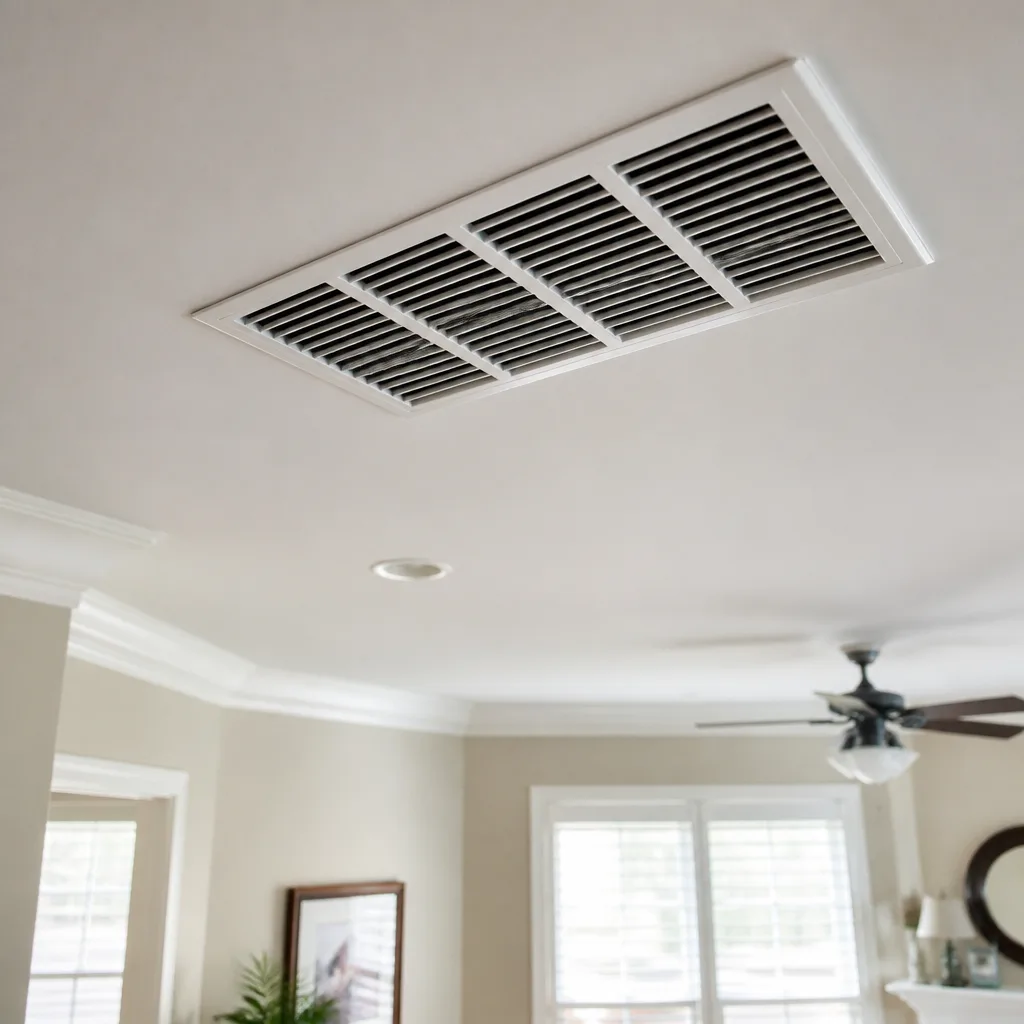
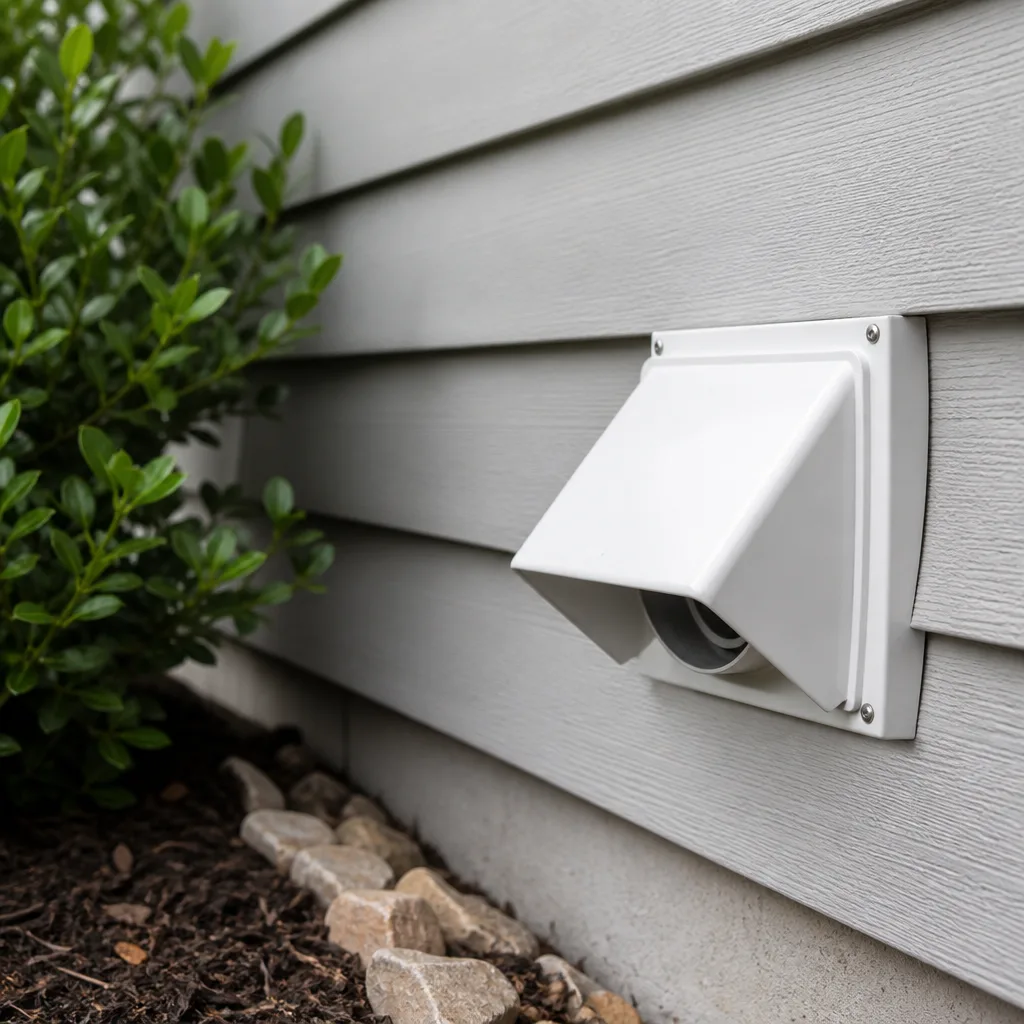
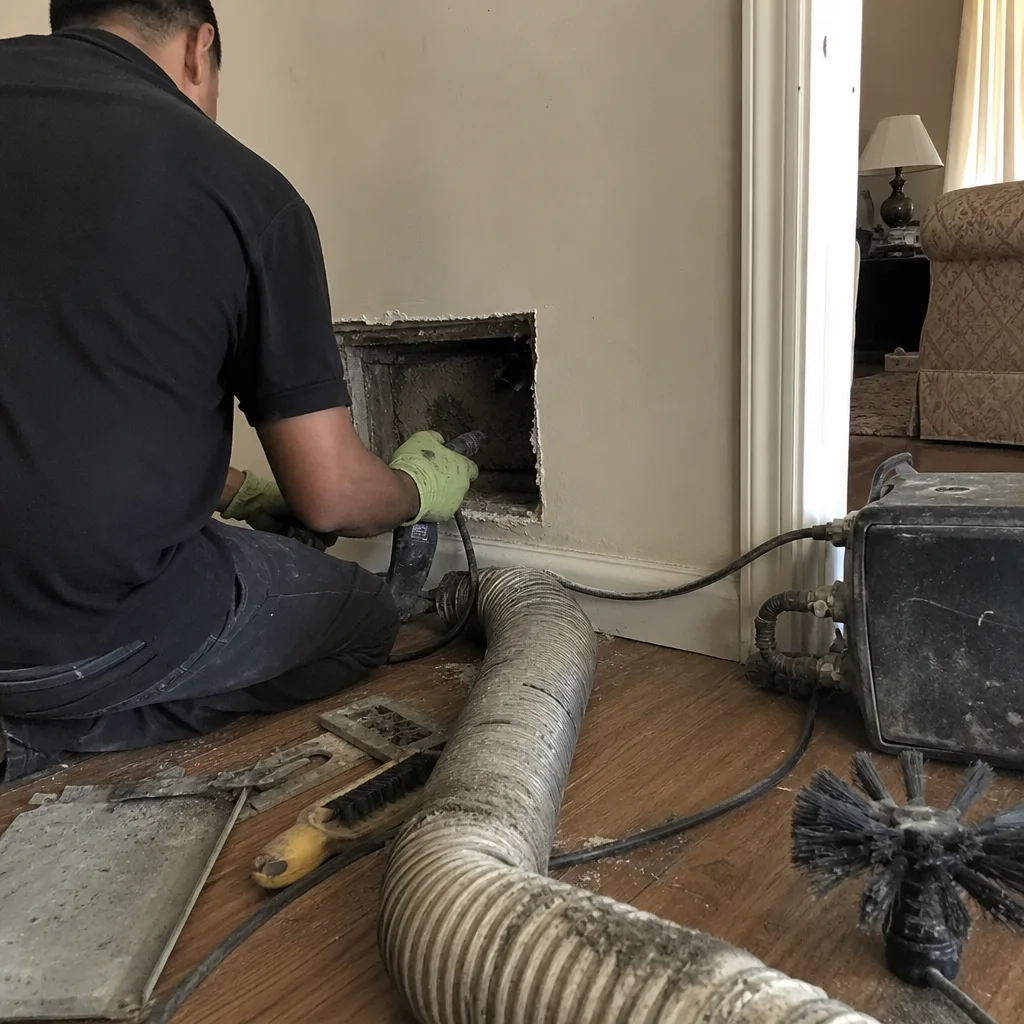 Before
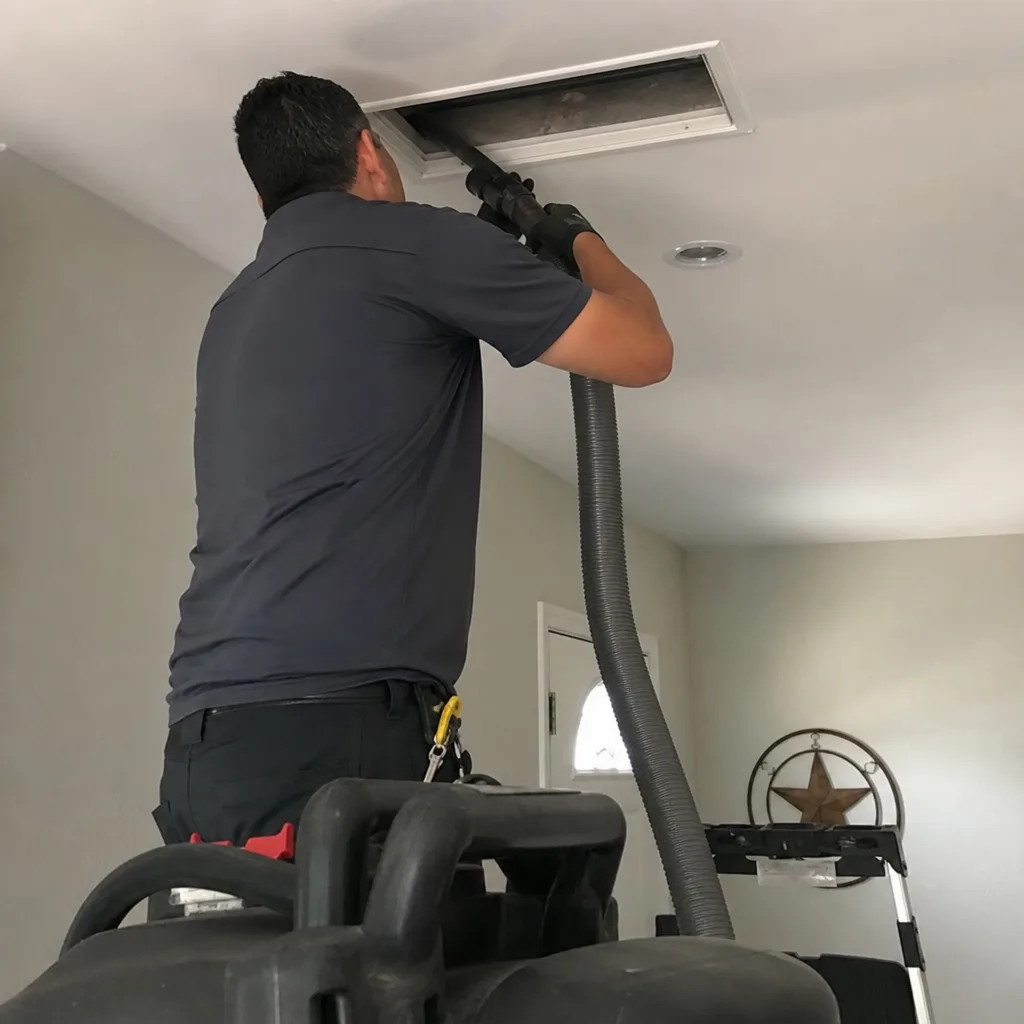 After
After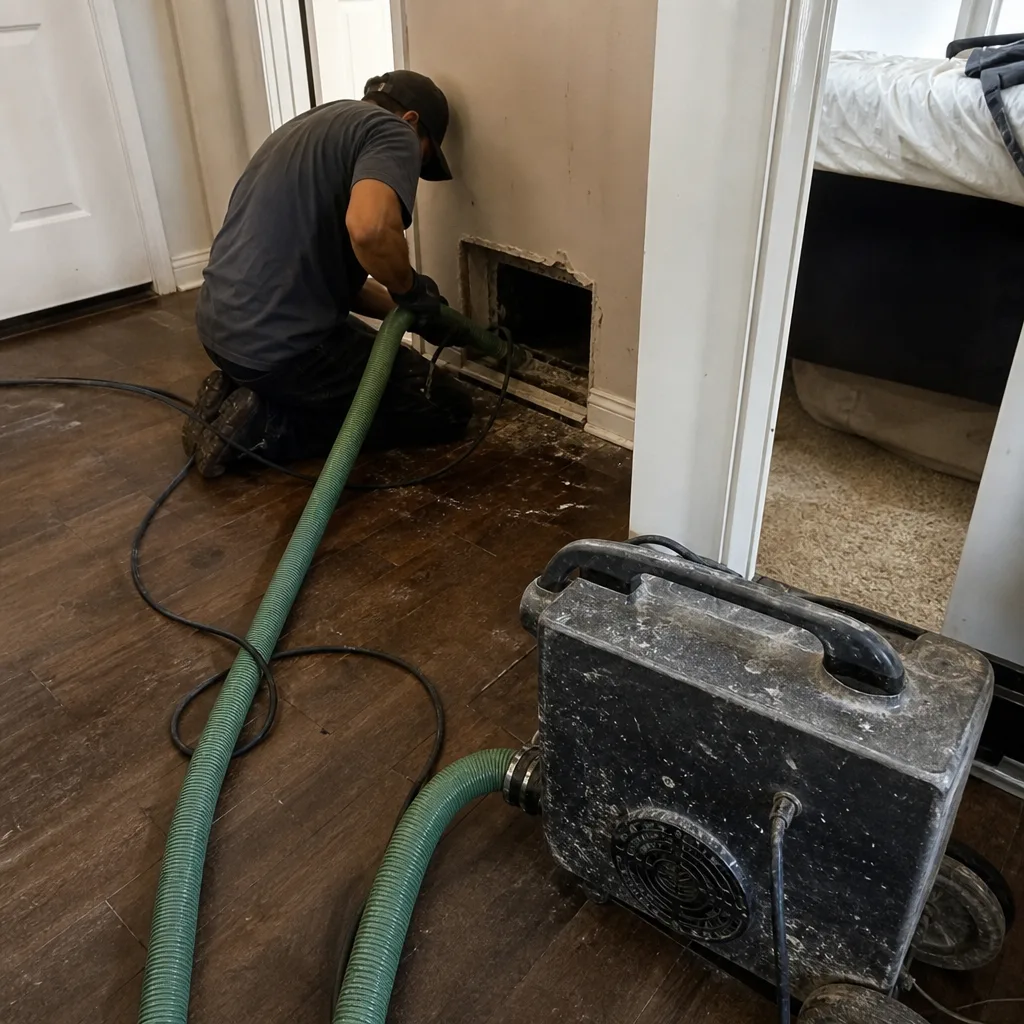 Before
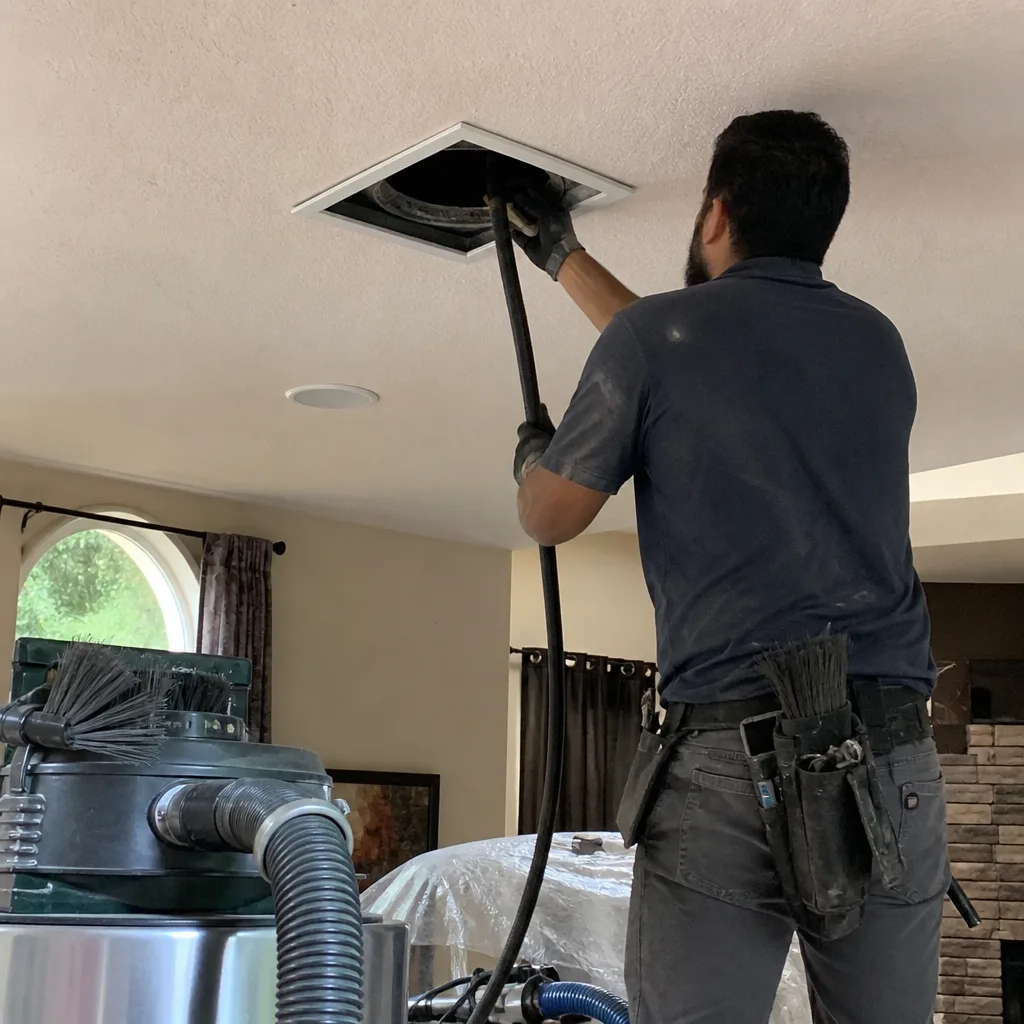 After
After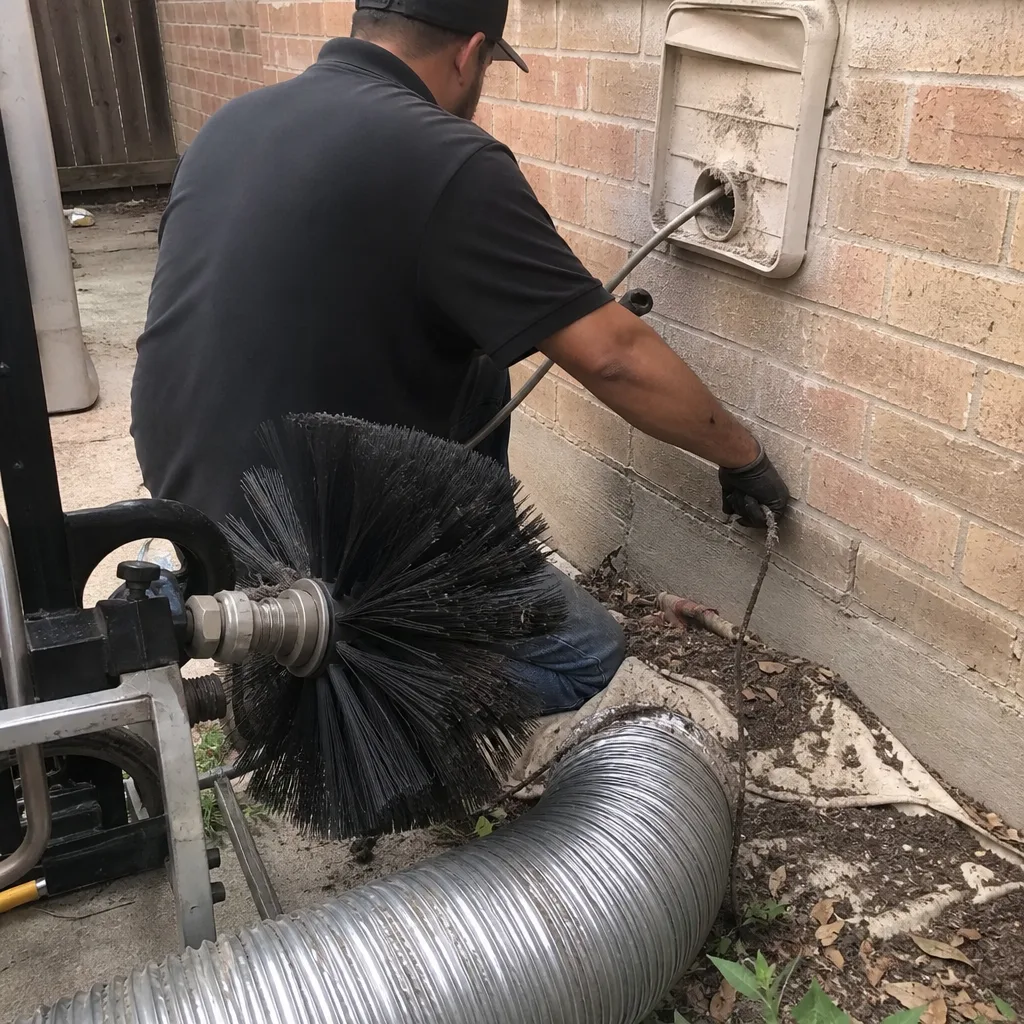 Before
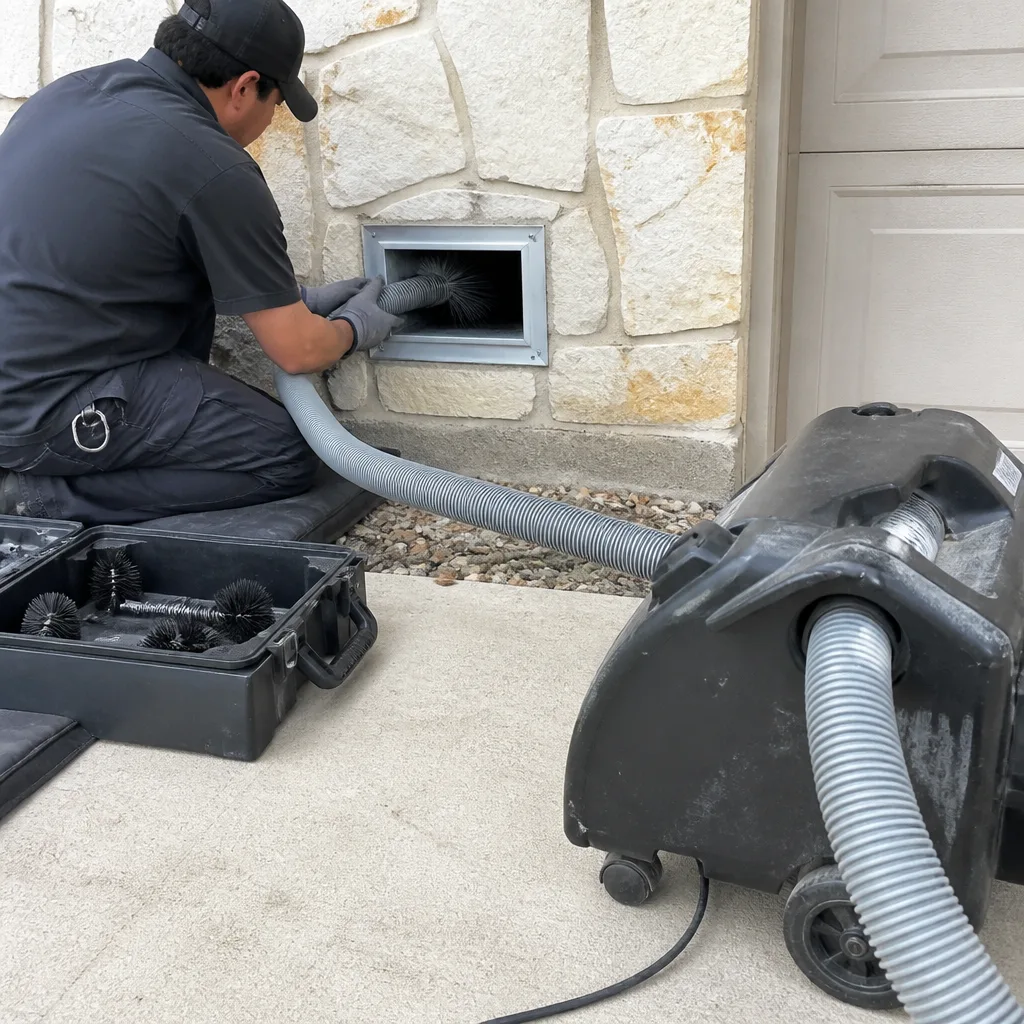 After
AfterAir Duct Cleaning Permits, Codes & Inspections in TX: What You Need to Know
Here’s the distinction that catches Round Rock homeowners off guard: air duct cleaning itself sits in an unregulated gap in Texas law, but the duct sealing and repair work that typically follows a cleaning falls under Chapter 1302 of the Texas Occupations Code and requires a licensed HVAC contractor. We’ve inspected homes in Round Rock’s Paloma Lake and Forest Creek neighborhoods where sellers faced last-minute repair demands because a previous “duct cleaning” included unpermitted plenum modifications. This guide draws the legal line between cleaning and mechanical work, explains when permits matter for resale, and shows you how to verify a contractor’s license before the truck arrives. For a deeper look at when your ducts actually need attention, see our Air Duct Cleaning Warning Signs: A Round Rock Homeowner’s Reference Guide.
Quick Answer
Air duct cleaning alone does not require a permit or HVAC license in Texas. However, duct repair, sealing with mastic or foil tape, flex duct replacement, plenum modification, or duct board patching crosses into regulated mechanical work that requires a Texas HVAC contractor license and may require a municipal permit depending on your jurisdiction in Williamson County. If you’re in Round Rock city limits, mechanical work on ducts falls under city building codes; in unincorporated Williamson County, different rules apply. For everything you need to know about the process, read The Complete Guide to Air Duct Cleaning in Round Rock.
Table of Contents
- Texas Chapter 1302: Where Duct Cleaning Ends and HVAC Work Begins
- The Legal Line: Cleaning vs. Mechanical Repair
- Round Rock vs. Williamson County: Who Requires What
- How Undocumented Duct Work Shows Up at Resale
- How to Verify a Contractor’s Texas HVAC License
- What CleanRun Documents on Every Job
- The Cost of Compliance vs. The Cost of Skipping It
- Key Takeaways
BeforeAfterTexas Chapter 1302: Where Duct Cleaning Ends and HVAC Work Begins
Texas Occupations Code Chapter 1302 governs the Air Conditioning and Refrigeration Contractor program through the Texas Department of Licensing and Regulation (TDLR). The statute defines “air conditioning and refrigeration contracting” broadly: it includes the installation, repair, or modification of any part of a system that controls temperature, humidity, or air cleanliness. Where duct cleaning sits on this spectrum depends entirely on what the technician does after the vacuum hose comes out.
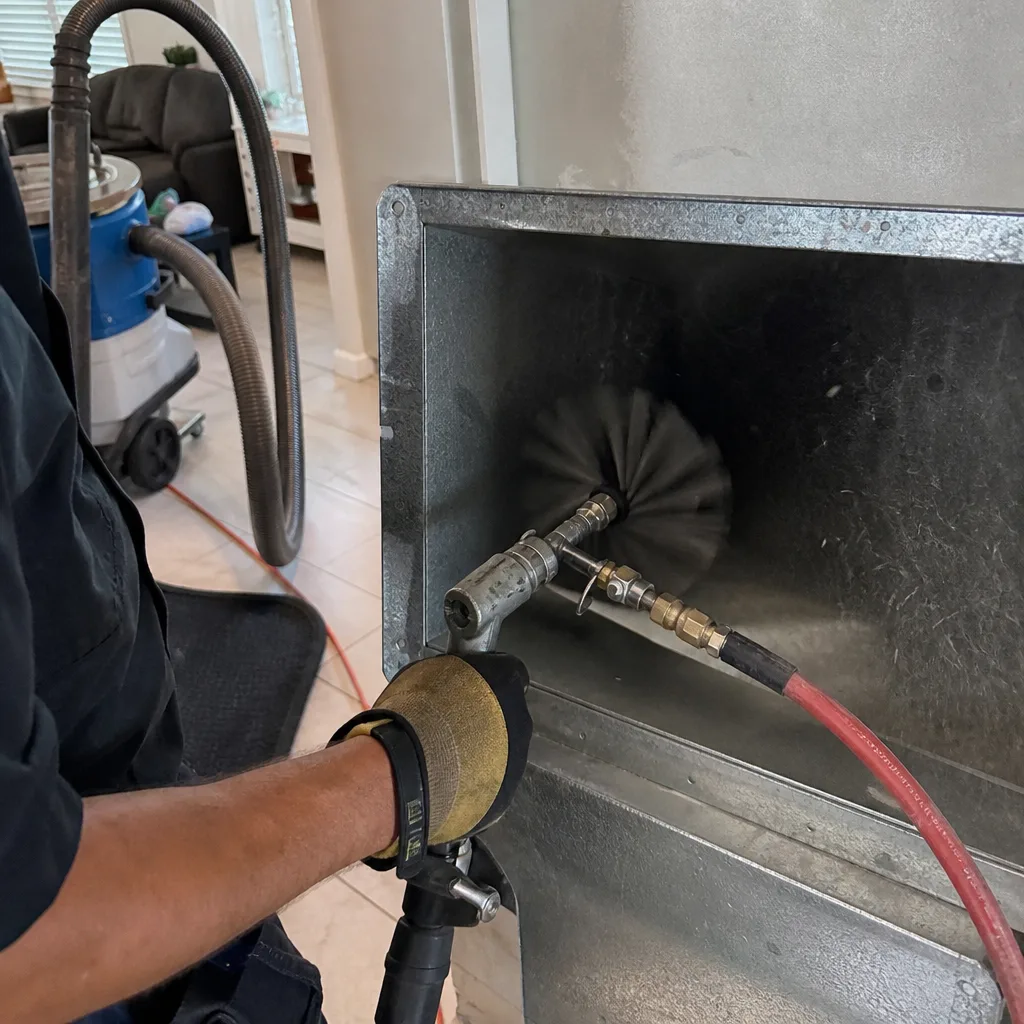
The TDLR explicitly excludes “cleaning” from its definition of regulated work, but this exclusion is narrow. It covers the removal of debris, dust, and contaminants from existing ductwork using brushes, compressed air, or negative-pressure extraction (a vacuum system that pulls loosened material out through a sealed port). Once a technician cuts, seals, replaces, or modifies any component of the duct system, they’ve crossed into mechanical work.
We’ve encountered this boundary repeatedly in Round Rock homes built during the 2015-2020 construction boom. Many of these houses have flex duct runs that sag or separate at the collar connections after five to seven years of Central Texas heat cycling. A cleaning company that reattaches that flex duct with a zip tie and foil tape has performed mechanical repair. If they replace the entire run, they’ve performed installation work. Both require a TDLR license.
The penalty for unlicensed HVAC work in Texas is administrative and civil, not criminal, but it’s substantial. TDLR can issue cease-and-desist orders, impose administrative penalties up to $5,000 per violation, and refer cases to the Attorney General for injunctive relief. For homeowners, the practical risk isn’t a fine, it’s what happens when the work surfaces during a transaction.
Key distinctions under Chapter 1302:
- Cleaning only: Brushing, vacuuming, or agitating debris inside existing ductwork - no license required
- Sealing accessible leaks: Applying mastic or foil tape to reachable joints - gray area; many jurisdictions treat this as maintenance, but extensive sealing crosses into repair
- Replacing flex duct, collars, or plenum sections: Licensed HVAC contractor required
- Modifying duct board or metal trunk lines: Licensed HVAC contractor required
- Installing new registers or relocating returns: Licensed HVAC contractor required; permit likely required
Round Rock’s rapid growth has attracted operators who blur these lines. We’ve arrived at jobs in Teravista and Behrens Ranch where a previous “cleaning” included duct repairs the homeowner didn’t know were regulated. The work looked fine until an HVAC technician during a seasonal tune-up noted that a plenum patch had been done without proper support, creating a new restriction.
The Legal Line: Cleaning vs. Mechanical Repair
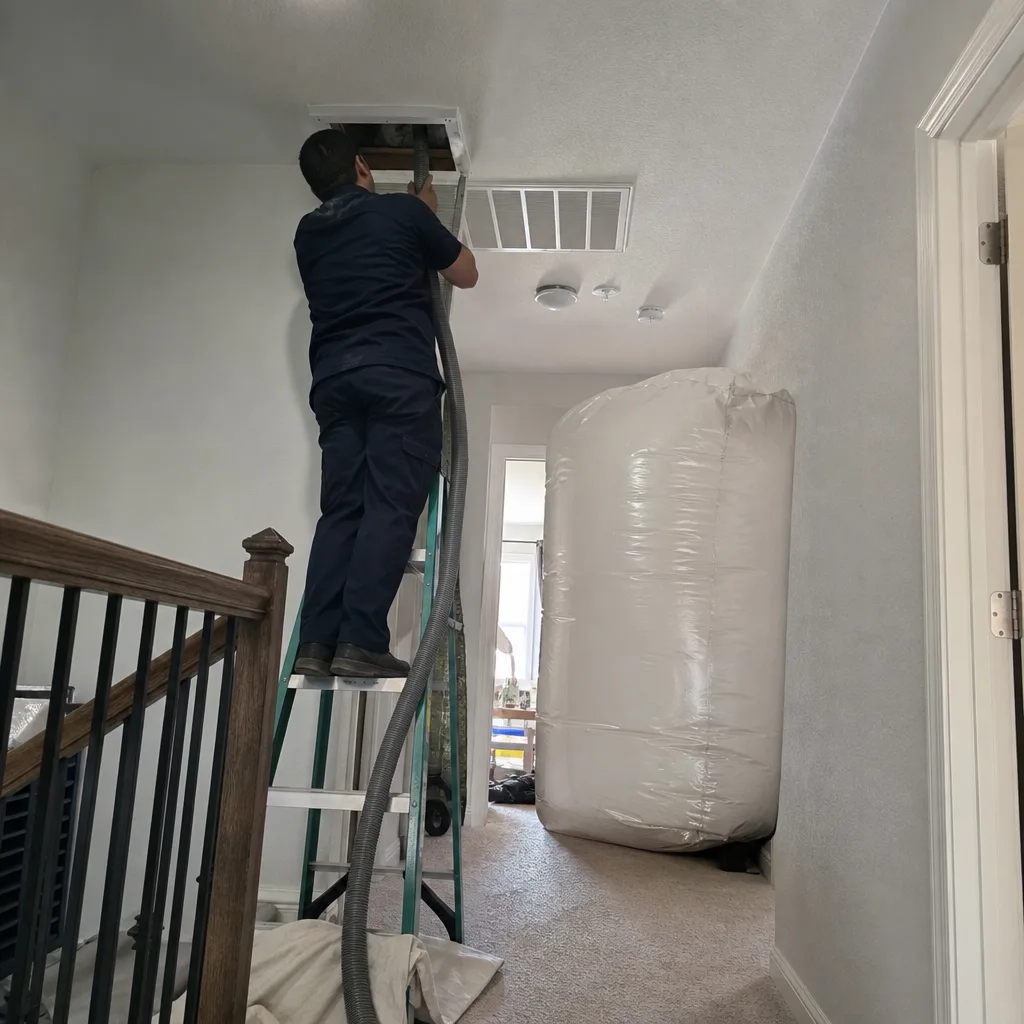
The physical actions that separate cleaning from repair are specific and observable. Understanding them protects you from two problems: hiring an unqualified contractor for regulated work, and paying a licensed HVAC contractor for work that doesn’t require their expertise.
Actions That Stay in the “Cleaning” Category
These tasks require no TDLR license and no permit in Texas:
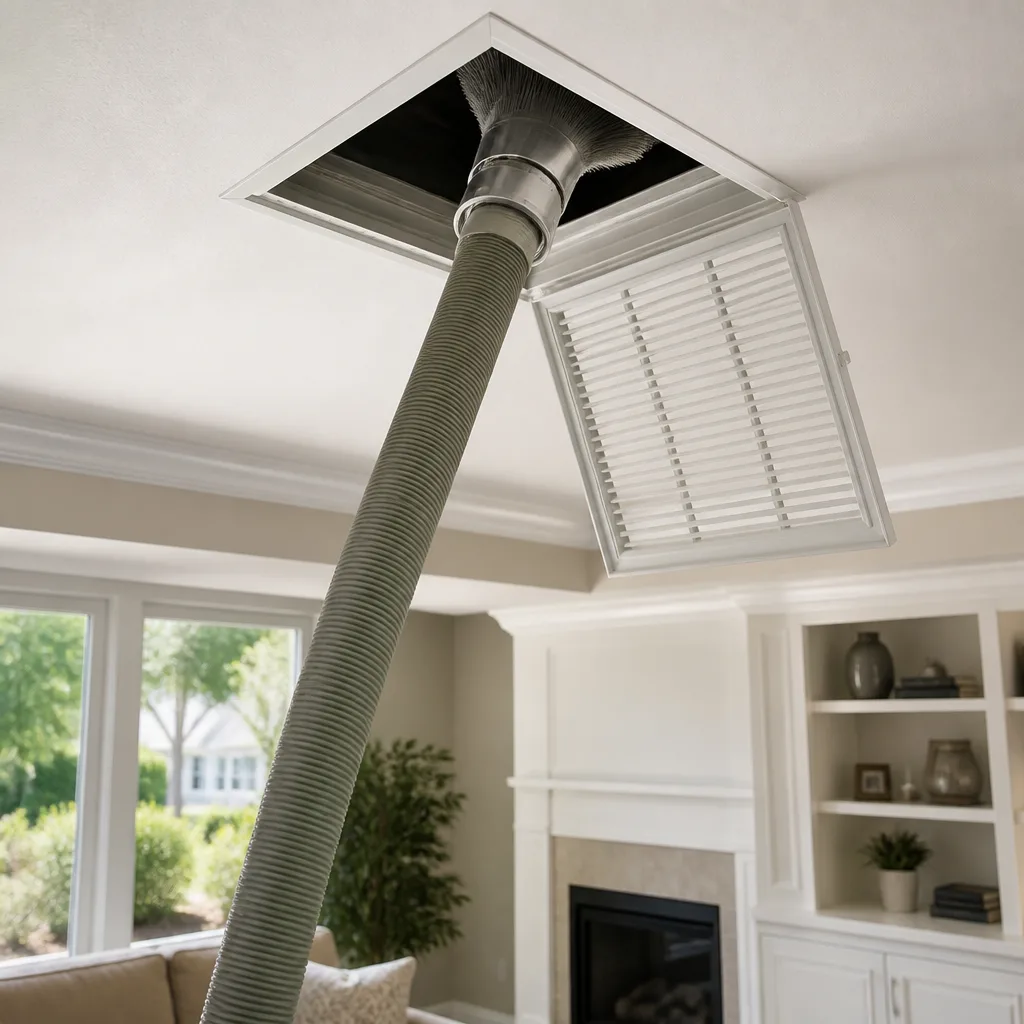
- Negative-pressure extraction - A vacuum unit, typically mounted on a truck or portable cart, creates suction at a sealed access port while brushes or compressed air tools dislodge debris inside the duct run (the individual branch of ductwork serving a room or zone).
- Register and boot cleaning - Removing supply and return registers to clean the boot (the sheet-metal transition piece between the duct and the room) with brushes and vacuum.
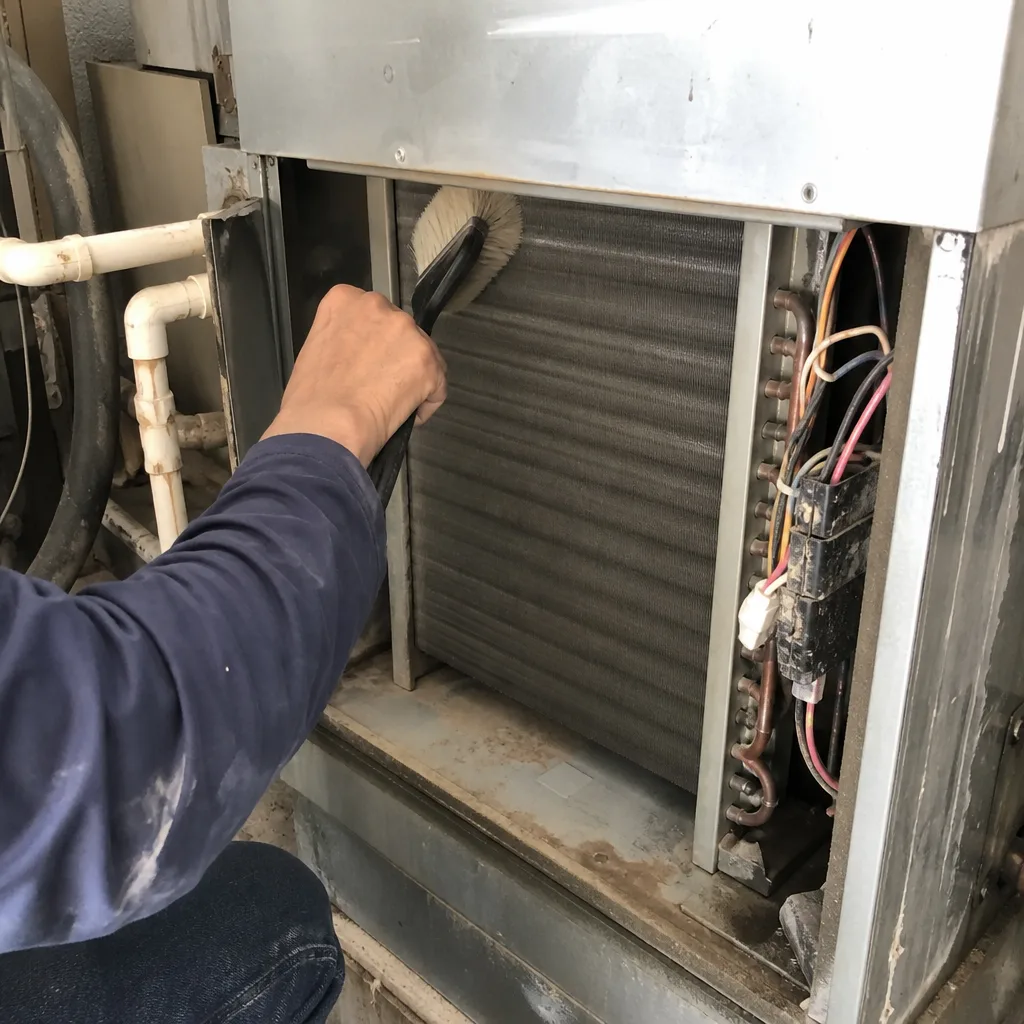
- Coil cleaning - Applying foaming cleaner to the evaporator coil inside the air handler, then rinsing and vacuuming. This is maintenance on an existing component, not modification.
- Sanitizing treatment - Applying EPA-registered antimicrobial products to interior duct surfaces after cleaning. The product does not alter the duct’s structure or airflow characteristics.
Actions That Cross into “Mechanical Repair”
These tasks require a TDLR-licensed HVAC contractor and may require a permit:
- Flex duct replacement - Removing and replacing deteriorated flex duct, including proper sizing, insulation R-value matching, and support strap placement at maximum 4-foot intervals per IRC standards.
- Plenum modification - Cutting, extending, or rebuilding the plenum (the large sheet-metal box that connects the air handler to the trunk duct system) to accommodate a new coil, filter cabinet, or zoning damper.
- Duct board patching or replacement - Fibrous glass duct board, common in 1980s and 1990s Texas construction, requires specialized cutting tools and proper sealing with UL-181-rated tape and mastic.
- Mastic sealing of extensive leaks - While spot-sealing a few accessible joints is often treated as maintenance, systematic sealing of an entire duct system - particularly when it involves accessing concealed runs - constitutes repair work in many jurisdictions.
- Adding or relocating registers - Any modification to the distribution system that changes airflow design requires engineering consideration and permit verification.
The climate in Round Rock amplifies why this distinction matters. Our summer design temperature of 99°F per ACCA Manual J means duct systems operate under extreme load for months. A poorly supported flex duct replacement or an improperly sealed plenum doesn’t just leak conditioned air; it creates negative pressure that pulls attic heat and humidity into the system. We’ve photographed 140°F attic air being drawn into ductwork through gaps the homeowner didn’t know existed until our camera went in.
At CleanRun Air Duct Cleaning in Round Rock, we document the condition of every duct run with before-and-after photography. When our inspection shows mechanical repair is needed, we explain what we found, why it requires a licensed HVAC contractor, and whether we can coordinate that work under our own TDLR-licensed division or refer you to a partner we trust. We don’t perform regulated mechanical work without the proper license, and we don’t pretend cleaning alone fixes structural problems.
Round Rock vs. Williamson County: Who Requires What
Jurisdiction determines permit requirements, and in the Round Rock area, your address matters more than you might expect. The city of Round Rock maintains its own Building and Development Services department with adopted codes including the 2021 International Mechanical Code (IMC) with local amendments. Unincorporated Williamson County follows the Williamson County Building Code, which references the 2018 IMC with different amendment language.
If you’re in Round Rock city limits - roughly bounded by FM 1460 to the north, IH-35 to the east, FM 620 to the south, and the Balcones Canyonlands Preserve boundary to the west - mechanical work on your duct system requires a permit when it involves:
- Replacement of ductwork totaling more than 50 linear feet
- Modification of the plenum or air handler cabinet
- Installation of new duct runs or registers
- Any work that alters the heating or cooling capacity of the system
The city does not require permits for cleaning, maintenance, or minor repairs that don’t alter system capacity. However, Round Rock’s definition of “minor repair” is narrower than many homeowners assume. Replacing a single flex duct run of 25 feet? No permit. Replacing three runs and sealing the plenum? That’s a permit.
In unincorporated Williamson County - areas like parts of Brushy Creek, Jollyville, and the territory between Round Rock and Cedar Park city limits - the Williamson County Building Division handles permits. Their threshold for mechanical permits is similar but their inspection scheduling and fee structure differ. A mechanical permit in unincorporated Williamson County runs approximately $85-$150 for residential ductwork modifications, compared to Round Rock’s $120-$200 range depending on project valuation.
The practical difference for homeowners: Round Rock permits trigger a mandatory inspection, typically scheduled within 2-3 business days of completion. Williamson County permits may be inspected or may receive a “remote review” for smaller projects, at the building official’s discretion. Both jurisdictions require the work to be performed by or under the direct supervision of a TDLR-licensed HVAC contractor.
We’ve worked in Round Rock neighborhoods where the city limit line runs through a subdivision. One side of the street falls under Round Rock’s code enforcement; the other, Williamson County’s. The homeowner on the county side had unpermitted plenum work done by a cleaning company that didn’t know the difference. When they sold in 2022, the buyer’s inspector flagged the modification. The seller had to pay a retroactive permit fee, a late penalty, and the cost of a licensed contractor’s inspection letter - all because the original “cleaning” company performed work they weren’t qualified to document.
Round Rock’s specific requirements are published in the city’s Residential Building Permit Guide, available at the Development Services Center on Main Street. Williamson County’s procedures are outlined in the Williamson County Building Code Administrative Manual. Both documents are public record, and any contractor performing regulated work should be able to tell you which jurisdiction applies to your address before work begins.
How Undocumented Duct Work Shows Up at Resale
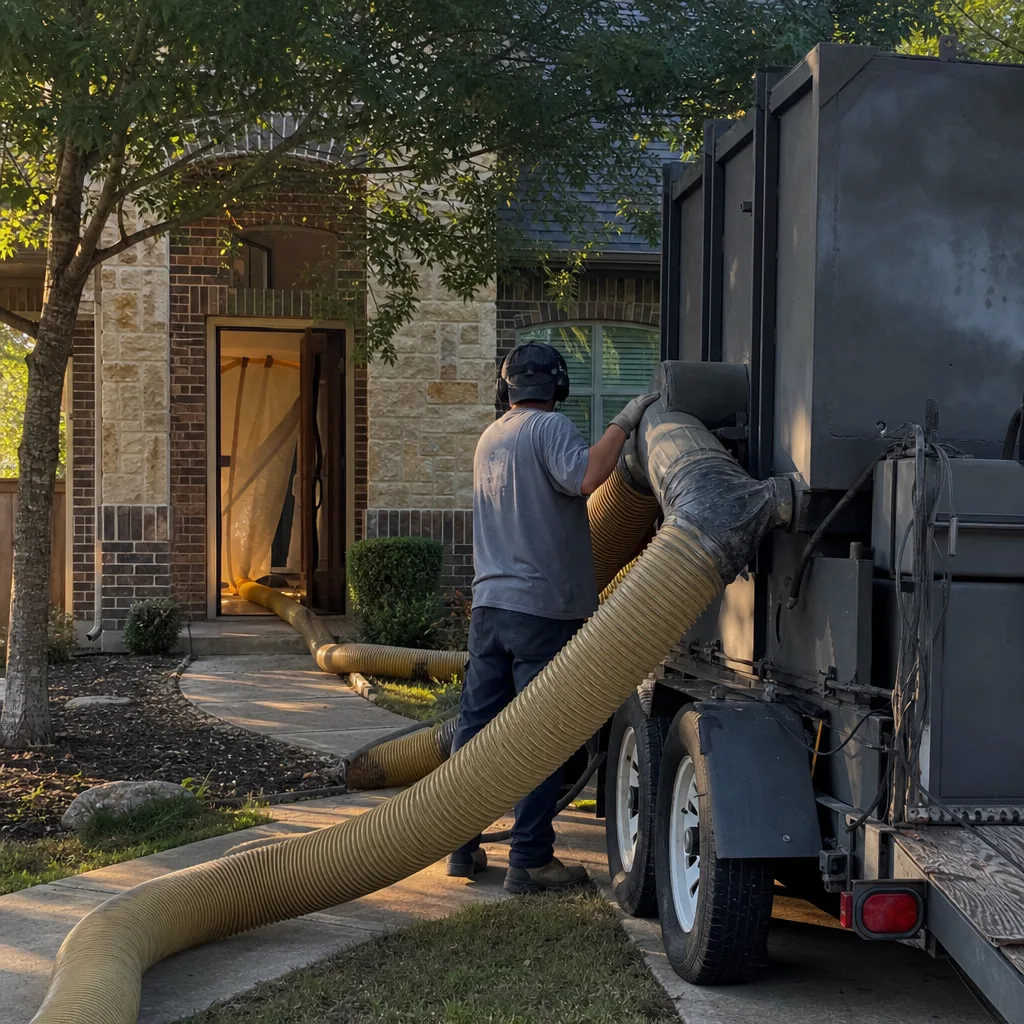
The moment permit records become relevant is typically not during the work itself, but months or years later when the house changes hands. Texas Property Code requires sellers to disclose known defects and unpermitted work on the Seller’s Disclosure Notice. What constitutes “known” is broader than many sellers realize: if you hired someone to do the work, you know it exists.
Here’s how undocumented duct modifications surface during a typical Round Rock resale:
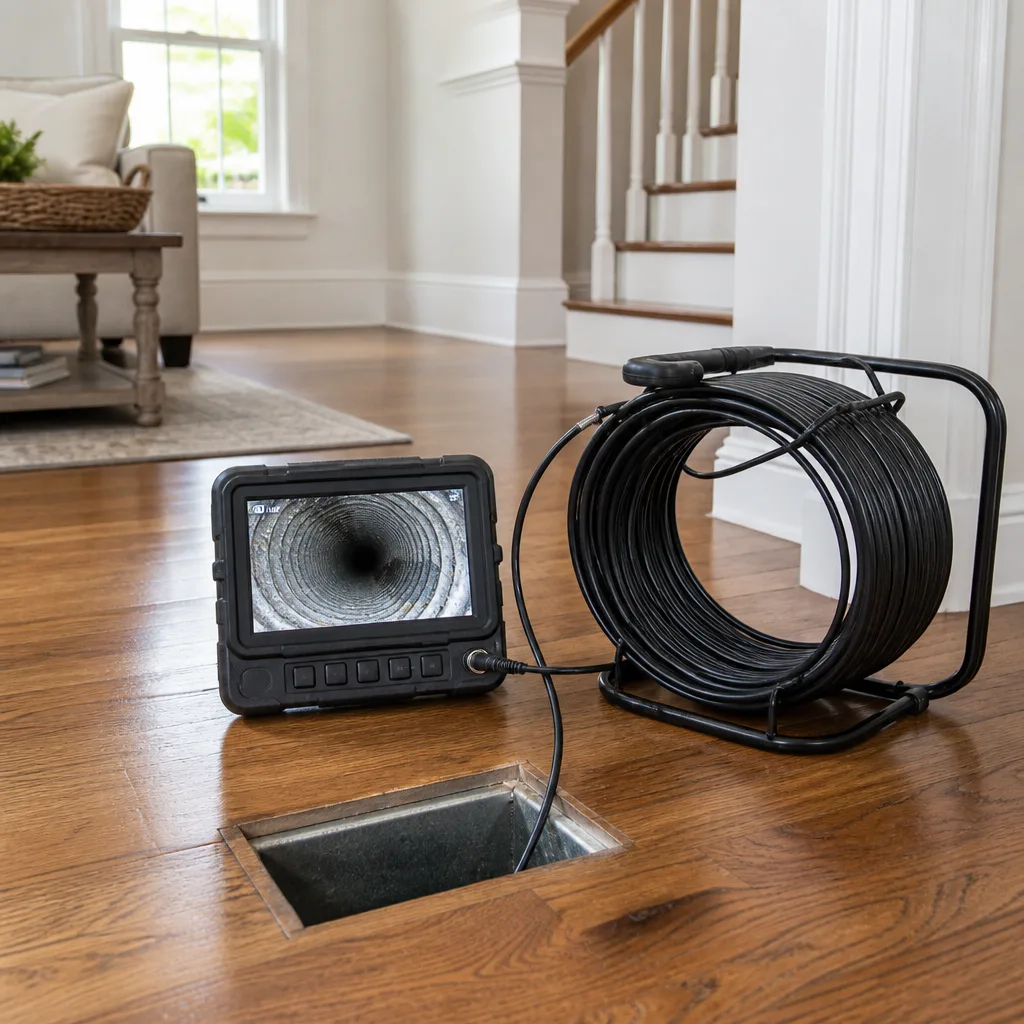
- Buyer’s HVAC inspection - A thorough home inspector in the Round Rock market will remove at least one register per system to examine duct conditions with a borescope camera. They’ll note recent modifications by tape freshness, screw type, or material mismatches.
- Permit history search - Title companies and savvy buyers’ agents pull permit records for the property address. A clean permit history with no mechanical permits raises questions when the HVAC system shows obvious modifications.
- Appraiser condition notes - FHA and VA appraisers specifically flag unpermitted mechanical work as a condition that may require repair or documentation before loan approval.
- Insurance underwriting - Some carriers request permit verification for homes with recent HVAC modifications, particularly if the work involved electrical or gas connections.
The disclosure form itself - Texas Real Estate Commission Form OP-H, the Seller’s Disclosure Notice - includes Item 7C: “Are you aware of any work performed on the property for which a permit was required but not obtained?” A “no” answer based on not knowing the work required a permit is defensible but risky. A “yes” answer with no documentation attached typically triggers buyer negotiation for repair credits or professional inspection at seller expense.
We’ve been called to Round Rock homes in Steiner Ranch and Walsh Ranch where sellers faced this exact scenario. In one case, a 2019 “duct cleaning and sealing” package included replacement of two flex duct runs and mastic sealing of the entire plenum. The work was performed competently but without a permit by a company that held no TDLR license. The 2023 buyer’s inspector noted the plenum mastic was fresh and extensive, the seller’s disclosure showed no permits, and the title search came up clean. The buyer’s lender required a licensed HVAC contractor’s letter confirming the work met code. That letter cost $425 and delayed closing by eleven days.
The documentation that prevents this problem is straightforward: a permit application with scope of work, a TDLR license number on the invoice, and inspection sign-off. CleanRun’s approach is to perform only cleaning work under our standard service protocol and to coordinate any mechanical repairs through properly licensed channels with permit documentation delivered to the homeowner as a PDF. Our CleanRun Air Duct Cleaning Round Rock home page details how this process works for new customers.
How to Verify a Contractor’s Texas HVAC License
Texas makes license verification simple, but most homeowners don’t know where to look. The TDLR’s online license search at license.texas.gov allows you to verify any contractor’s credentials in under two minutes. Here’s what to check and what the results mean.
Step-by-Step License Verification
- Obtain the license number - A legitimate contractor provides this without hesitation. At CleanRun, we publish our TDLR license number on every proposal and on our website. If a contractor deflects or says they’ll “get it to you later,” that’s a signal to pause.
- Search the TDLR database - Enter the license number at license.texas.gov. The system returns the licensee’s name, business name, license type, status, and expiration date.
- Confirm license type - For duct repair and modification, you want an “Air Conditioning and Refrigeration Contractor” license, not an “Air Conditioning and Refrigeration Technician” license. Technicians work under a contractor’s supervision; contractors can operate independently and pull permits.
- Check status and expiration - Active status with a future expiration date is required. Texas HVAC licenses expire annually and require continuing education for renewal.
- Verify complaint history - The TDLR site lists disciplinary actions. A complaint doesn’t disqualify a contractor, but a pattern of violations for unlicensed activity or permit violations should.
Beyond the TDLR search, ask three specific questions before any duct repair work begins:
- “Will this work require a permit, and if so, who pulls it?” - The answer should be specific to your address and scope. “We’ll take care of it” without naming a jurisdiction is insufficient.
- “Can you provide a certificate of insurance naming me as additional insured?” - Licensed contractors carry general liability and workers’ compensation. CleanRun maintains both, with coverage details provided in every proposal under Haven Standard Clause 2: Documented Coverage.
- “What documentation will I receive when the work is complete?” - You should receive an invoice with license number, scope of work, permit number if applicable, and inspection sign-off if required.
We’ve encountered operators in the Round Rock market who present a business license or city occupational license as proof of HVAC qualification. These are not the same. A Round Rock business license allows a company to operate within city limits; it says nothing about technical qualifications. Only the TDLR license authorizes mechanical work on your duct system.
The equipment a contractor uses also signals their trade knowledge. Professional-grade duct cleaning equipment from manufacturers like Rotobrush, Nikro, and Guardsman is designed for cleaning, not repair. If a technician arrives with only cleaning tools and proposes extensive duct modifications, ask how they plan to execute and verify that work. Proper duct repair requires sheet-metal tools, duct board cutting equipment, and UL-181-rated sealing materials - not shop vac attachments.
What CleanRun Documents on Every Job
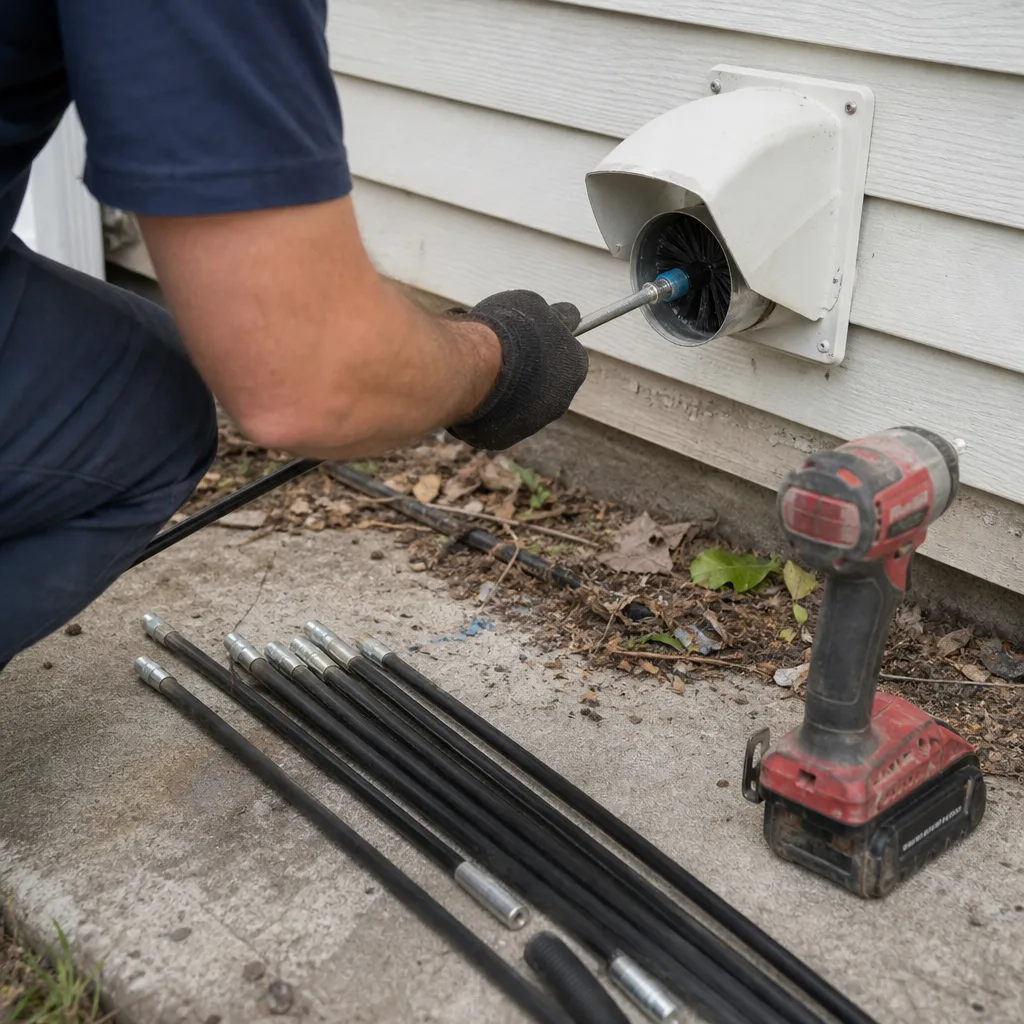
Our documentation protocol exists specifically to close the gap between what homeowners know and what they need to prove. Every CleanRun job in Round Rock generates three deliverables, whether the scope is cleaning alone or coordinated repair work.
Written Price Before Work Starts - Haven Standard Clause 1 requires a fixed, itemized price delivered in writing before any panel comes off. This isn’t an estimate range; it’s the price you’ll pay. For cleaning-only jobs, we price per system based on square footage, register count, and accessibility. If our inspection reveals mechanical repair needs, we provide a separate written scope for that work with license verification and permit requirements noted.
Documented Photo Record - Since our first job in 2013, we’ve photographed the interior of every duct run before and after service. These images are delivered as part of the standard job record, not held hostage for a review or additional fee. You can see what we found: the 2-inch debris layer at the first elbow, the separated flex duct collar, the rust spot on the plenum. This documentation serves two purposes. It proves the work was performed, and it creates a baseline for future comparison. When we return to a Round Rock home three years later, we can show exactly what changed.
365-Day Done Right Promise - Our written guarantee, not a policy subject to manager approval. If the work isn’t right, we make it right. For cleaning, this means re-service if debris remains visible in the photo record. For coordinated repair work, it means the licensed contractor’s warranty plus our oversight of their performance. Haven Standard Clause 5: Accountable Completion.
When mechanical repair is needed, we coordinate with our TDLR-licensed repair division or refer to a vetted partner. The permit application, inspection scheduling, and sign-off are handled as part of the project. You receive the permit number, inspection date, and final approval as PDF attachments to your job record. This is the documentation that satisfies a buyer’s inspector, an appraiser’s condition note, or an insurance underwriter’s request.
Our equipment roster includes Rotobrush brush-and-vac systems for residential duct cleaning, Nikro portable negative-pressure units for tighter access situations, and Guardsman HEPA filtration for post-cleaning air quality verification. We name these brands so you can research their specifications independently and verify that our tools match our claims.
The Cost of Compliance vs. The Cost of Skipping It
Homeowners naturally weigh the price of permitted, licensed work against the apparent savings of unpermitted alternatives. The math changes when you account for the full lifecycle cost, including transaction risk and system performance.
| Scenario | Upfront Cost | Typical Additional Costs | Total Exposure |
|---|---|---|---|
| Licensed cleaning + permitted repair | $400-$700 cleaning + $800-$1,500 repair | Permit fee $120-$200 | $1,320-$2,400, fully documented |
| Cleaning-only by unlicensed operator | $79-$199 | Deferred repair costs, potential re-cleaning, no documentation | $79-$199 + unknown future costs |
| “Cleaning package” including unpermitted repair | $299-$599 | Retroactive permit + inspection letter $400-$800; potential re-work; closing delay costs | $699-$1,400+ if flagged at sale |
The $79 coupon model deserves specific scrutiny. At that price point, no legitimate operator can cover labor, equipment, insurance, and documentation for a whole-system cleaning. The economics only work through upsell: discovering “urgent” repair needs once inside the home, or performing minimal cleaning while charging for additional services. We’ve been called to Round Rock homes where a $79 cleaning became a $1,200 invoice for “mold remediation” that consisted of spraying a retail antimicrobial product available at any hardware store.
Our pricing is whole-system and flat-rate. A typical single-system cleaning in Round Rock’s 2,000-3,000 square foot homes runs $400-$550, depending on register count and accessibility factors like attic temperature and crawl space clearance. This includes the full photo record, the written scope, and the 365-Day Done Right Promise. Repair work, when needed, is priced separately with full license and permit documentation.
The cost of skipping compliance surfaces most painfully at transaction time. In Round Rock’s competitive resale market, where median home prices have ranged from $375,000 to $450,000 in recent years, an eleven-day closing delay or a $5,000 repair credit negotiation dwarfs the original savings from unpermitted work. The permit fee that seemed unnecessary becomes the cheapest insurance you could have bought.
Key Takeaways
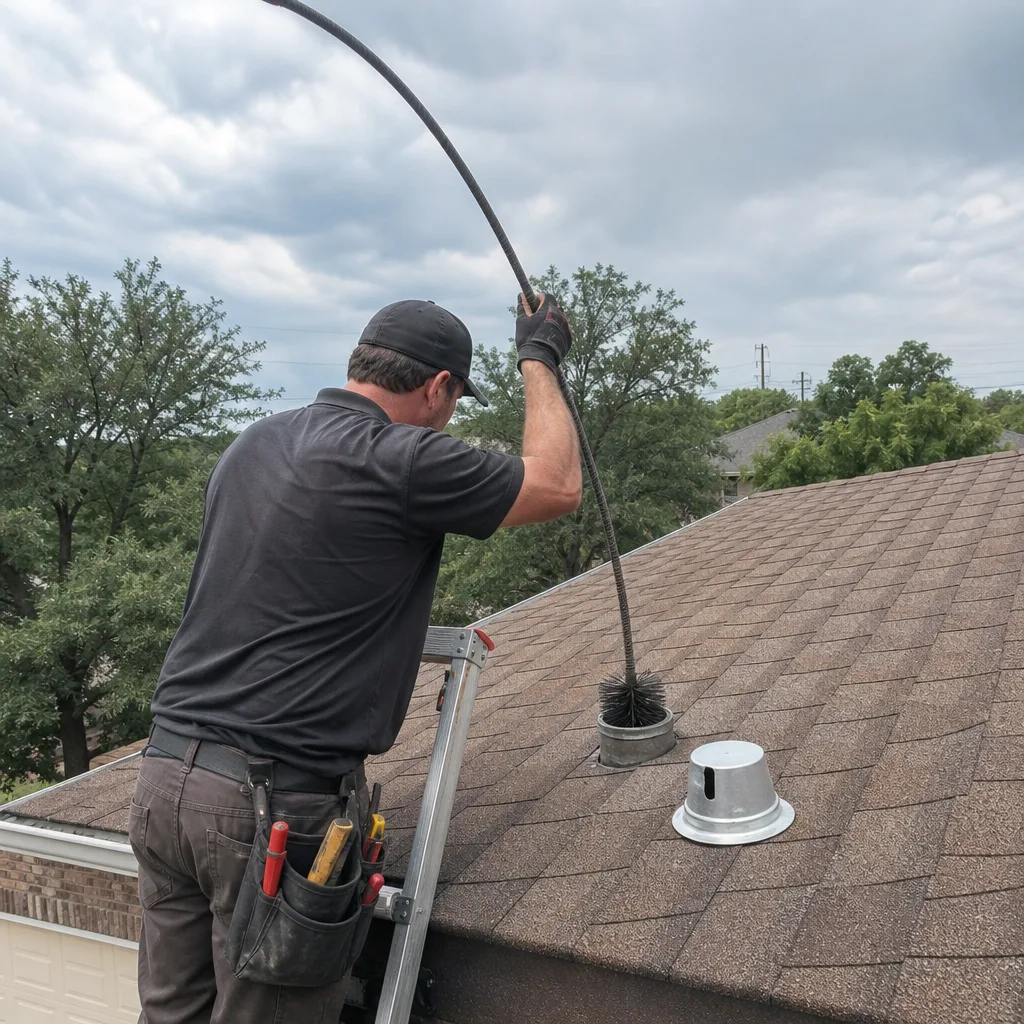
- Air duct cleaning alone requires no Texas HVAC license or permit, but the line between cleaning and mechanical repair is specific and frequently crossed without homeowner knowledge.
- Flex duct replacement, plenum modification, duct board patching, and systematic sealing require a TDLR-licensed HVAC contractor and may require a municipal permit in Round Rock or Williamson County.
- Your address determines jurisdiction: Round Rock city limits follow the 2021 IMC with local amendments; unincorporated Williamson County follows different procedures and fee structures.
- Undocumented duct work surfaces at resale through buyer inspections, permit history searches, and lender requirements, potentially costing far more than original compliance would have.
- Verify any contractor’s TDLR license at license.texas.gov before allowing mechanical work; a business license is not a substitute.
- Demand written documentation for all work: scope, price, license number, permit number, and inspection sign-off if applicable.
Common Mistakes to Avoid
- Assuming “duct cleaning” covers everything inside the vents. Many Round Rock homeowners believe a cleaning package includes whatever the technician finds necessary. In reality, extensive sealing or repair without proper licensing creates liability you may not discover until sale.
- Accepting verbal assurances about permits. A contractor who says “we’ve never needed a permit before” is describing their own compliance gap, not a legal exemption. Permits are jurisdiction-specific and scope-specific.
- Confusing a business license with an HVAC license. Round Rock’s city business license allows operation within city limits; only TDLR licensure authorizes mechanical work on your duct system.
- Ignoring the permit history when buying a home. A clean permit record with obvious HVAC modifications is a red flag. Ask the seller for documentation or budget for a licensed inspection.
- Paying for “mold remediation” without independent verification. We’ve found that many Round Rock homes flagged for “mold” during discount cleanings show only ordinary dust accumulation when examined by an independent hygienist.
- Letting a cleaning company perform repairs without license verification. The work may look acceptable and function adequately, but without proper documentation, it becomes your problem at transaction time.
- Failing to request before-and-after documentation. Without photographic evidence of what was inside your ducts, you have no proof the work was performed or baseline for future comparison.
When to Call a Professional
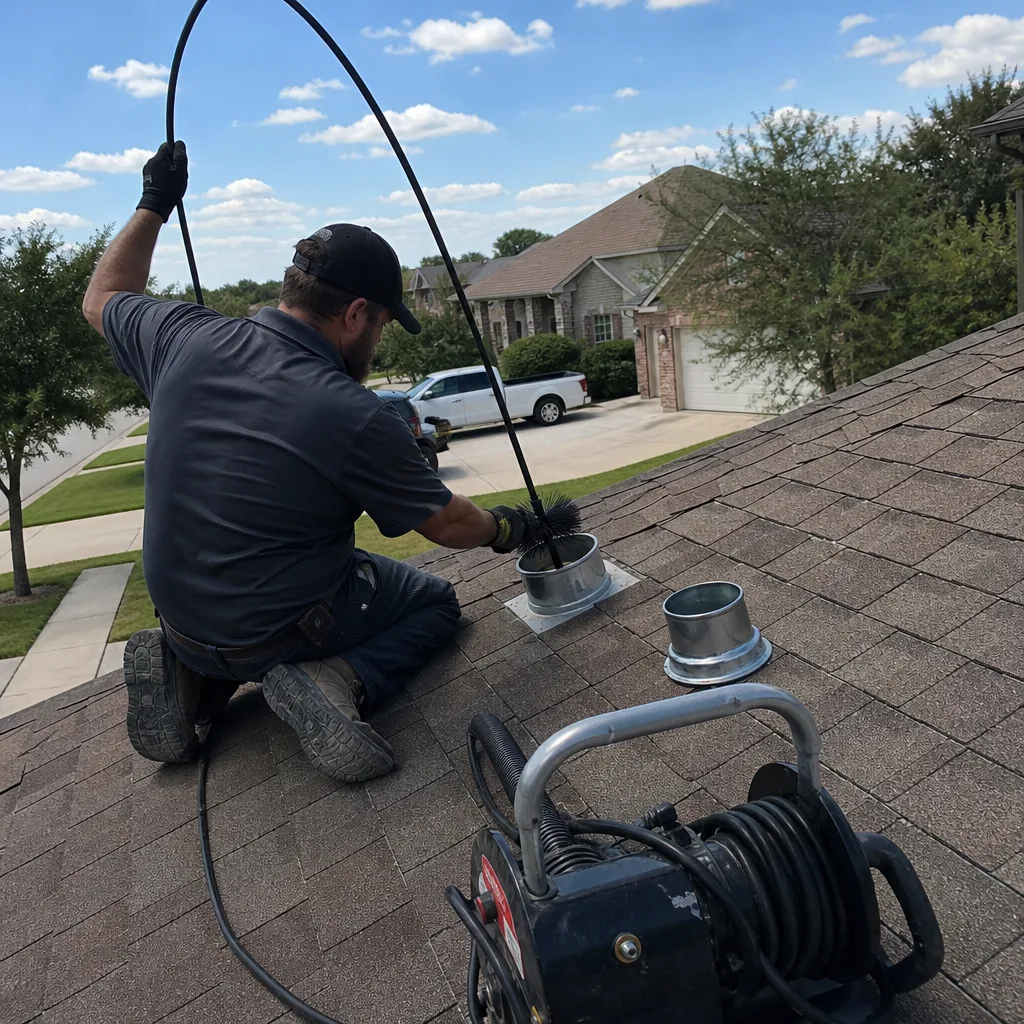
Call a TDLR-licensed HVAC contractor when your duct system needs modification, repair, or extensive sealing beyond routine maintenance. Call a documented, equipment-specific cleaning company when you need debris removal, coil cleaning, or sanitizing with verifiable results. CleanRun offers our Air Duct Cleaning services with full photo documentation and flat-rate pricing. If you’re unsure which category your situation falls into, start with an inspection that produces a written scope and photo documentation.
CleanRun Air Duct Cleaning Round Rock offers free estimates in Round Rock - call (737) 259-5752. Our inspection includes a written price for any cleaning work, a documented photo record of duct conditions, and clear guidance on whether additional mechanical work requires licensed coordination. For dryer vent cleaning in Round Rock or HVAC cleaning services, we apply the same documentation standards and upfront pricing protocol.
Frequently Asked Questions
No. Air duct cleaning - the removal of debris and contaminants using brushes, compressed air, or negative-pressure extraction - does not require a permit or HVAC license in Texas, including in Round Rock city limits and unincorporated Williamson County. For more guides & resources on maintaining your home’s air quality, explore our blog. If the work includes duct repair, replacement, or modification, permit requirements may apply depending on scope and jurisdiction.
Ask for their TDLR Air Conditioning and Refrigeration Contractor license number, then verify it at license.texas.gov. The license type should be “Contractor,” not “Technician,” and the status should be active. CleanRun publishes its license number on every proposal; any legitimate operator should provide theirs without hesitation.
You’ll likely face buyer negotiation for repair credits, professional inspection at your expense, or closing delays while documentation is obtained. In Round Rock’s competitive market, we’ve seen sellers pay $400-$800 for retroactive inspection letters and permit fees that would have cost $120-$200 if handled originally.
When mechanical repair is needed, we coordinate through our TDLR-licensed repair division or vetted partners who handle permit applications, inspections, and sign-off as part of the project. The permit number, inspection date, and final approval are delivered to you as PDF attachments to your job record.
The $79-$199 range typically covers minimal service with upsell pressure, not whole-system cleaning with documentation. At CleanRun, our $400-$550 single-system price includes every duct run photographed before and after, a written scope, and the 365-Day Done Right Promise. The cheaper quote often becomes more expensive once the technician is inside your home.
For most Round Rock homes, every 3-5 years is adequate unless you have specific conditions: recent renovation, visible mold growth, pest intrusion, or occupants with severe allergies. Our climate’s high pollen counts and dust from Hill Country limestone soils mean some homes benefit from more frequent service. The photo record from your last cleaning shows whether accumulation is accelerating.
The Bottom Line
Texas law creates a clear but frequently ignored boundary between duct cleaning and duct repair. Cleaning requires no license; repair does. Round Rock and Williamson County have specific permit thresholds that depend on your address and scope. The cost of compliance is modest and predictable; the cost of skipping it surfaces at the worst possible moment, when you’re under contract to sell. Verify licenses, demand documentation, and understand that a legitimate operator will welcome both requests. The ones who don’t have something to hide.
Written by Tomas Reyes, Owner at CleanRun Air Duct Cleaning Round Rock, serving Round Rock since 2013.