
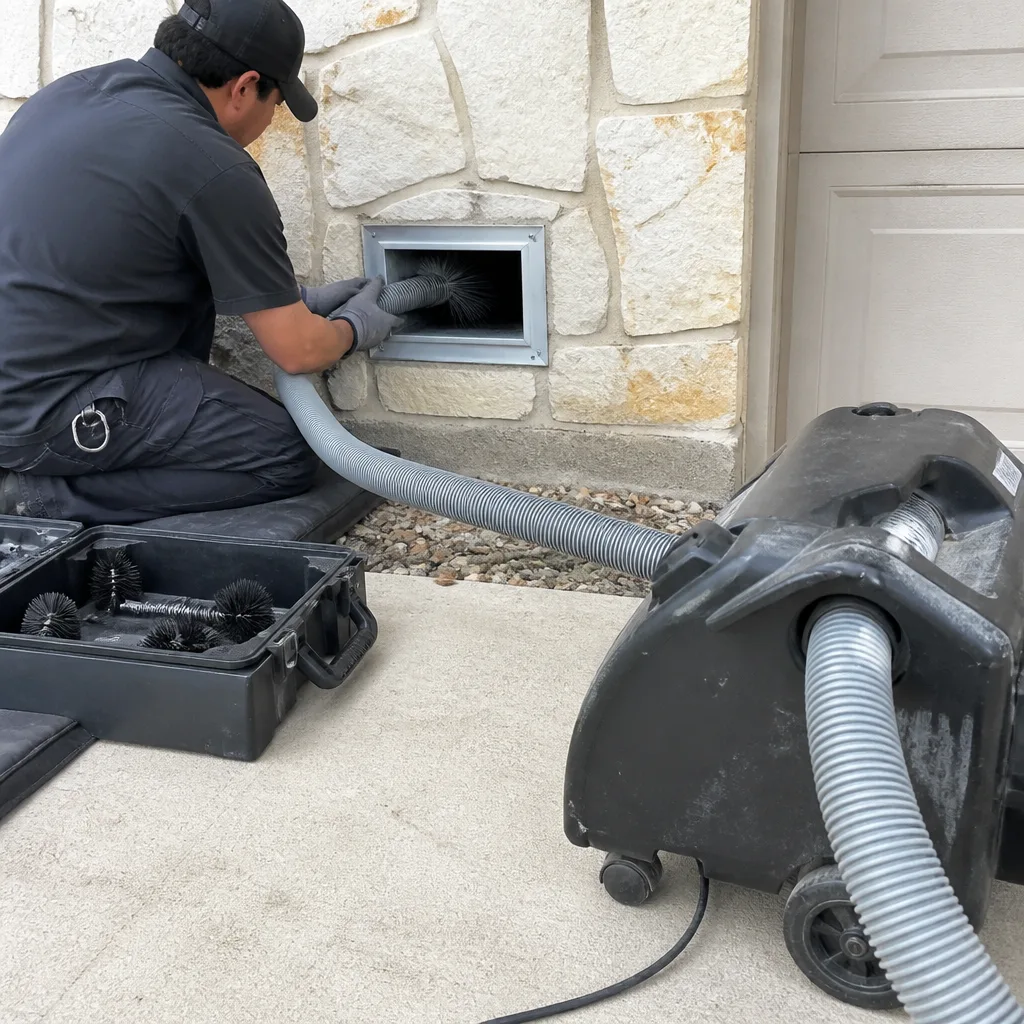
Whole-system duct and dryer vent check with before-and-after photos - you see exactly what came out of your vents
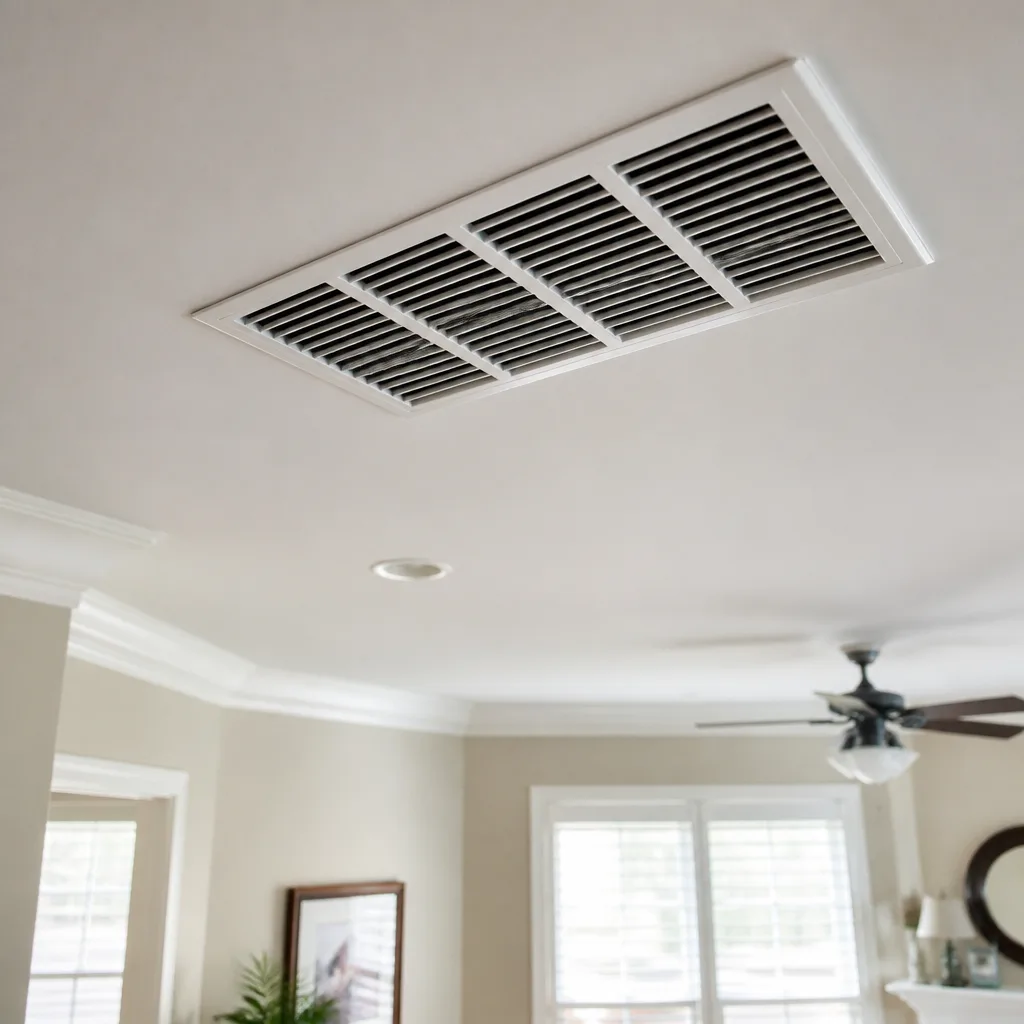
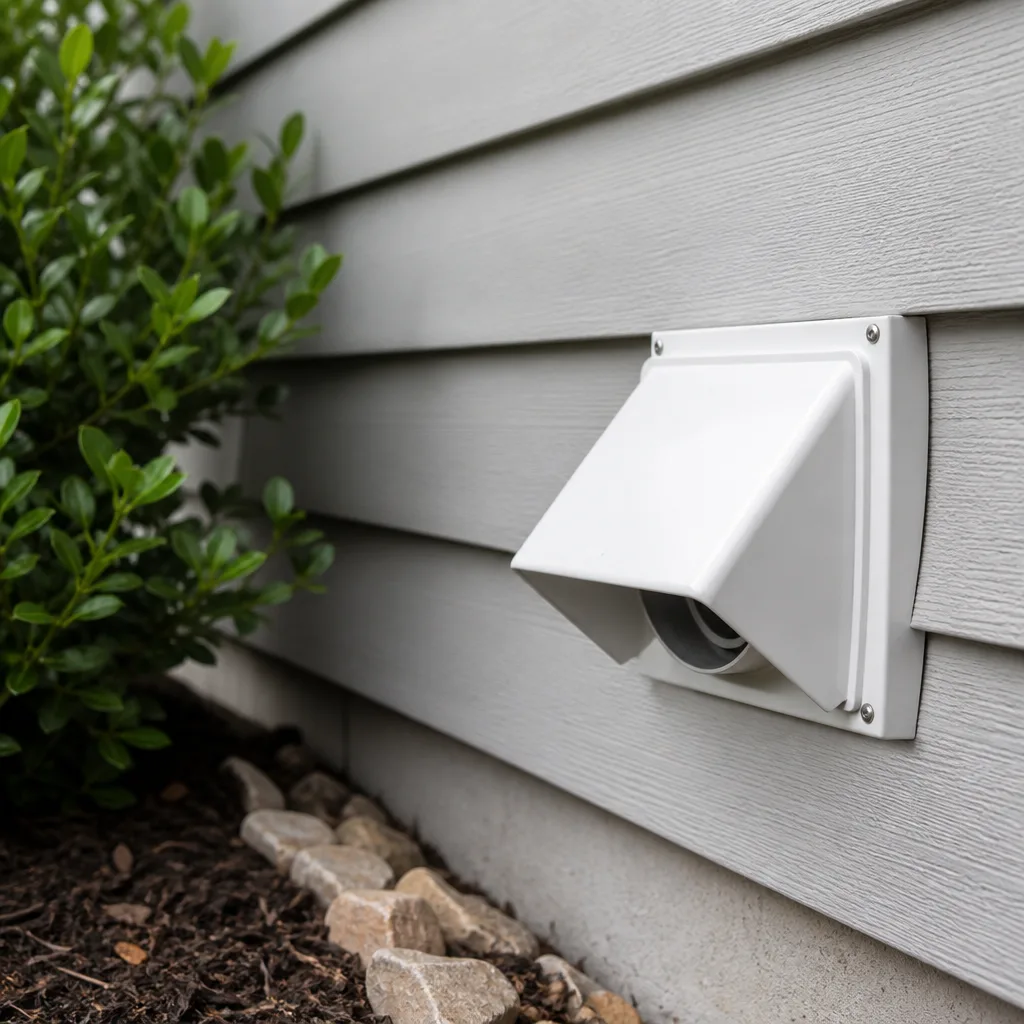
That "$99 whole-house special" is a bait ad - the real number appears once they are in your hallway, or the "clean" is a shop-vac at the register. We photograph the inside of your ducts before and after instead.
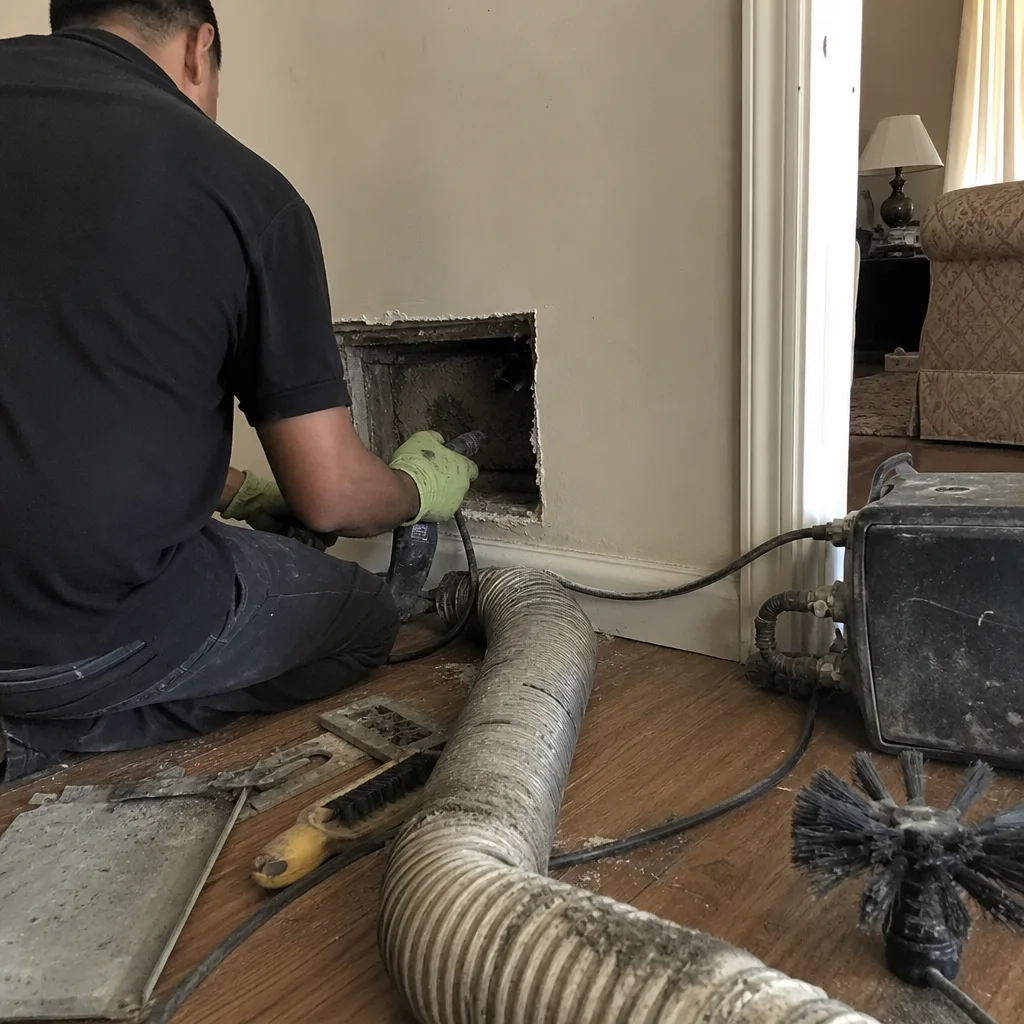 Before
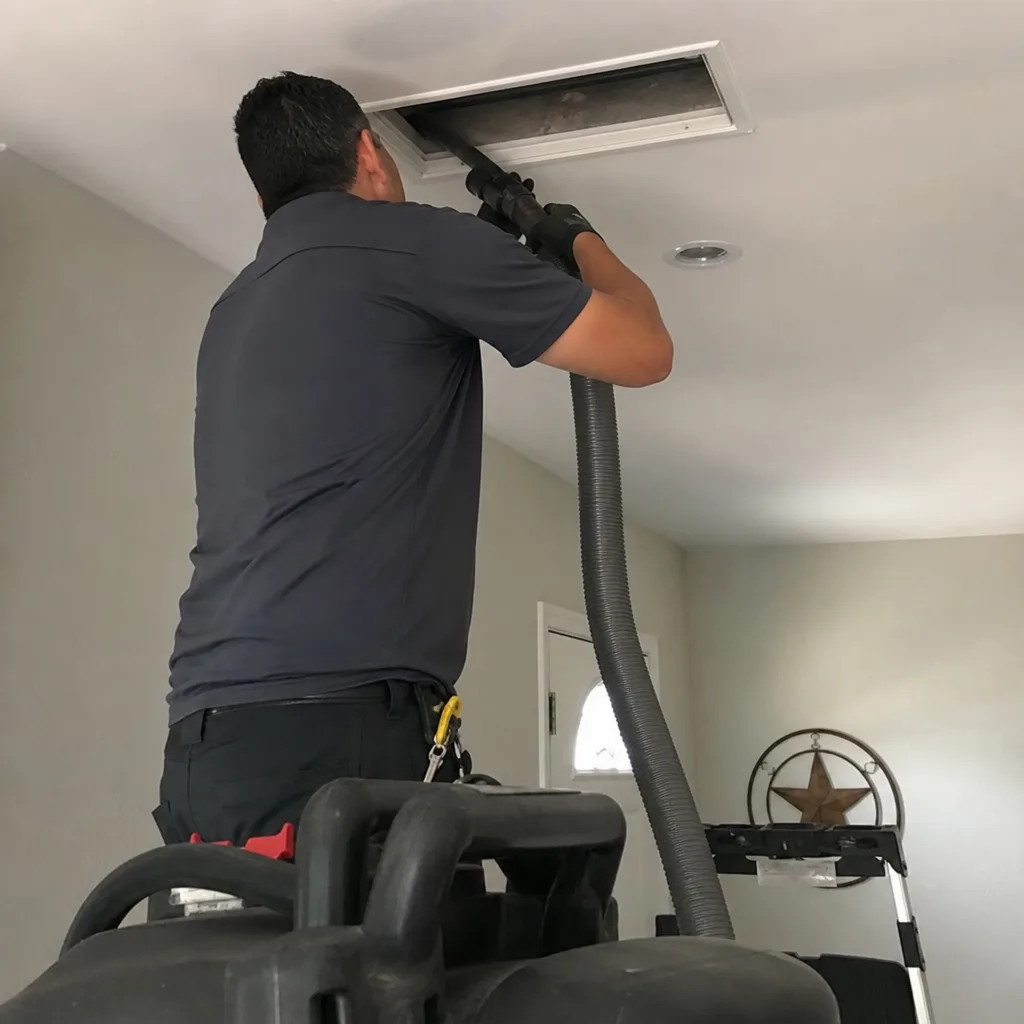 After
After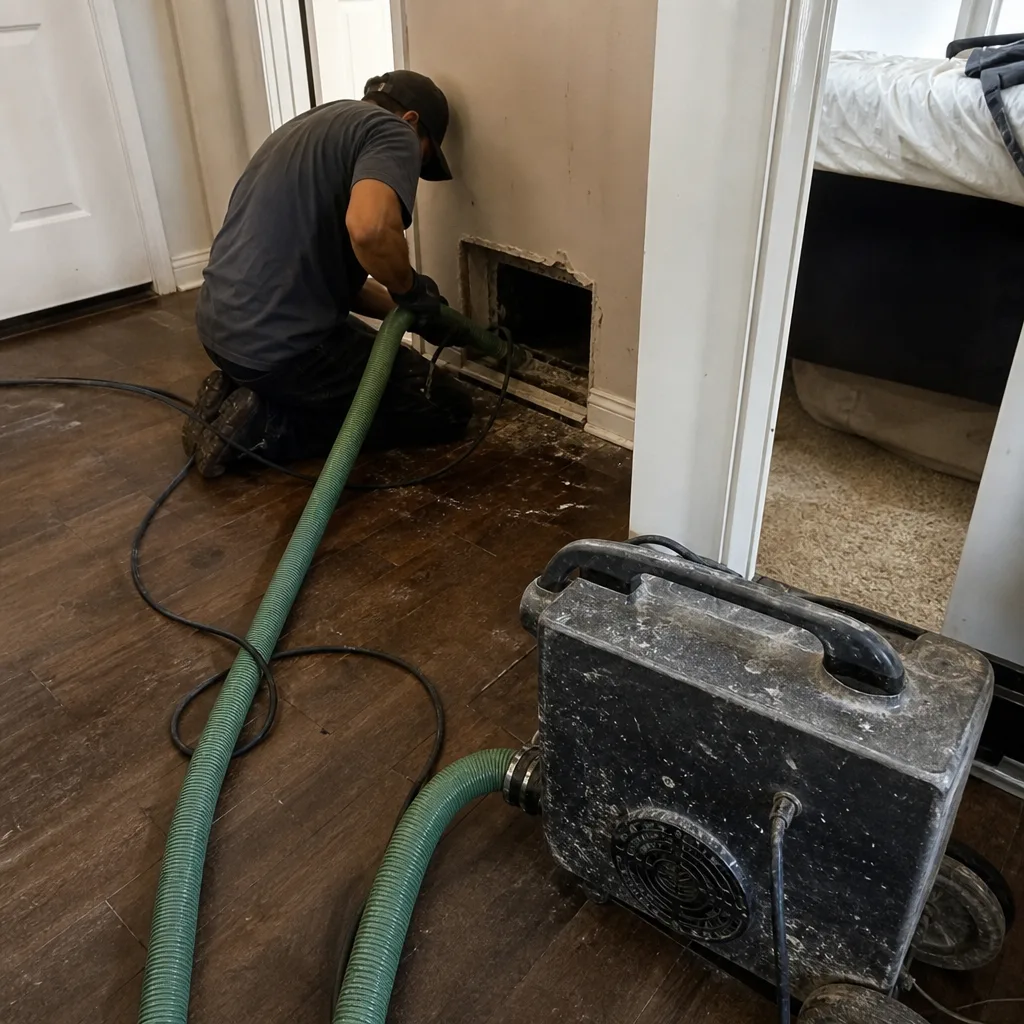 Before
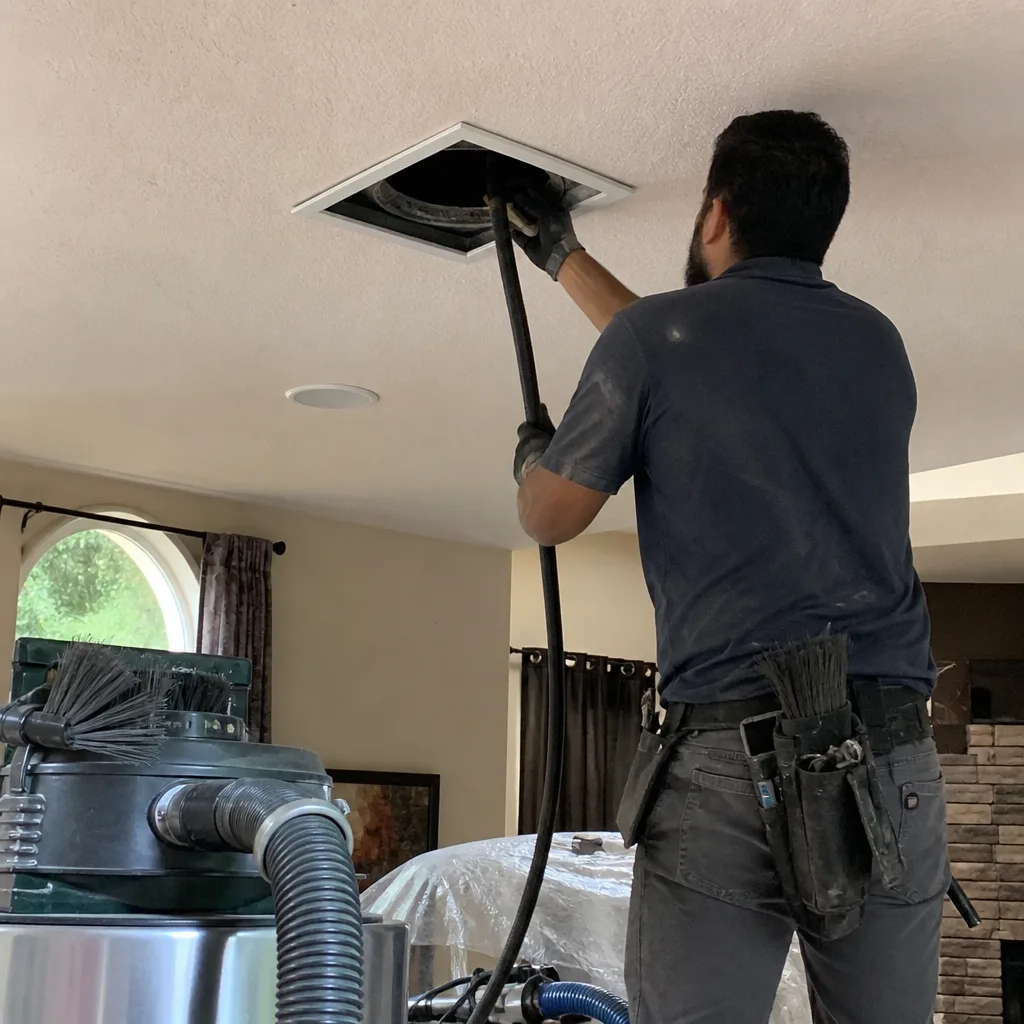 After
After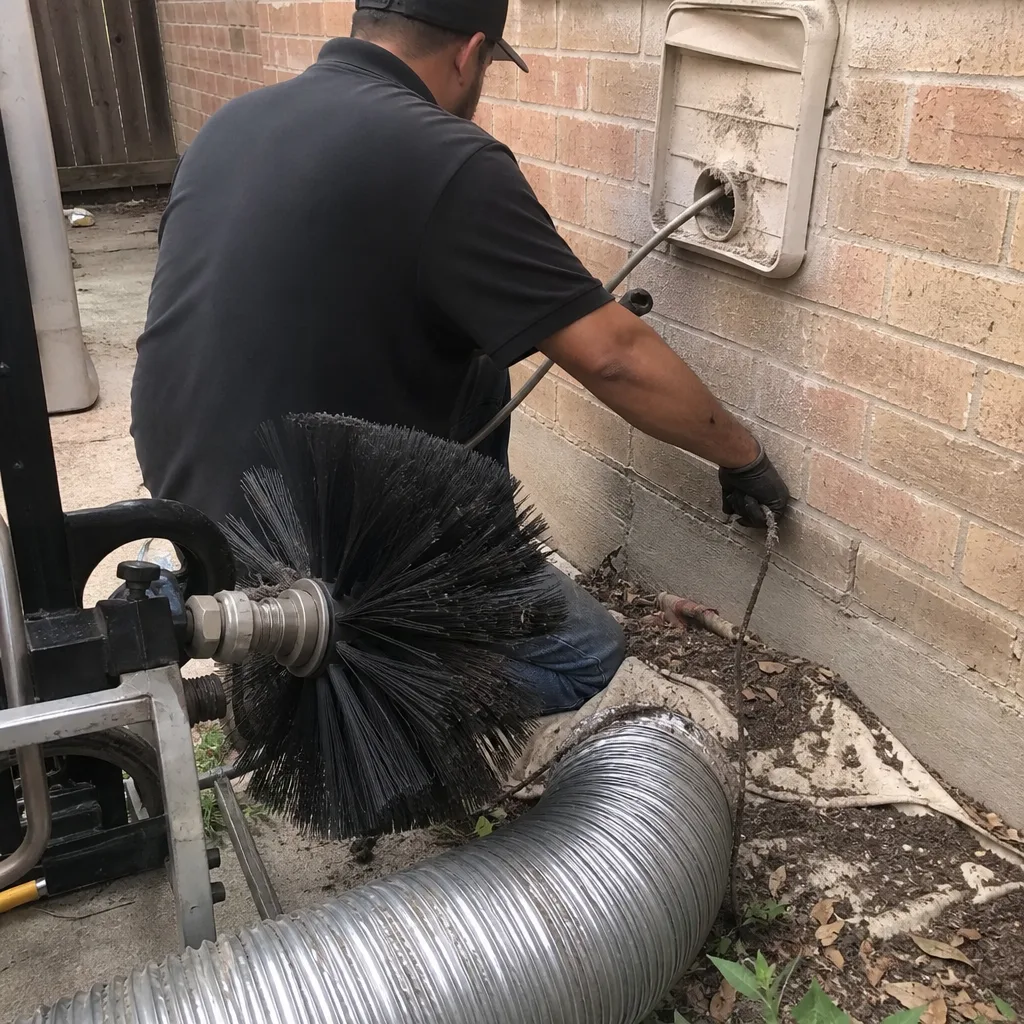 Before
 After
AfterGuardsman Coil Cleaning: The Round Rock Owner’s Guide
Guardsman coil cleaning in Round Rock typically runs $340-$580 for a full evaporator or condenser coil service, depending on accessibility and whether the coil is in an attic plenum (the main distribution box) or a ground-level air handler. We stock Guardsman-compatible cleaning agents and fin combs on every truck, and most coil jobs in the Round Rock area are completed in a single visit. Homeowners usually figure out something’s wrong when their upstairs never cools below 78 degrees in July, or they notice a sweet, chemical smell right at the register (the vent cover where air enters the room) - both point to a coil that’s either clogged with debris or corroded from the hard water scale common in Williamson County.
Which Guardsman Models This Applies To
Guardsman produces coil assemblies for several HVAC lines, but the part numbers that cross our bench most often in Round Rock are the GCM-series evaporator coils (GCM-24 through GCM-60, denoting 2-ton to 5-ton capacity) and the GCC condenser coils used in split-system outdoor units. The model label lives on a metal tag attached to the coil cabinet, usually on the upstream side near the refrigerant lines. If the tag’s faded - common in attics that hit 140 degrees in August - measure the cabinet width: GCM coils run 14.5″, 17.5″, 21″, or 24.5″ to match standard furnace footprints.
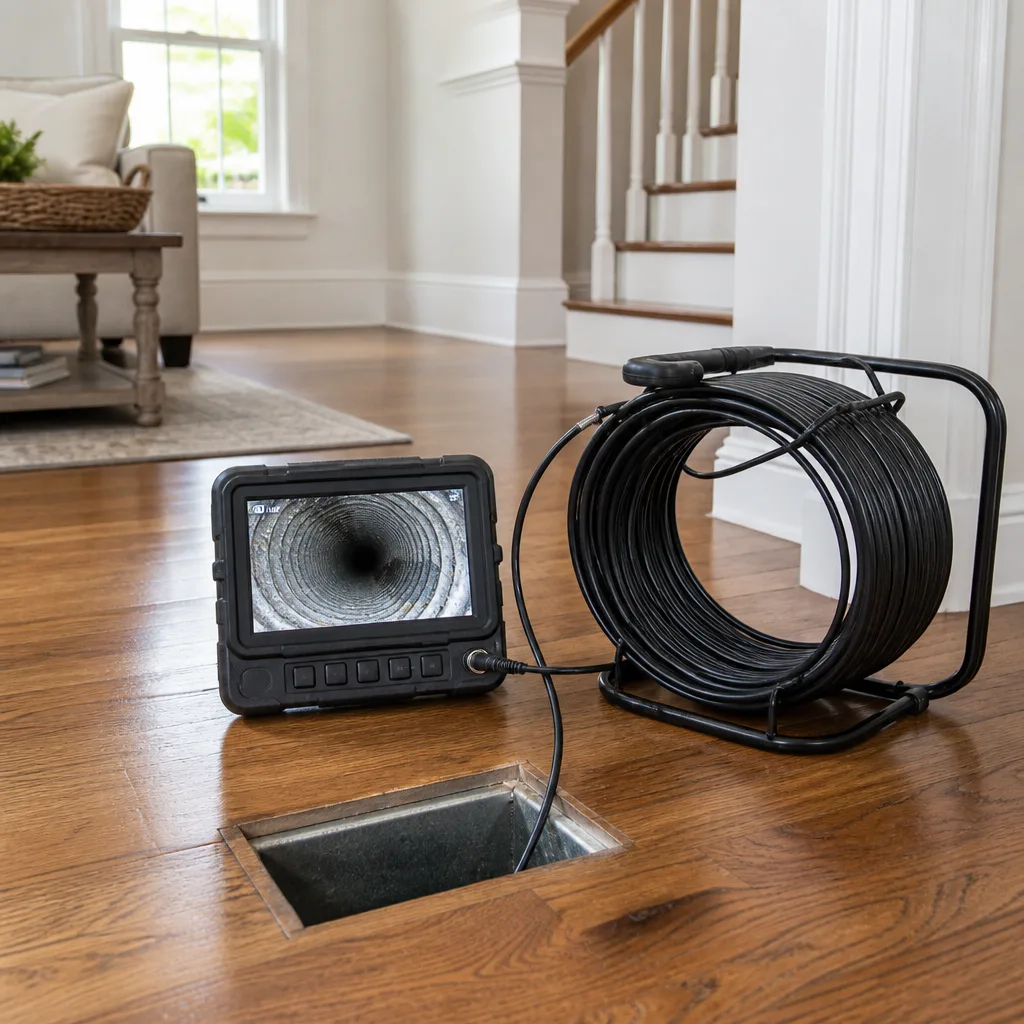
CleanRun Air Duct Cleaning Round Rock is an independent service provider, not affiliated with Guardsman. For OEM replacement, we source factory-spec coils through standard HVAC distribution. In most cases, though, we can restore the existing Guardsman coil with professional-grade cleaning rather than replacement, which is where the real savings live. The aftermarket equivalent question only matters if the coil itself is leaking refrigerant or the fins are deteriorated to the point of no return - something we confirm with a borescope inspection before quoting.
Signs Your Guardsman Coil Cleaning Is Failing
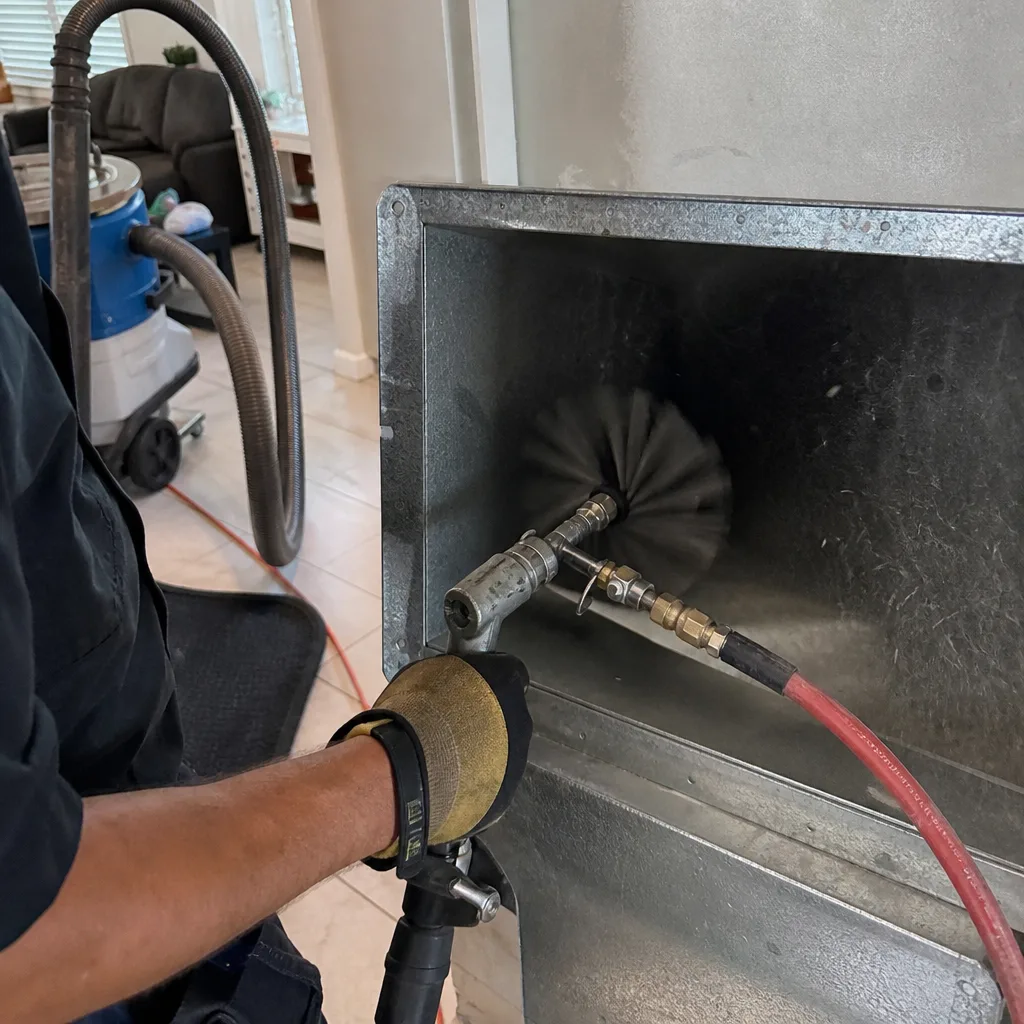
- Uneven cooling between floors. A clogged evaporator coil restricts airflow through the duct runs (the individual branches feeding each room), so the system can’t push enough treated air upstairs. In Round Rock’s two-story builds, we see this first in master bedrooms over the garage where the longest duct run already starts at a disadvantage.
- Ice formation on the refrigerant lines. When a coil can’t exchange heat because debris blocks the fins, the refrigerant stays cold enough to freeze condensation on the suction line. The camera shows a sheet of ice where there should be bare copper - Tomas Reyes has documented this exact pattern in Teravista homes where the return plenum sits directly above the laundry room, pulling lint into the coil year after year.
- Musty or sweet odor at the registers. Bacterial growth on a wet, dirty coil produces a distinct smell that bypasses standard filters. It’s not the ductwork; it’s the coil itself, and no amount of register wiping fixes it.
- System runs constantly without reaching setpoint. The thermostat keeps calling, but the coil can’t absorb enough heat from the return air. Your electric bill climbs while the house stays sticky - a combination we check for first in Stone Oak Ranch, where 2018-2021 builds are hitting their first major coil maintenance cycle.
- Visible debris or corrosion when the access panel is removed. Cedar pollen from the Hill Country, construction dust from ongoing development, and the calcium scale from Round Rock’s moderately hard water all collect on coil fins. Left alone, the aluminum fins corrode and the copper tubes develop pinhole leaks - at that point, cleaning won’t save it.
BeforeAfterReplacement Cost & What’s Included
| Service | Price Range | What’s Included |
|---|---|---|
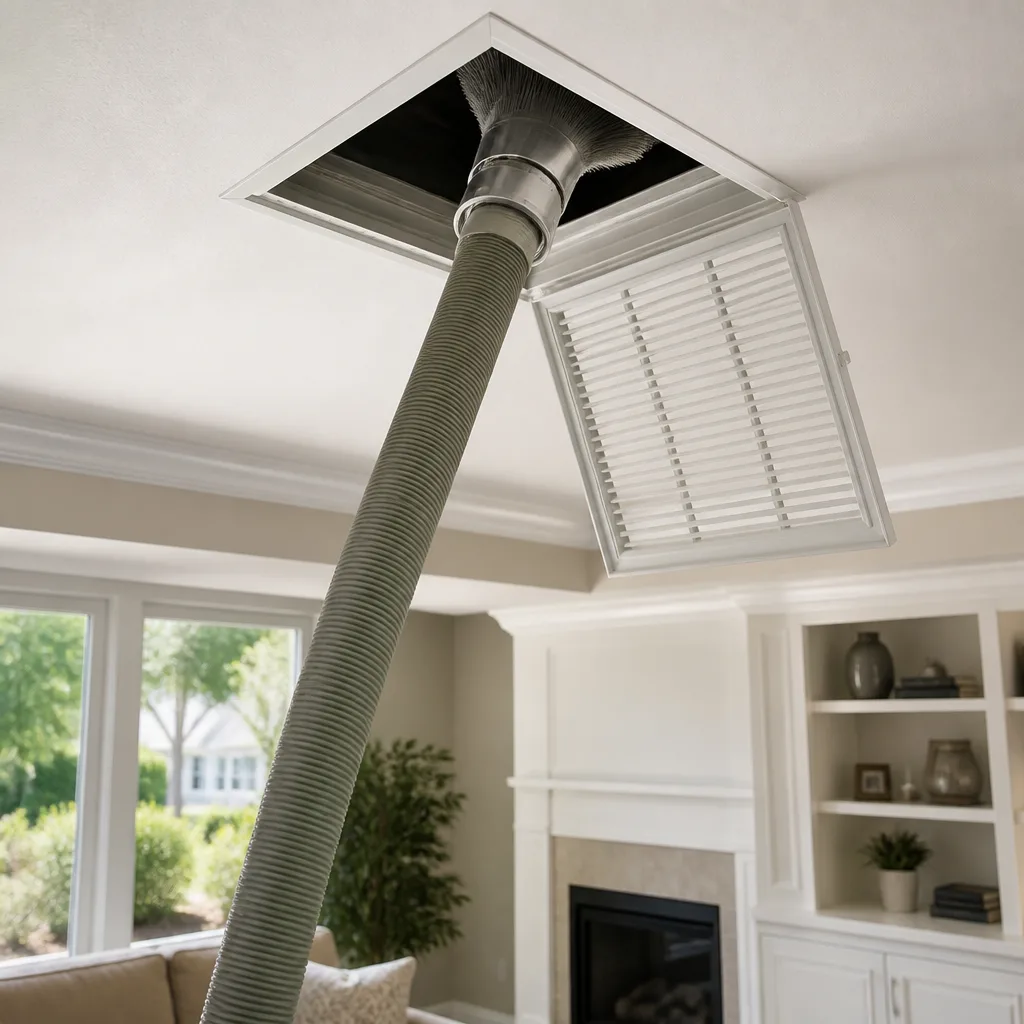
| Evaporator coil cleaning (accessible attic) | $340-$440 | Negative-pressure extraction (suction-based debris removal), foaming cleaner application, fin comb straightening, before/after photo record |
| Evaporator coil cleaning (tight crawlspace or high attic) | $440-$580 | Same as above, plus additional access labor and safety rigging if required |
| Condenser coil cleaning (outdoor unit) | $280-$380 | Coil fin wash, debris removal from cabinet base, refrigerant pressure verification, photo record |
| Coil replacement (if cleaning won’t restore function) | $1,200-$2,400 | OEM or equivalent coil, recovery/recharge, brazed connections, pressure test, written warranty |
The spread depends on three things: where the coil lives, how long it’s been since the last service, and whether the fins are damaged enough to need combing or beyond repair. Every quote is written and signed before work starts - Haven Standard Clause 1 - and the 365-Day Done Right Promise covers the labor. The photo record, delivered before we leave, shows every angle of the coil so you can verify what was done.
DIY or Call Us?
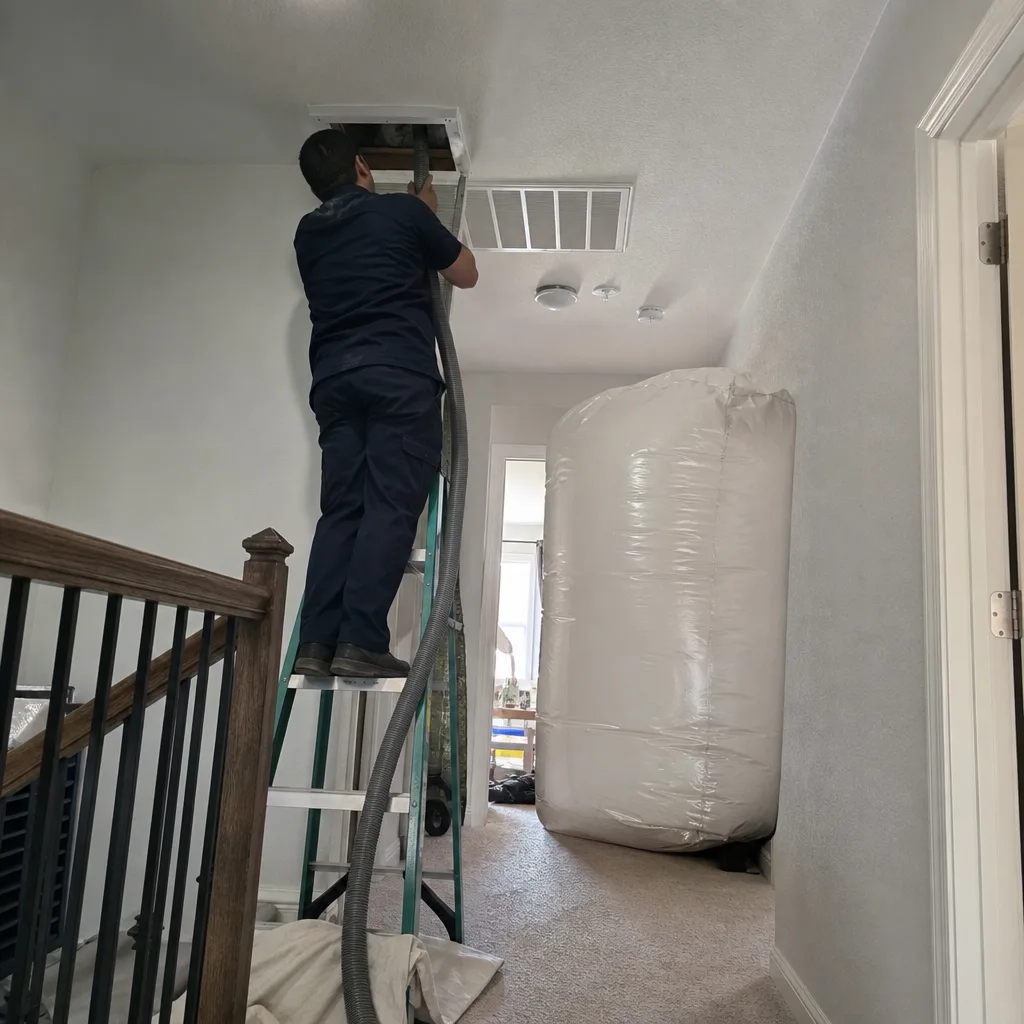
There’s a safe middle ground here, and then there’s the line where it gets expensive.
What you can check yourself: whether the outdoor condenser is clogged with leaves or grass clippings (shut the disconnect first), whether your return filter is actually seated properly, and whether the condensate drain line is flowing. These are visual checks, no tools required.
Where DIY goes wrong: evaporator coils sit inside the plenum, often upstream of the blower, and the fins are aluminum - soft enough to crush with a fingernail. Store-bought foaming cleaners, used without proper rinsing and extraction, can corrode the copper tubing or leave residue that attracts more debris. We’ve pulled coils in Round Rock where a homeowner’s “cleaning” actually packed the debris deeper between the fins, restricting airflow worse than when they started. The refrigerant lines are pressurized; disturbing a corroded flare fitting can release R-410A and require a full recovery and recharge. For attic-mounted coils, there’s also the basic hazard of working in heat, on joists, near electrical.
Our recommendation: let us run the camera and show you what we’re looking at. Then decide. The camera goes in first. Then we talk.
FAQs
Most jobs run 90 minutes to 2.5 hours, depending on whether we’re cleaning one coil or both, and how much access the attic or crawlspace allows. We don’t charge by the hour - the written price is the price. Call (737) 259-5752 for an exact quote; estimates are free.
Cleaning IS the repair for a functional but clogged coil. If the copper tubes are leaking or the fins are deteriorated to stubble, no amount of cleaning restores heat transfer, and replacement becomes the only fix. We make that call with the borescope, not a guess.
Every 3 to 5 years for most homes, sooner if you’re near active construction or have pets that shed heavily. Cedar pollen season in Central Texas - roughly March through May - pushes more particulate through standard filters, so homes in the Teravista and Stone Oak Ranch areas often benefit from a 2-year cycle.
We carry Guardsman-compatible cleaning agents, fin combs, and sealants on every vehicle. Full coil replacements require a warehouse pull, but we can typically have the correct OEM or equivalent coil within 24 hours once we’ve confirmed the model and measured the cabinet. For cleaning-only calls, we’re equipped to complete the job same visit.
Ready to see what’s actually inside your plenum? Call CleanRun Air Duct Cleaning Round Rock at (737) 259-5752. We’ll run the camera, put a written price in your hand before any work starts, and leave you with a documented photo record of every duct run and coil surface - the same standard we’ve held since 2013.
Written by Tomas Reyes, Owner, CleanRun Air Duct Cleaning Round Rock at CleanRun Air Duct Cleaning Round Rock, serving Round Rock and nearby areas.